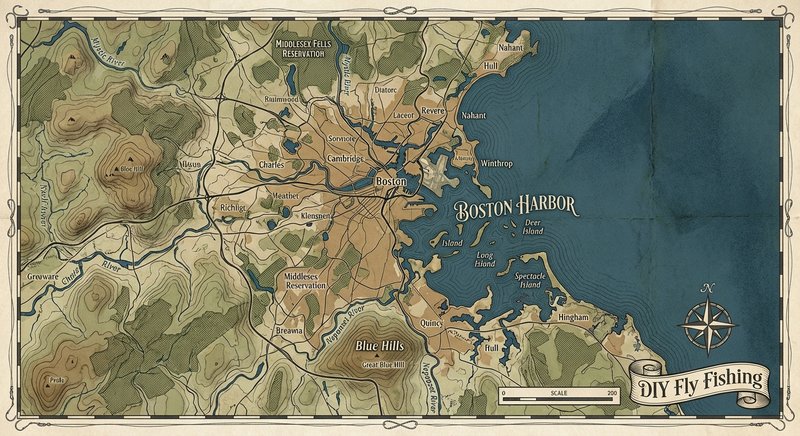
Boston Harbor
Fly fishing in Massachusetts · Intermediate · Best seasons: Spring, Summer, Fall
Target Species
Striped Bass, Bluefish, Flounder
About This Water
Urban striped bass fishing. Harbor islands and channels.
Fishing Recommendations
Welcome to the "Urban Wild." As a guide who has spent years poling the flats and navigating the rocky ledges of the Massachusetts Bay, I can tell you that Boston Harbor is one of the most underrated fly fishing gems on the East Coast. It offers a unique juxtaposition of industrial skylines and rugged, island-dotted waters.
Here is your comprehensive guide to fly fishing the "Hub."
🎣 Location Overview
Boston Harbor is a massive estuary system comprising 34 islands and three major rivers (the Charles, Mystic, and Neponset). What makes it special is the incredible tidal range—often exceeding 10 feet—which moves a staggering volume of water and bait.
Anglers love it because you can be casting under the shadow of a skyscraper one moment and standing on a remote, windswept island beach thirty minutes later. The harbor features everything from shallow sand flats and salt marshes to deep, high-current channels and boulder-strewn shorelines.
🐟 Target Species & Behavior
Striped Bass (The King)
The primary target. In the spring, "schoolies" (12–24 inches) flood the estuaries. By June, larger migratory "cows" (30–40+ inches) arrive.
- Behavior: They are opportunistic predators. They hide in the "shadow lines" of bridges at night and hold behind boulders in heavy current (rips) to ambush bait.
- Feed: Grass shrimp and silversides early; Atlantic Menhaden (pogies), river herring, and mackerel later.
Bluefish (The Yellow-Eyed Devil)
Usually arriving in late June or July when the water warms.
- Behavior: Highly aggressive and nomadic. They travel in schools and can turn the water into a "washing machine" when they find bait.
- Feed: Anything that moves. They will shred expensive flies, so wire tippet is a must.
Winter Flounder
While primarily a bait-and-sinker fish, they can be targeted on a fly in the early spring (April/May).
- Behavior: They hold in muddy or sandy bottoms near eelgrass.
- Feed: Small worms and shrimp. You must get your fly literally on their nose.
📅 Best Times to Fish
Seasons
- Spring (May – June): The "Arrival." Focus on the river mouths (Charles/Neponset) where the water warms up first. This is prime time for numbers.
- Summer (July – August): The "Dog Days." Large bass move to deeper, cooler water or the outer islands. Night fishing becomes the most effective way to find big fish.
- Fall (September – October): The "Fall Run." This is the pinnacle. Fish are bulking up for the migration south. Massive surface blitzes are common.
Tides & Time of Day
- The Golden Rule: Moving water is mandatory. The two hours before and after high tide are generally most productive for shore anglers.
- Low Light: Striped bass are light-sensitive. The first 90 minutes of dawn and the last hour of dusk are "Magic Hour."
🪰 Recommended Flies & Techniques
Top Fly Patterns
- Chartreuse & White Clouser Minnow: The undisputed champion. It mimics silversides and gets deep.
- Hollow Fleyes (Bob Popovics style): Essential for mimicking large Menhaden (Pogies).
- Gurglers or Bobbers: For heart-stopping surface strikes. Best in low light or calm water.
- Ray’s Fly: A local staple. Sparse and effective for mimicking "rain bait" (small anchovies).
Gear & Techniques
- Rod/Reel: A 9-foot, 9-weight rod is the "Goldilocks" setup for the harbor. It handles the wind and the occasional 15lb Bluefish.
- Lines:
- Intermediate: The workhorse for flats and shore fishing.
- Fast-Sinking (350–450 grain): Necessary for fishing the deep channels or "dredging" the rips from a boat.
- Presentation: A "strip-strip-pause" retrieve is standard. When fishing rips, cast up-current, let the fly sink, and "swing" it through the tension zone—most hits occur at the turn.
💡 Pro Tips & Local Knowledge
- The "Harbor Islands" Ferry: Don't have a boat? Take the public ferry to Georges Island or Spectacle Island. You can hike the perimeter and fly fish remote beaches that see very little pressure.
- Structure is Key: Look for "white water." Bass love the oxygenated, turbulent water where waves crash against rocks (like the perimeter of Deer Island).
- The "Shadow Line" Trick: If fishing the bridges at night (like the Alford St. Bridge), cast your fly into the dark water and strip it into the light. Bass sit in the dark looking into the light for shadows of bait.
- Bird Activity: If you see terns or gulls diving frantically, get there immediately. They have found the bait that the bass are pushing to the surface.
⚠️ Important Information
Access Points
- Castle Island (South Boston): Great shore access and famous for "The Sugar Bowl" rip.
- Deer Island (Winthrop): Massive paved perimeter with excellent access to deep water and rocky flats.
- Nut Island (Quincy): A sleeper spot for big fish moving into the back harbor.
Regulations & Permits
- Saltwater Permit: You must have a Massachusetts Saltwater Fishing Permit (available online via MassFishHunt).
- Striped Bass Limits: Regulations change yearly (currently a very narrow "slot" limit to protect the species). Most fly anglers practice 100% Catch and Release to preserve the fishery.
Safety
- The "Snotty" Rocks: Harbor rocks are covered in rockweed and are incredibly slippery. Korkers (studded wading boots) are highly recommended.
- Boat Traffic: Boston is a working port. If you are in a kayak or small boat, watch out for the "Commuter Cats" (high-speed ferries); their wakes are enormous and dangerous.
Tight lines, and enjoy the views of the Zakim Bridge while you're hooked up!
Bug Hatches & Matching Flies
| Hatch | Type | Peak months | Time of day | Hook sizes | Matching flies |
|---|---|---|---|---|---|
| Common Midge Chironomidae | midge | April, May, September, October | All Day | #18-24 | Zebra Midge #18-22, Griffith's Gnat #20-24, Top Secret Midge #20-22 |
| Japanese Beetle Popillia japonica | terrestrial | July, August | Afternoon | #10-14 | Japanese Beetle #12-14, Foam Beetle #10-14 |
| Flying Ant Formicidae | terrestrial | August, September | Afternoon | #16-22 | Black Foam Ant #16-20, Cinnamon Ant #16-18 |
| Cinnamon Caddis Hydropsyche | caddis | June, July | Evening | #14-18 | Elk Hair Caddis #14-16, Pupa #14-18 |
| Blue-Winged Olive Baetis | mayfly | May, September, October | Afternoon | #18-22 | RS2 #20-22, BWO Sparkle Dun #18-22, Pheasant Tail #18-20 |
| Trico Tricorythodes | mayfly | July, August, September | Morning | #20-24 | Trico Spinner #22-24, Trico Nymph #20-22 |
| Black Fly Simuliidae | midge | May, June | Morning/Afternoon | #18-22 | Black Gnat #18-20, Larva Lace Midge #18-22 |
| Crane Fly Tipulidae | midge | August, September | Evening | #8-12 | Daddy Long Legs #10-12, Crane Fly Larva #8-10 |