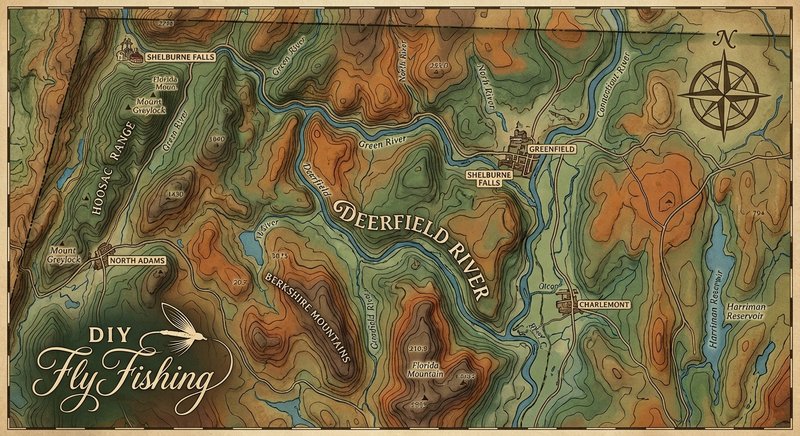
Deerfield River
Fly fishing in Massachusetts · Intermediate · Best seasons: Spring, Summer, Fall
Target Species
Brown Trout, Rainbow Trout, Brook Trout
About This Water
Western Massachusetts' premier trout river. Catch-and-release sections with excellent hatches.
Fishing Recommendations
The Deerfield River is arguably the crown jewel of Massachusetts trout fishing. Flowing through the rugged hills of the Berkshires in Western MA, it offers a "big water" western-style experience that is rare in Southern New England. As a tailwater system regulated by a series of hydroelectric dams, it stays cold and oxygenated throughout the year, supporting a world-class trout fishery.
🎣 Location Overview
The Deerfield is a high-gradient, boulder-strewn tailwater. It is divided into several sections, but the most famous is the Fife Brook Section, which runs from the Fife Brook Dam in Florida, MA, down to the Hoosac Tunnel.
What makes it special is the cold-water release. While other New England rivers are reaching lethal temperatures for trout in July and August, the Deerfield remains in the 50s and 60s (Fahrenheit). It is a diverse river—offering everything from technical dry fly flats and deep, heavy nymphing runs to aggressive streamer water. However, it is a river of "pulses"; the water levels fluctuate daily based on power generation, which dictates when and where you can fish.
🐟 Target Species & Behavior
- Brown Trout: The kings of the river. The Deerfield holds a significant population of wild-reared and holdover Browns, some reaching over 20 inches. They are structure-oriented, often tucking behind large boulders or under cut banks. They become highly predatory as they age, favoring large streamers.
- Rainbow Trout: These are frequently stocked but quickly "naturalize." They tend to hold in faster water, riffles, and the heads of pools. They are more likely to rise for dries and are known for their aerial acrobatics.
- Brook Trout: While less common in the main stem than Browns and Rainbows, you will find beautiful, vibrant Brookies near the mouths of cold-water tributaries.
📅 Best Times to Fish
- Spring (April – June): This is prime time for hatches. The water is high but the fish are hungry. Late April brings the Hendrickson hatch, followed by Sulphurs and Caddis in May and June.
- Summer (July – August): This is when the Deerfield shines. When other rivers go dormant, the tailwater releases keep the fish active. Focus on early mornings or the "tail end" of a water release. Terrestrials (ants/beetles) become very effective now.
- Fall (September – October): My personal favorite. The Browns get aggressive before the spawn. Isonychia hatches are heavy, and the foliage in the Deerfield Valley is world-class.
- The "Window": Always check the Brookfield Power flow schedule. Fishing is best when the water is "low" (around 125–800 cfs) for wading. If they are releasing (2,000+ cfs), the river becomes a drift-boat-only fishery and is dangerous for waders.
🪰 Recommended Flies & Techniques
Nymphing (The High-Yield Producer)
Nymphing accounts for about 80% of the fish caught here.
- Patterns: Pat’s Rubber Legs (Size 8-12), Pheasant Tails (14-18), Zebra Midges (18-22), and Perdigons in olive or flash colors.
- Technique: Euro Nymphing is incredibly effective in the Deerfield’s pocket water. If using an indicator, use plenty of split shot to get the fly down through the heavy currents into the "cushion" near the bottom.
Dry Flies (The Excitement)
- Patterns: Parachute Adams (14-22), Elk Hair Caddis (14-18), Light Cahill (14-16), and the Isolucha (12-14) for the fall.
- Technique: Look for "slick" water at the tailouts of pools. A long leader (12ft+) is often necessary to avoid spooking fish in the clearer sections.
Streamers (The Trophy Hunter)
- Patterns: Wooly Buggers (Olive/Black), Kelly Galloup’s Sex Dungeon, or the Complex Twist Bugger.
- Technique: "Pounding the banks." Cast toward the shore or behind large boulders and strip aggressively. On high-water days, swinging streamers on a sink-tip line is the best way to find a 20-inch Brown.
💡 Pro Tips & Local Knowledge
- The "Pulse" Fishing: Experienced guides time their day based on the water release. As the water begins to rise (the "front" of the pulse), fish often get active as nymphs are dislodged. However, get to the bank quickly—the water rises fast.
- Wading Safety: The Deerfield's rocks are notoriously "greasy." Studded felt boots and a wading staff are mandatory. Do not underestimate the power of this current.
- The Zoar Gap: This is a popular whitewater rafting area. During summer afternoons, expect rafts. If you want solitude, fish the upper Catch & Release section early in the morning before the rafters launch at 10:00 AM.
- Small Fly Confidence: Even though it’s a big river, the fish see a lot of pressure. Dropping down to a size 20-22 midge or a 6X tippet can turn a slow day into a busy one.
⚠️ Important Information
- Access:
- Fife Brook Dam: Plenty of parking; start of the C&R section.
- Shunpike Rest Area: Great access to mid-river runs.
- Deerfield #7: Good access for the lower sections.
- Regulations:
- There are two Catch & Release / Artificial Lures Only sections.
- Section 1: Fife Brook Dam to the Hoosac Tunnel (approx. 4 miles).
- Section 2: From the Pelham Brook mouth to the Mohawk Park Campground.
- Always check the current MA DMF abstracts for seasonal changes.
- Flow Phone Line: Call the Brookfield Power Flow Line (ext. 22 for Fife Brook) before you leave your house. If it's releasing 2,500 cfs and you don't have a boat, stay home or fish a tributary.
The Deerfield is a rewarding but demanding river. Respect the water levels, bring your heavy nymphs and your biggest streamers, and you’ll see why it’s the pride of Massachusetts fly fishing.
Bug Hatches & Matching Flies
| Hatch | Type | Peak months | Time of day | Hook sizes | Matching flies |
|---|---|---|---|---|---|
| Blue Winged Olive Baetis / Acerpenna | mayfly | April, May, September, October | Midday | #18-22 | RS2 #20-22, Parachute BWO #18-22, BWO CDC Emerger #20-22 |
| Sulphur Ephemerella invaria / dorothea | mayfly | May, June, July | Late Afternoon/Evening | #14-18 | Pheasant Tail #14-18, Sulphur Parachute #14-18, Snowshoe Rabbit Foot Emerger #16-18 |
| Isonychia (Slate Drake) Isonychia bicolor | mayfly | June, July, August, September | Late Afternoon | #10-12 | Iso Parachute #10-12, Zug Bug #10-12, Prince Nymph #10-14 |
| Tan Caddis Hydropsyche | caddis | May, June, July | Evening | #14-18 | Elk Hair Caddis #14-18, LaFontaine's Deep Sparkle Pupa #14-16, Holy Grail #14-16 |
| March Brown Maccaffertium vicarium | mayfly | May | Midday | #10-14 | March Brown Western Red #12-14, Gold Ribbed Hare's Ear #10-14 |
| Golden Stonefly Acroneuria | stonefly | June, July | Morning/Evening | #8-12 | Pat's Rubber Leg #8-12, Stimulator (Yellow) #8-12 |
| Midges Chironomidae | midge | January, February, March, December | Late Morning | #20-26 | Zebra Midge #20-24, Griffith's Gnat #20-24 |
| Terrestrials (Ants and Beetles) Formicidae / Coleoptera | terrestrial | July, August, September | All Day | #12-18 | Cinnamon Ant #14-18, Black Foam Beetle #12-16 |
| Light Cahill Stenacron / Stenonema | mayfly | June, July | Evening | #12-16 | Light Cahill #12-16, Cream Usual #14-16 |