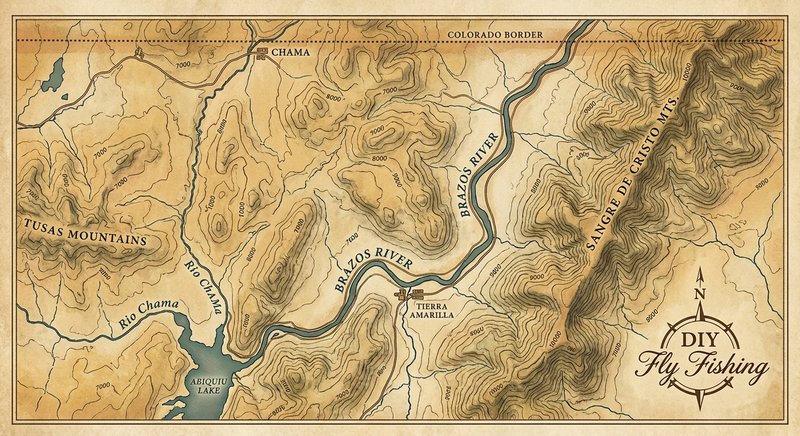
Brazos River
Fly fishing in New Mexico · Intermediate · Best seasons: Summer, Fall
Target Species
Brown Trout, Rainbow Trout
About This Water
Remote northern New Mexico stream. Wild browns and rainbows in meadow water.
Fishing Recommendations
The Brazos River in Northern New Mexico is one of the state's best-kept secrets. Flowing beneath the towering 2,000-foot quartzite cliffs of the Brazos Box, this high-altitude freestone stream offers some of the most dramatic scenery and technical trout fishing in the Southwest. Unlike the wider, slower Rio Grande, the Brazos is intimate, rugged, and rewarding for the angler willing to hike and hunt for wild fish.
🎣 Location Overview
The Brazos is a classic high-mountain freestone river. It is characterized by its crystal-clear water, massive granite boulders, and steep gradients. What makes it special is its "split personality": the upper reaches flow through high-alpine meadows, while the lower sections (near the Brazos Box) feature deep, shaded pools and turbulent pocket water.
Anglers love the Brazos for its solitude and aesthetics. Because much of the river flows through private land or rugged canyons, you won't find the crowds typical of the San Juan. It feels wild, looks prehistoric, and the trout are as "honest" as they come—they aren't pellet-fed; they are opportunistic mountain predators.
🐟 Target Species & Behavior
- Brown Trout: The stars of the Brazos. These are wild, brightly colored fish with vivid red spots. They are wary and tend to hold in the "dark water"—underneath undercut banks, behind large boulders, or in the deep, slow-moving tails of pools.
- Rainbow Trout: Found primarily in the swifter riffles and at the heads of pools where oxygen levels are highest. While some are stocked in the lower reaches near lodges, the wild rainbows are acrobatic and lean.
Behavior: During the summer, these fish are highly focused on the surface. Because the growing season is short at 8,000+ feet, they are aggressive feeders. In the fall, the Brown Trout become territorial and aggressive as they prepare for the spawn, making them susceptible to larger streamer patterns.
📅 Best Times to Fish
Optimal Seasons: Summer & Fall
- Summer (Late June – August): This is the prime window for dry fly fishing. Once the spring runoff subsides (usually by mid-June), the water clears and the hatches begin in earnest.
- Fall (September – October): My personal favorite. The cottonwoods turn gold, the air gets crisp, and the large Brown Trout move out of the deep "Box" to spawn. The water levels are usually stable and low, making the river easy to wade.
Best Times of Day
- Summer: Early morning (8 AM – 11 AM) and late evening (6 PM until dark). During the heat of the day, fish deep in the bubbles.
- Fall: Mid-day is best. Wait for the sun to hit the water and warm the bugs; 10 AM to 4 PM is the sweet spot.
🪰 Recommended Flies & Techniques
Top Fly Patterns
- Dry Flies:
- Chubby Chernobyl (Size 10-14): The ultimate attractor and hopper pattern.
- Parachute Adams (Size 14-18): The gold standard for matching various mayflies.
- Stimulators (Orange or Yellow, Size 12-16): Perfect for the heavy stonefly activity found here.
- Nymphs:
- Pheasant Tail (Size 16-20): Mimics the prolific Baetis.
- Copper John (Red or Copper, Size 14-18): Great for getting down fast in pocket water.
- Pat’s Rubber Legs (Size 8-12): Essential for the big Browns in the deep holes.
- Streamers:
- Woolly Bugger (Olive or Black, Size 6-10): A staple for the Brazos Box.
Effective Techniques
- Dry-Dropper: This is the most effective way to fish the Brazos. Use a buoyant Hopper or Stonefly pattern as your "indicator" and hang a small Beadhead Pheasant Tail 18–24 inches below it.
- High-Sticking/Euro Nymphing: In the boulder-strewn pocket water, keep as much fly line off the water as possible to avoid drag.
- Streamer Stripping: In the fall, swing streamers through the deep pools. Use an erratic "strip-strip-pause" retrieve to trigger the predatory instinct of the big Browns.
💡 Pro Tips & Local Knowledge
- The "Shadow" Rule: Because of the high cliffs, parts of the river go into shadow early. Fish often become more active and move into shallower water the moment the direct sun leaves the pool.
- Stealth is Key: The water is exceptionally clear. Avoid wearing bright colors (stick to olives and tans) and try to stay low. If you can see the fish, they have likely already seen you.
- Focus on the "Box": The area where the river emerges from the Brazos Box canyon holds the largest fish. It requires a bit of a hike and some rock scrambling, but the rewards are significantly higher.
- The Terrestrial Factor: In late summer, don't ignore the banks. Beetles, ants, and grasshoppers are a major part of the trout's diet here. A size 16 Cinnamon Ant can be a secret weapon when fish are being picky.
⚠️ Important Information
Access
Access to the Brazos is a bit tricky. Much of the river is surrounded by private property (The Brazos Lodge and Corkins Lodge).
- Public Access: There is a small section of public access at the Brazos Box (managed by the State) and some access where the river crosses Forest Service land.
- Private Options: Staying at one of the local lodges (like Corkins) provides exclusive access to miles of pristine, private water.
Regulations & Permits
- A New Mexico Fishing License is required for everyone 12 years and older.
- You must also purchase a Habitat Management & Access Validation and a Habitat Stamp if fishing on FS or BLM lands.
- Always check the NM Department of Game and Fish for current proclamations, as some sections may have "Special Trout Water" designations (barbless hooks/catch and release).
Special Considerations
- Wildlife: This is bear and mountain lion country. Carry bear spray and be aware of your surroundings.
- Weather: Afternoon monsoons are common in July and August. If you see dark clouds over the peaks, get off the water; flash floods in the canyon are a serious danger.
Bug Hatches & Matching Flies
| Hatch | Type | Peak months | Time of day | Hook sizes | Matching flies |
|---|---|---|---|---|---|
| Blue-winged Olive Baetis spp. | mayfly | April, May, September, October | Late Morning/Afternoon | #18-22 | RS2 #18-22, Parachute Adams #18-22, Pheasant Tail Nymph #18-20 |
| Pale Morning Dun Ephemerella inermis | mayfly | June, July | Morning/Early Afternoon | #14-18 | PMD Sparkle Dun #16-18, Frenchie #14-16, PMD Emerger #16-18 |
| Golden Stonefly Hesperoperla pacifica | stonefly | June, July | All Day | #6-10 | Pat's Rubber Legs #8-10, Chubby Chernobyl (Gold) #8-12, 20 Incher #10-12 |
| Yellow Sally Isoperla spp. | stonefly | June, July, August | Afternoon/Evening | #14-16 | Yellow Stimulator #14-16, Iron Lotus #16, Little Yellow Sloan #14-16 |
| American Grannom (Caddis) Brachycentrus occidentalis | caddis | May, June | Evening | #14-16 | Elk Hair Caddis #14-16, Peacock Caddis Larva #14-16, Holy Grail #14-16 |
| Trico Tricorythodes spp. | mayfly | August, September | Early Morning | #20-24 | Trico Spinner #20-24, Zebra Midge #20-22, Griffith's Gnat #20-22 |
| Terrestrials Formicidae/Orthoptera | terrestrial | July, August, September | All Day | #10-16 | Morrish Hopper #10-12, Black Foam Ant #14-18, Conflict Beetle #14-16 |
| Midges Chironomidae | midge | March, April, October, November | Morning | #18-24 | Morgan's Midge #20-22, Manhattan Midge #20-24, Top Secret Midge #20-22 |