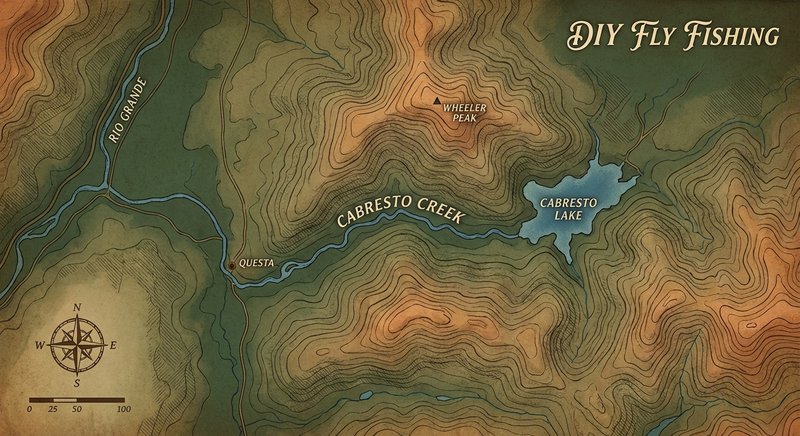
Cabresto Lake
Fly fishing in New Mexico · Intermediate · Best seasons: Summer, Fall
Target Species
Rainbow Trout, Cutthroat Trout
About This Water
High mountain lake near Questa. Stocked rainbow and cutthroat trout.
Fishing Recommendations
Welcome to one of Northern New Mexico’s hidden high-altitude gems. As your guide, I can tell you that Cabresto Lake is a special destination for anglers looking to escape the crowds of the Red River or the Rio Grande. Nestled at approximately 9,100 feet in the Latir Peaks Wilderness, this lake offers an authentic alpine experience with some of the most beautiful trout in the state.
🎣 Location Overview
Cabresto Lake is a stunning, 15-acre alpine reservoir located north of Questa, New Mexico. What makes this water special is its transition point: it serves as the gateway to the Latir Peaks Wilderness. Unlike many high-mountain lakes that require a 5-mile hike, Cabresto is accessible by vehicle (though the road is a challenge), allowing you to bring a float tube or kayak into the backcountry.
The water is crystal clear and cold year-round. It is surrounded by dense coniferous forests and steep mountain ridges. The lake was renovated several years ago to improve the dam, and since then, the fishery has rebounded beautifully. It offers a mix of "drive-to" accessibility with "wilderness" quality fishing.
🐟 Target Species & Behavior
The lake is managed primarily for Rainbow Trout and the native Rio Grande Cutthroat Trout.
- Rio Grande Cutthroats: These are the crown jewels of New Mexico. They are opportunistic feeders but can be extremely "looky" in the clear water. They tend to cruise the shoreline drop-offs and the inlet where Cabresto Creek enters the lake.
- Rainbow Trout: Often more aggressive than the cutthroats, these fish hold in the deeper pockets during the heat of the day but move into the shallows during the morning and evening hatches.
- Behavior: Because the water is so clear, these fish are easily spooked. They rely heavily on aquatic insect hatches (midges, mayflies) and terrestrial "drifts" from the surrounding forest (ants, beetles).
📅 Best Times to Fish
Optimal Seasons
- Summer (Late June – August): This is the prime window. The high elevation means the lake stays cool when the valley floors are scorching. This is when the insect life is most active.
- Fall (September – October): My personal favorite time. The Rio Grande Cutthroats begin to color up, and the Brook Trout (found in the feeder creeks) become aggressive. The aspen trees turning gold in the canyon make for a spectacular backdrop.
Best Times of Day
- The "Magic Hour": The hour before sunset is legendary here. As the wind dies down, the lake becomes a mirror, and the surface will "boil" with rising trout.
- Mid-Morning: Once the sun hits the water and warms the surface slightly, the midge activity usually picks up.
🪰 Recommended Flies & Techniques
Top Fly Patterns
- Dries: Parachute Adams (#14-18), Elk Hair Caddis (#14-16), Royal Wulff (#14-16), and Amy’s Ant (#12-14) for late summer terrestrial action.
- Nymphs: Zebra Midges (Black or Red, #18-22), Pheasant Tail Nymphs (#16-18), and Hare’s Ear (#16).
- Streamers: Woolly Buggers in Olive or Black (#10-12). Small Pine Squirrel leeches are also deadly here.
Effective Techniques
- The "Duo" (Dry-Dropper): This is the most effective way to fish the shoreline. Hang a small Zebra Midge 18-24 inches below a buoyant Parachute Adams.
- Stillwater Stripping: If the fish aren't rising, use a slow, pulsed retrieve with a small olive Woolly Bugger. Focus on the transition zones where the shallow shelf drops into the deep blue water.
- Sight Casting: On calm days, use polarized glasses to spot cruising Cutthroats along the dam and the western shore. Lead the fish by 3-5 feet and let your fly sit motionless.
💡 Pro Tips & Local Knowledge
- The Inlet is Key: Hike around to the far end of the lake where Cabresto Creek flows in. The moving water brings in a constant supply of food and oxygen. This is the most consistent spot for native Cutthroats.
- Go Small and Light: Because the water is gin-clear, I recommend using 5X or 6X fluorocarbon tippet. If you use 4X, you will likely see fish turn away at the last second.
- Bring a Float Tube: While you can fish from the bank, a float tube or kayak allows you to reach the steep eastern cliffside that is inaccessible by foot. The biggest fish often hug those underwater rock faces.
- The Latir Hike: If you are feeling adventurous, the trail from Cabresto Lake leads up to the Latir Lakes. These are higher-altitude alpine lakes that require a strenuous hike but offer some of the best Cutthroat fishing in the American Southwest.
⚠️ Important Information
- Access: The road to Cabresto Lake (Forest Road 134) is gravel and can be rough. While a high-clearance 2WD can sometimes make it in dry weather, a 4WD vehicle is strongly recommended, especially after afternoon monsoon rains which can make the road muddy and slick.
- Regulations: New Mexico Department of Game and Fish (NMDGF) regulations apply. You must have a valid NM Fishing License and a Habitat Stamp.
- Wilderness Ethics: You are on the edge of the Latir Peaks Wilderness. Please practice Leave No Trace principles. Pack out everything you pack in.
- Safety: Afternoon thunderstorms are common in the summer. If you see clouds building over the peaks, get off the water. Lightning at 9,000 feet is no joke.
Tight lines, and enjoy the solitude of the Sangre de Cristo Mountains!
Bug Hatches & Matching Flies
| Hatch | Type | Peak months | Time of day | Hook sizes | Matching flies |
|---|---|---|---|---|---|
| Chironomids Chironomidae | midge | June, July | All Day | #18-24 | Zebra Midge #18-22, Ice Cream Cone #16-20, Griffith's Gnat #18-22 |
| Callibaetis Callibaetis spp. | mayfly | July, August, September | Late Morning to Afternoon | #12-16 | Parachute Adams #14-16, Callibaetis Spinner #14-16, Hare's Ear Nymph #12-16 |
| Blue-Winged Olive Baetis spp. | mayfly | May, September, October | Mid-day | #18-22 | BWO Sparkle Dun #18-22, RS2 #20-22, Pheasant Tail #18-20 |
| Damselfly Enallagma spp. | terrestrial | July, August | Mid-day | #10-14 | Marabou Damsel #10-14, Adult Damsel #12-14 |
| Cinnamon Caddis Ceraclea spp. | caddis | July, August | Evening | #14-16 | Elk Hair Caddis (Cinnamon) #14-16, LaFontaine's Deep Sparkle Pupa #14-16 |
| Terrestrial Ants Formicidae | terrestrial | August, September | Afternoon | #14-18 | Cinnamon Ant #14-18, Black Foam Ant #14-16 |
| Black Beetle Coleoptera | terrestrial | July, August | Afternoon | #12-16 | Foam Beetle #12-16, Peacock Beetle #14-16 |
| Freshwater Shrimp (Scuds) Gammarus spp. | crustacean | May, June, October | All Day | #14-18 | Ray Charles #14-18, Scud (Olive or Orange) #14-18 |