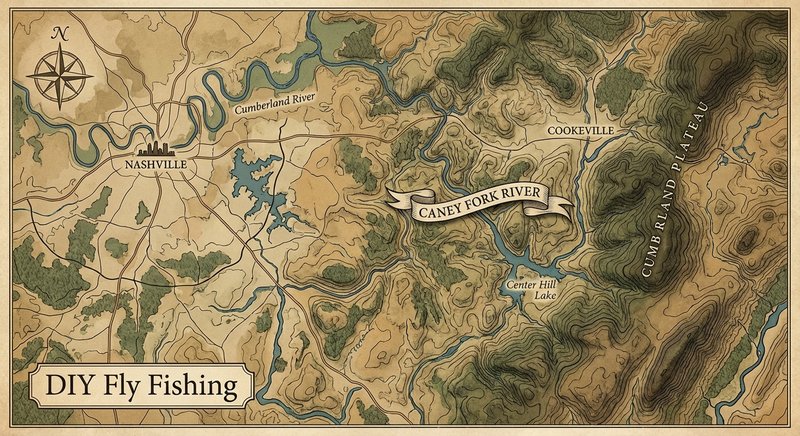
Caney Fork River
Fly fishing in Tennessee · Beginner · Best seasons: Spring, Summer, Fall, Winter
Target Species
Brown Trout, Rainbow Trout
About This Water
Central Tennessee tailwater with excellent trout fishing. Brown and rainbow trout in scenic canyon.
Fishing Recommendations
As a guide who has spent countless hours navigating the tailwaters of Middle Tennessee, I can tell you that the Caney Fork River is the crown jewel of the region. Located about an hour east of Nashville, it is a classic tailwater fishery flowing from the Center Hill Dam. It offers some of the best opportunities in the Southeast to land a trophy-sized Brown Trout.
Here is your comprehensive guide to fly fishing the Caney.
🎣 Location Overview
The Caney Fork is a 28-mile stretch of cold, clear water winding through rolling hills and limestone bluffs. Because it is a tailwater (fed from the bottom of Center Hill Lake), the water temperature remains a consistent 50–58 degrees year-round, making it a trout sanctuary even in the sweltering Tennessee summer.
What makes it special is the biomass. The river is incredibly fertile, packed with midges, scuds, and sowbugs. While it is heavily stocked with Rainbows, the Brown Trout are the real draw—they can grow to massive proportions here, with some specimens pushing the 10-to-15-pound mark.
🐟 Target Species & Behavior
- Rainbow Trout: These are the "willing participants." They are frequently stocked and tend to congregate in faster riffles and at the heads of pools. They are less wary than the Browns and will rise more readily to dry flies.
- Brown Trout: The "shadows of the river." Browns here are notoriously moody and highly sensitive to light. They prefer structure—undercut banks, sunken logs, and deep ledge holes. To catch a big Caney Brown, you often have to "hunt" them rather than just fish for them.
- Feeding Habits: For 90% of the year, these fish are eating sub-surface. Their diet consists mostly of microscopic midges (larvae and pupae), scuds, and sowbugs. During high water or low light, big Browns switch to high-protein meals like sculpins and smaller trout.
📅 Best Times to Fish
The most critical factor on the Caney is the TVA Generation Schedule. You must check the schedule before heading out.
- Spring (March – May): Peak season. The Sulphur hatch usually starts in late April or May. This is the best time for dry fly action.
- Summer (June – August): Great fishing, but can be crowded. Focus on terrestrial patterns (ants/beetles) near the banks.
- Fall (September – November): The Brown Trout move toward their spawning run. Streamer fishing becomes electric as they get aggressive. Note: Please avoid fishing for trout actively sitting on gravel nests (redds).
- Winter (December – February): The "quiet season." Midge fishing is king. You’ll have the river to yourself, and the big Browns are often more active during the day due to lower light levels.
🪰 Recommended Flies & Techniques
Nymphing (The Bread & Butter)
This is the most effective way to catch fish on the Caney. Use a 9ft 5wt or 6wt rod with a long leader (9–12ft) tapered to 6X tippet.
- Zebra Midge: Sizes 18–22 in red, black, or olive.
- Sowbugs/Scuds: Size 16–20 in "Ray Charles" grey or soft olive.
- Pheasant Tail: Size 18–20 (unweighted for the film).
Dry Fly Action
When the Sulphurs are popping or midges are hovering:
- Parachute Sulphur: Size 16–18.
- Griffith’s Gnat: Size 20–22 (for midge clusters).
- Chernobyl Ant: Size 8–12 (Summer terrestrial).
Streamer Fishing
Best during high water (from a boat) or low light conditions.
- Woolly Bugger: Black or Olive, size 6–10.
- Galloup’s Sex Dungeon: For those targeting the "river monsters."
💡 Pro Tips & Local Knowledge
- The "Caney Twitch": When fishing small midges under an indicator, if the float even pauses or "shivers," set the hook. These fish take subtly.
- Long and Light: The water is often crystal clear and slow. If you aren't getting bites, drop to 7X fluorocarbon tippet. It makes a massive difference here.
- Low Light is Your Friend: The biggest Browns are rarely caught in the midday sun. Fish the "magic hour"—30 minutes before sunset is when the monsters come out of the depths to feed in the shallows.
- Stealth Matters: Avoid wading deeply and splashing. On the Caney, fish often hold in water less than 12 inches deep right against the bank. If you walk in without looking, you've already spooked the best fish.
⚠️ Important Information
Access Points
- Center Hill Dam (The Steps): Best for wading during zero generation.
- Happy Hollow: Great mid-river access for both waders and boat launches.
- Betty’s Island: The lower end of the trout water. Best for floating; wading is limited here.
Regulations & Safety
- License: You need a Tennessee Fishing License AND a Trout Permit.
- Trophy Section: Pay close attention to the "Buffer Zone" and size limits. There is a protected slot limit for Rainbows and Browns; generally, you can only keep one fish over 20 inches.
- SAFETY WARNING: The Caney Fork can be dangerous. When the sirens at the dam go off, or if you see the water level rising/getting muddy, exit the river immediately. The water rises rapidly and can trap waders on gravel bars.
Expert Advice: Download the TVA App on your phone. Check the "Center Hill" generation schedule every 30 minutes. If they are running two generators, the river is for boats only. If it's zero generators, it's a wader’s paradise.
Tight lines!
Bug Hatches & Matching Flies
| Hatch | Type | Peak months | Time of day | Hook sizes | Matching flies |
|---|---|---|---|---|---|
| Midges Chironomidae | midge | January, February, March, December | All day | #18-24 | Zebra Midge #18-22, Griffith's Gnat #20-22, Palomino Midge #20-24 |
| Sulphurs Ephemerella invaria/dorothea | mayfly | May, June, July | Late Afternoon/Evening | #14-18 | Parachute Sulphur #16-18, Sulphur CDC Emerger #16-18, Pheasant Tail Nymph #14-18 |
| Blue-Winged Olives Baetis | mayfly | March, April, October, November | Midday/Overcast days | #18-22 | BWO Sparkle Dun #18-22, RS2 #20-22, WD-40 #18-22 |
| Sowbugs Asellus aquaticus | terrestrial | All | All day | #14-18 | Ray Charles #14-18, Soft Hackle Sowbug #16-18, Tailwater Sowbug #14-16 |
| Scuds Gammarus | terrestrial | All | All day | #14-18 | Rainbow Scud #14-18, Flashback Scud #16-18 |
| Tan Caddis Hydropsyche | caddis | April, May, September | Evening | #14-18 | Elk Hair Caddis #14-18, Holy Grail Caddis #16-18, LaFontaine Sparkle Pupa #16-18 |
| Black Caddis Brachycentrus | caddis | March, April | Afternoon | #16-18 | Black Elk Hair Caddis #16-18, Zebra Midge (Black/Silver) #18 |
| Terrestrials Formicidae/Coleoptera | terrestrial | July, August, September | Midday/Afternoon | #10-16 | Chernobyl Ant #10-14, Black Foam Beetle #14-16, Fur Ant #16-18 |