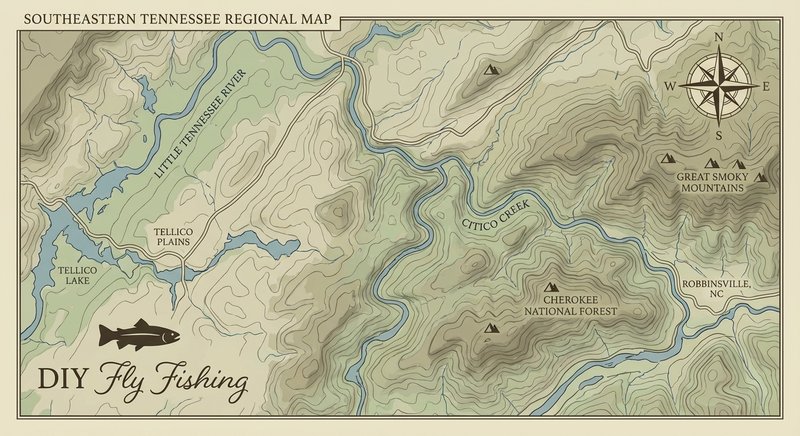
Citico Creek
Fly fishing in Tennessee · Intermediate · Best seasons: Spring, Summer, Fall
Target Species
Rainbow Trout, Brown Trout
About This Water
Cherokee National Forest stream with wild trout. Remote wilderness fishing experience.
Fishing Recommendations
Citico Creek, located in the Cherokee National Forest of Monroe County, Tennessee, is one of the state’s most pristine and rugged fly fishing destinations. Often overshadowed by its famous neighbor, the Tellico River, Citico offers a more secluded and wild experience for anglers willing to put in a little extra footwork.
As your guide, here is everything you need to know to find success on Citico Creek.
🎣 Location Overview
Citico Creek is a classic Appalachian freestone stream characterized by its crystal-clear water, massive boulders, and dense rhododendron canopy. It is divided into two distinct personalities:
- The Lower/Roadside Section: Frequently stocked and easily accessible along Citico Road (FS 35).
- The Wilderness Section: Above the confluence of the North and South Forks, the creek enters the Citico Creek Wilderness. Here, the water is remote, the fish are wild, and the scenery is spectacular.
Anglers love Citico because it offers "solitude by the mile." Even when the Tellico is crowded, you can often find a half-mile stretch of Citico all to yourself.
🐟 Target Species & Behavior
- Rainbow Trout: In the lower sections, you will find healthy stocked rainbows that range from 9 to 14 inches. As you move into the higher elevations and tributaries, you’ll encounter "wild" rainbows—smaller (6–9 inches) but incredibly vibrant and aggressive.
- Brown Trout: Citico is known for holding some "special" wild brown trout. These fish are wary, nocturnal, and highly predatory. They tend to hold in the deepest, darkest undercut banks and beneath large mid-stream boulders in the Wilderness section.
- Behavior: Due to the clarity of the water, these fish are "spooky." If they see your shadow or your fly line splashing, the pool is finished. They hold in oxygenated "pocket water" during the summer and move to the slower, deeper tail-outs of pools during cooler months.
📅 Best Times to Fish
- Spring (March – May): Prime Time. This is when the major hatches occur (Quill Gordons, March Browns, and Blue Quills). The water temperatures rise into the 50s, making the fish highly active.
- Summer (June – August): Best for the Wilderness section. While the lower creek can get warm, the upper reaches stay cool. This is the season for terrestrial fishing (ants and beetles).
- Fall (September – November): A favorite for many. The water levels are often low, requiring extreme stealth, but the Brown Trout become more aggressive as they prepare for the spawn. The fall colors in the Cherokee National Forest are a world-class backdrop.
- Best Time of Day: During Spring/Fall, 10:00 AM to 4:00 PM is best. In the heat of Summer, focus on the "magic hour"—the first two hours of light and the last hour before dark.
🪰 Recommended Flies & Techniques
Top Fly Patterns
- Dry Flies: Parachute Adams (#14-18), Yellow Stimulator (#12-16) to mimic stoneflies, and the Elk Hair Caddis (#14-16).
- Nymphs: Bead-head Pheasant Tail (#14-18), Prince Nymph (#12-16), and the "Sexy Walt’s Worm" (bead-head).
- Terrestrials: Black Foam Ants (#16-18) and Green or Cinnamon Beetles (#14-16).
- Streamers: Wooly Buggers in Olive or Black (#8-10) for targeting larger Brown Trout in deep holes.
Effective Techniques
- Dry-Dropper Rig: This is the "bread and butter" on Citico. Use a buoyant Stimulator or Parachute Adams as your "indicator" and hang a Pheasant Tail nymph 18–24 inches below it.
- Tight-Line Nymphing: In the heavy pocket water and plunges, keeping your fly line off the water is essential to avoid drag and spooking fish.
- The "Stealth Approach": Fish upstream. Always. By approaching from behind the fish, you stay out of their field of vision.
💡 Pro Tips & Local Knowledge
- Focus on the North Fork: If you want a true wilderness experience with wild fish, hike into the North Fork Citico Creek. It requires a bit of a trek, but the reward is untouched water and aggressive wild trout.
- The "Tellico Twitch": On the lower stocked sections, if a fish is looking at your nymph but not taking, give it a tiny micro-twitch. This often triggers a reaction strike from stocked rainbows.
- Watch the Water Levels: Citico can "blow out" quickly after heavy rain. Check the USGS gauges for nearby rivers; if the Tellico is spiking, Citico is likely too high to fish safely.
- Dress for Success: Wear drab colors (greens, browns, greys). Bright white or orange shirts will alert the fish to your presence before you even make a cast.
⚠️ Important Information
- Permits: Citico Creek is a "Daily Permit" area. In addition to a standard Tennessee fishing license with a trout flip, you must purchase a Tellico/Citico Daily Permit (Type 098). These are available at local fly shops or online.
- Regulations: Be sure to check the current TWRA (Tennessee Wildlife Resources Agency) guide. Some sections or seasons may have specific lure or bait restrictions (though most fly anglers are naturally compliant).
- Access: Citico Road (FS 35) follows the lower creek. For the upper reaches, you will use the Warden Fields trailhead.
- Safety: This is Bear Country. Store food properly if camping. Also, cell service is non-existent once you turn off the main highway; let someone know your itinerary.
Tight lines, and enjoy the solitude of one of Tennessee's finest mountain streams!
Bug Hatches & Matching Flies
| Hatch | Type | Peak months | Time of day | Hook sizes | Matching flies |
|---|---|---|---|---|---|
| Quill Gordon Epeorus pleuralis | mayfly | March, April | Afternoon | #12-14 | Quill Gordon Dry #12-14, Pheasant Tail Nymph #12-14 |
| Blue-Winged Olive (BWO) Baetis | mayfly | March, April, October, November | Midday | #18-22 | Parachute Adams #18-22, RS2 #20-22 |
| American March Brown Maccaffertium vicarium | mayfly | April, May | Afternoon | #10-12 | March Brown Dry #10-12, Gold Ribbed Hare's Ear #10-14 |
| Yellow Sally Isoperla | stonefly | May, June, July | Late Afternoon/Evening | #14-16 | Yellow Stimulator #14-16, Little Yellow Sloan #14-16 |
| Cinnamon Caddis Hydropsyche | caddis | May, June, September | Evening | #14-18 | Elk Hair Caddis (Cinnamon) #14-18, Holy Grail #16 |
| Light Cahill Stenacron interpunctatum | mayfly | June, July | Evening | #12-14 | Light Cahill #12-14, Cream Variant #14 |
| Golden Stonefly Acroneuria | stonefly | May, June | Morning/Evening | #8-12 | Golden Stone Nymph #8-12, Kaufmann's Stone #8-10 |
| Eastern Terrestrials Formicidae / Coleoptera | terrestrial | July, August, September | All Day | #12-18 | Black Foam Ant #16-18, Green Weenie #12-14 |