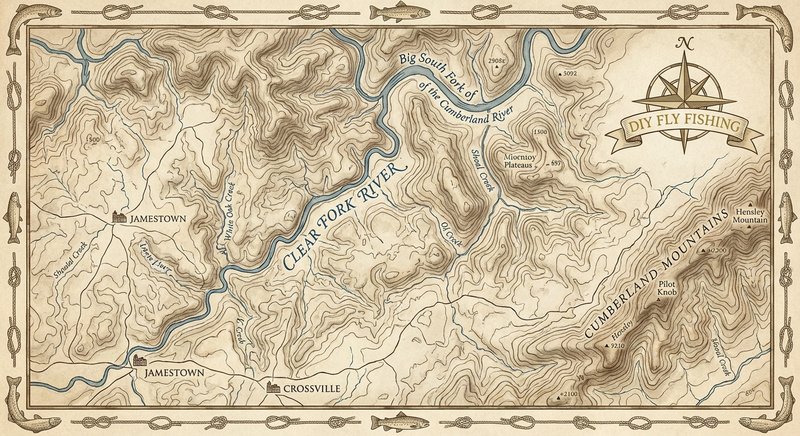
Clear Fork River
Fly fishing in Tennessee · Intermediate · Best seasons: Spring, Summer, Fall
Target Species
Smallmouth Bass, Rock Bass
About This Water
Big South Fork tributary with excellent smallmouth. Remote canyon fishing.
Fishing Recommendations
The Clear Fork River is one of the true gems of the Cumberland Plateau in North Tennessee. As a major tributary to the Big South Fork of the Cumberland River, it flows through rugged sandstone gorges, offering some of the most scenic and wild warm-water fly fishing in the Southeast.
Here is your comprehensive guide to fly fishing the Clear Fork.
🎣 Location Overview
The Clear Fork is a classic free-flowing plateau river. What makes it special is its wildness. Much of the river is encased within the Big South Fork National River and Recreation Area, meaning you are fishing in a primitive, boulder-strewn environment far from the noise of highways.
The water characteristics vary from deep, emerald-green pools to fast-moving "shoals" (riffles) and massive sandstone boulder gardens. Because the water is generally clear (as the name suggests) and the bottom is composed of sandstone shelf and cobble, it is a visual paradise for anglers who enjoy "reading" water.
🐟 Target Species & Behavior
Smallmouth Bass (The Bronze Back)
The "Smallies" here are hard-fighting and lean. Unlike lake-run fish, these river residents spend their lives fighting current.
- Behavior: They are ambush predators. They hold in the "seams" where fast water meets slow water, or behind large boulders that break the current.
- Feeding: Their diet consists heavily of crayfish (craw dabs) and hellgrammites, along with various minnows like shiners and dace.
Rock Bass (Redeye)
Plentiful and aggressive, Rock Bass are the "gatekeepers" of the river.
- Behavior: They prefer the slower, wood-choked sections and the deep shadows of undercut banks or large rocks.
- Feeding: They will hit almost anything a smallmouth will, but they tend to stay tighter to structure.
📅 Best Times to Fish
Optimal Seasons
- Spring (Mid-April to June): This is the prime window. As water temperatures hit the 55°F–60°F mark, Smallmouth become highly active. The "Pre-spawn" and "Post-spawn" periods offer the best chance at a trophy.
- Summer (July to August): Great for topwater action. The water levels drop, concentrating fish in the deeper pools and oxygenated riffles.
- Fall (September to October): As the water cools, fish feed heavily to prepare for winter. The fall colors in the gorge are spectacular.
Best Times of Day
- Low Light: Early morning (dawn to 9:00 AM) and late evening (6:00 PM to dark) are peak times for topwater.
- Mid-Day: During the heat of summer, focus on the deepest shadows or the fastest, bubbliest water where oxygen levels are highest.
🪰 Recommended Flies & Techniques
Top Fly Patterns
- Topwater: BoogleBugs (Poppers) in yellow or black, Stealth Bombers (Size 4-6), and Murdich Minnows (fished on the surface or just below).
- Sub-surface: Clouser Minnows (Chartreuse/White or Olive/White), Near Nuff Crawfish, and Hellgrammite imitations (Pat’s Rubber Legs in black/coffee works surprisingly well here).
- The "Local Secret": A Wooly Bugger in Olive or Black with a bit of flash. It mimics everything from a baitfish to a crawdad.
Techniques & Presentation
- The "Crayfish Hop": Use a weighted fly and let it sink to the bottom. Use short, erratic strips to mimic a fleeing crawfish.
- Swing the Riffles: Cast across the current in the shoals and let your streamer swing through the tail-out. Smallmouth often sit at the very end of a pool before the water breaks into the next rapid.
- Topwater Chugging: When using poppers, slow down. Pop it once, let the rings disappear, and wait. Often, the strike comes when the fly is motionless.
💡 Pro Tips & Local Knowledge
- Master the "Eddy": On the Clear Fork, some of the biggest fish sit in the "back-eddies" (where the water flows upstream) behind massive boulders. Cast into the reverse current and let your fly be carried toward the rock.
- Wading Safety: This is "slick rock" country. The sandstone can be incredibly slippery. Felt-soled boots or boots with aluminum studs are highly recommended.
- Water Levels are Key: Always check the USGS gauge for the Clear Fork at Burnt Mill Bridge.
- Too High: Above 500 cfs is difficult and dangerous to wade.
- Ideal: 100 cfs to 300 cfs is the "sweet spot" for wading.
- Stay Stealthy: Because the water is clear, these fish can see you. Wear earth-toned clothing and avoid splashing as you wade.
⚠️ Important Information
Access Points
- Burnt Mill Bridge: A popular and easy access point with a loop trail. Good fishing both upstream and downstream.
- Brewster Bridge (Hwy 52): Offers access to some great water, though it can get crowded on weekends.
- Peter’s Ford: A more remote access point that requires a bit more hiking/effort but rewards you with less pressured fish.
Regulations & Permits
- License: A valid Tennessee Fishing License is required.
- Big South Fork Rules: If you are within the National River and Recreation Area, be aware of federal park rules. Pack out all trash (Leave No Trace).
- Creel Limits: While keep-limits exist, most fly anglers on the Clear Fork practice 100% Catch and Release for Smallmouth Bass to preserve the slow-growing highland population.
Special Considerations
- Cell Service: Expect zero cell service once you drop into the gorge. Tell someone where you are going and when you expect to be back.
- Wildlife: This is black bear and copperhead country. Keep your eyes open and store food properly if camping.
Bug Hatches & Matching Flies
| Hatch | Type | Peak months | Time of day | Hook sizes | Matching flies |
|---|---|---|---|---|---|
| Blue Winged Olive Baetis | mayfly | March, April, October, November | Midday/Afternoon | #18-22 | RS2 #20-22, Parachute Adams #18-20, BWO Emerger #18-22 |
| Quill Gordon Epeorus pleuralis | mayfly | March, April | Midday | #12-14 | Quill Gordon Dry #12-14, Hare's Ear Nymph #12-14 |
| March Brown Maccaffertium vicarium | mayfly | April, May | Afternoon | #10-14 | March Brown Dry #12-14, Gold Ribbed Hare's Ear #10-12, March Brown Wet #12-14 |
| Sulphur Ephemerella invaria | mayfly | May, June | Evening | #14-18 | Sulphur Parachute #14-16, Pheasant Tail Nymph #16-18, Sulphur Emerger #16-18 |
| Light Cahill Stenacron interpunctatum | mayfly | June, July, August | Evening | #12-16 | Light Cahill Dry #12-16, Cream Mid-Size Nymph #14 |
| Tan Caddis Hydropsyche | caddis | April, May, June, September | Late Afternoon/Evening | #14-18 | Elk Hair Caddis #14-18, Holy Grail Caddis #14-16, Pupa-style Caddis #14-18 |
| Golden Stonefly Hesperoperla pacifica | stonefly | June, July | Evening/Night | #8-12 | Golden Stone Nymph #8-10, Stimulator (Yellow) #10-12, Pat's Rubber Legs #8-12 |
| Common Terrestrials Formicidae/Coleoptera | terrestrial | July, August, September | All Day | #12-18 | Cinnamon Ant #16-18, Black Foam Beetle #14-16, Dave's Hopper #10-12 |