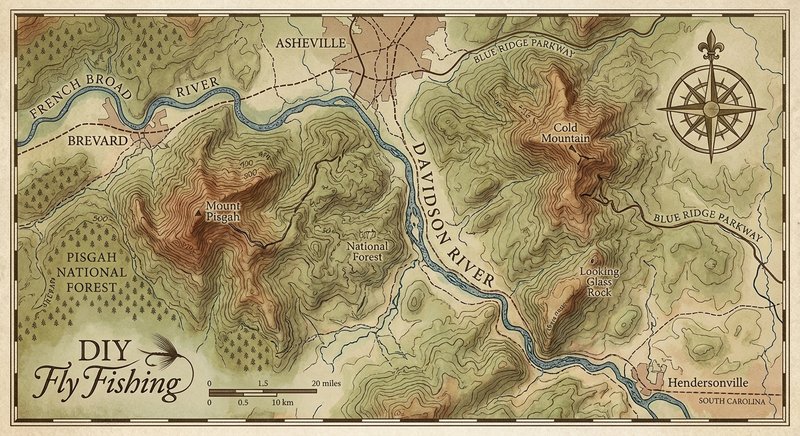
Davidson River
Fly fishing in North Carolina · Intermediate · Best seasons: Spring, Summer, Fall
Target Species
Brown Trout, Rainbow Trout, Brook Trout
About This Water
Premier trout stream in Pisgah National Forest. Excellent hatches and wild trout population.
Fishing Recommendations
Welcome to the Davidson River, often referred to by local guides as the "Ph.D. Water" of the Southeast. Located just outside Brevard, North Carolina, in the Pisgah National Forest, the Davidson is a premier fly fishing destination known for its crystal-clear water, technical challenges, and trophy-sized trout.
As your guide, I’m going to break down how to unlock the secrets of this legendary river.
🎣 Location Overview
The Davidson River is a freestone river that benefits from the cooling influence of the Pisgah Forest canopy and a unique nutrient boost from the Pisgah Forest National Fish Hatchery located on its banks.
What makes it special is the visibility. The water is exceptionally clear, meaning you can often sight-fish for 20-plus-inch trout. However, this is a double-edged sword: if you can see them, they can definitely see you. It is a highly pressured river, making the fish some of the most "educated" in the country. Anglers love it because it demands your absolute best casting, stealth, and presentation.
🐟 Target Species & Behavior
- Brown Trout: The kings of the Davidson. These are often wild, wary, and reach impressive sizes (20"+). They hold in deep pools, under dark undercut banks, and near heavy woody debris.
- Rainbow Trout: Found throughout the river. They tend to hold in the faster riffles and "head-of-pool" transitions. While many are wild, some are "hatchery escapees" that have grown large and smart in the river.
- Brook Trout: While less common in the lower sections, the headwaters and high-altitude tributaries of the Davidson hold beautiful, wild Southern Appalachian Brookies.
- Behavior: These fish are opportunistic but highly selective. They will often inspect a fly for several feet before rejecting it if the drift isn't perfect or the tippet is too thick.
📅 Best Times to Fish
Optimal Seasons
- Spring (March – May): The prime window. This is when you’ll see the best hatches (Quill Gordons, March Browns, and Hendrickson’s). The fish are active after winter and looking to bulk up.
- Summer (June – August): Unlike many Southern rivers, the Davidson stays cool enough to fish safely due to the forest shade. This is Terrestrial Season (ants, beetles, and inchworms).
- Fall (September – November): A favorite for many. The Brown Trout begin their spawning run (late Oct/Nov), and the BWO (Blue Winged Olive) hatches are consistent on drizzly days.
Prime Fishing Windows
- Early Morning: Best during summer to beat the tubers and the heat.
- Low Light/Overcast Days: The high-pressure "Ph.D. fish" feel more comfortable coming out of hiding when the sun isn't directly overhead.
- Mid-Week: If possible, avoid weekends to reduce competition with other anglers and forest visitors.
🪰 Recommended Flies & Techniques
Top Fly Patterns
- Nymphs: This is 80% of the game here.
- The Davidson River Midge: #22-26 in black, cream, or olive.
- Zebra Midges: #20-24 (Silver or Copper bead).
- Pheasant Tail/Frenchies: #18-22 for BWO imitations.
- Squirmy Worms/Egg Patterns: Specifically effective near the Hatchery Run.
- Dry Flies:
- Parachute Adams: #18-22 (the ultimate "searcher").
- Chernobyl Ant / Foam Beetles: Summer staples.
- Quill Gordon: #12-14 (Early Spring).
- Streamers:
- Black or Olive Woolly Buggers: Small (#10-12) usually work better than giant articulated patterns here.
Presentation Tips
- Long Leaders: Use 12-foot to 15-foot leaders tapered down to 6x or 7x fluorocarbon tippet. Anything heavier will likely result in a "refusal."
- The "Micro-Shot": Use the smallest possible split shot to get your midge down without creating a splash or unnatural drift.
- Sight Fishing: Don't just blind-cast. Spend 10 minutes watching a pool. Locate a fish, watch its feeding rhythm, and then make your move.
💡 Pro Tips & Local Knowledge
- The Hatchery Run: The stretch of water adjacent to the Fish Hatchery is famous. It holds the largest fish because they feed on the pellets and "waste" that wash out of the hatchery pipes. It is also the most crowded.
- Go Skinny: Many anglers walk right past the "thin" water between the big pools. Some of the largest Browns will tuck into 6 inches of water under a branch—fish the "in-between" spots.
- Stealth is Mandatory: Wear drab colors (camo, olive, or tan) to blend into the forest. Move slowly. If you wade like a hippo, you’ll see "V-wakes" of trout leaving the area before you even pull line off your reel.
- The "Midge Drop": If you see fish rising but can't see what they are eating, it's likely #24-26 midges. Drop a tiny midge nymph 12 inches behind a small dry fly.
⚠️ Important Information
- Regulations: Most of the Davidson is Catch and Release, Artificial Lures Only (CRAO). This means no bait and no keeping fish. Always check the NC Wildlife Resources Commission signs at access points.
- Access: Access is excellent. Forest Service Road 475 runs alongside much of the river, with numerous pull-offs and well-maintained trails.
- Wading Safety: The rocks in the Davidson are notoriously "greasy." Felt-soled boots or studs are highly recommended.
- Etiquette: Because it's a popular river, give other anglers plenty of space. If a pool is occupied, move on—there is plenty of water to go around.
Guide’s Final Word: The Davidson will humble you one day and reward you with the fish of a lifetime the next. Bring your thinnest tippet, your smallest flies, and your most patient mindset. 🎣
Bug Hatches & Matching Flies
| Hatch | Type | Peak months | Time of day | Hook sizes | Matching flies |
|---|---|---|---|---|---|
| Blue Winged Olive Baetis / Pseudocloeon | mayfly | March, April, October, November | Late Morning/Afternoon | #18-24 | RS2 #20-22, BWO Parachute #18-22, Pheasant Tail #18-20 |
| Midges Chironomidae | midge | January, February, March, December | All Day | #20-28 | Zebra Midge #20-24, Griffith's Gnat #20-24, Mercury Midge #20-22 |
| Sulphurs Ephemerella dorothea | mayfly | May, June | Late Afternoon/Evening | #16-18 | Sulphur Parachute #16-18, Sulphur CDC Emerger #16-18, Split Case Sulphur #16 |
| Quill Gordon Epeorus pleuralis | mayfly | March | Midday | #12-14 | Quill Gordon Dry #12-14, Quill Gordon Wet #12-14 |
| Yellow Sally Isoperla | stonefly | May, June, July | Late Afternoon/Evening | #14-16 | Yellow Sally Foam Dry #14-16, Little Yellow Stone Nymph #14-16 |
| Light Cahill Stenacron interpunctatum | mayfly | June, July | Evening | #14-16 | Light Cahill Dry #14-16, Cream Usual #14-18 |
| Cinnamon Caddis Hydropsyche | caddis | May, June, July, August | Evening | #14-18 | Elk Hair Caddis (Tan) #14-18, Holy Grail Caddis #14-16, Pupa-X #16-18 |
| Terrestrials Formicidae / Coleoptera | terrestrial | July, August, September | Late Morning/Afternoon | #12-20 | Black Foam Ant #16-20, Crowe Beetle #14-18, Pink Albert #12-14 |