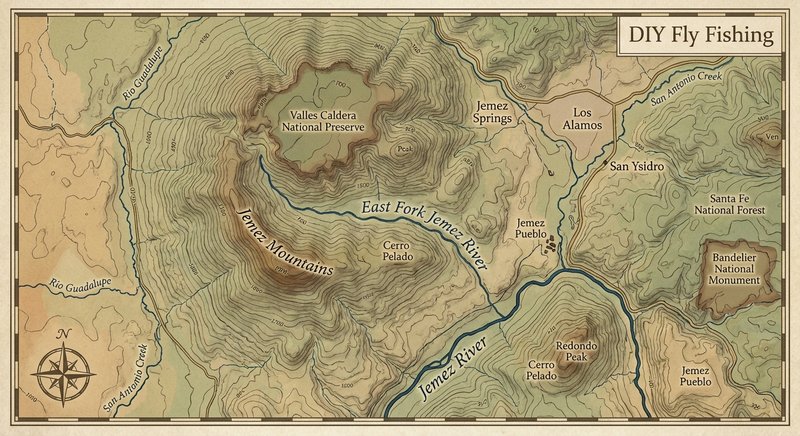
East Fork Jemez River
Fly fishing in New Mexico · Intermediate · Best seasons: Summer, Fall
Target Species
Brown Trout, Rainbow Trout
About This Water
Upper reaches of the Jemez with wild browns. Scenic fishing in Valles Caldera.
Fishing Recommendations
The East Fork of the Jemez River is one of New Mexico’s true fly fishing gems. Located within the stunning volcanic landscape of the Valles Caldera National Preserve and the Santa Fe National Forest, it offers a distinct "split personality" fishing experience—moving from high-alpine meadow meanders to rugged, pocket-water canyons.
As your guide, here is the breakdown for tackling this technical and beautiful fishery.
🎣 Location Overview
The East Fork is famous for its dramatic scenery and its accessibility. It is divided into two primary sections that offer very different experiences:
- The Valles Caldera (The Meadow): This is "Big Sky" fishing. The river snakes through a massive volcanic crater (caldera) in tight, deep oxbows. It looks like a miniature version of a Montana spring creek.
- The Las Conchas/Canyon Stretch: Below the preserve, the river plunges into a forested canyon filled with boulders, plunges, and pocket water.
What makes it special is the stealth required. The water is crystal clear and often small, making it a "hunter’s" fishery where your approach is just as important as your cast.
🐟 Target Species & Behavior
- Brown Trout: The dominant species. These are wild, wary, and highly territorial. In the meadow sections, they hold tight against undercut banks. In the canyon, they sit in the soft eddies behind boulders.
- Rainbow Trout: Found more frequently in the lower stretches and near the campgrounds where some stocking occurs, though wild rainbows are present.
- Behavior: These fish are opportunistic but easily "spooked." In the summer, they are looking up for terrestrials. Because the river is small, they are very sensitive to shadows and heavy footsteps. If you see them before you cast, they likely already know you’re there.
📅 Best Times to Fish
Optimal Seasons
- Summer (Late June – August): This is the prime window for Terrestrial Fishing. However, this coincides with the "Monsoon Season." Afternoon thunderstorms are common; fish early to avoid the rain and watch for flash floods.
- Fall (September – October): My personal favorite. The Brown trout become aggressive as they prepare to spawn, the aspens turn gold, and the crowds thin out. The water is lower and requires technical "fine and far off" presentations.
Best Times of Day
- Summer: 7:00 AM to 11:00 AM (before the sun hits the water directly) and 5:00 PM to Dusk.
- Fall: 10:00 AM to 4:00 PM. The water needs a little sun to wake up the bugs.
🪰 Recommended Flies & Techniques
Top Fly Patterns
- Dry Flies: Parachute Adams (#16-22), Elk Hair Caddis (#14-18), and Hi-Vis Griffith’s Gnat (#18-22).
- Terrestrials (Summer Gold): Dave’s Hopper (#12-14), Amy’s Ant (#12), and Black Ants (#16).
- Nymphs: Bead-head Pheasant Tails (#16-20), Zebra Midges (Black or Red, #18-22), and Copper Johns (#16-18).
- Streamers: Small Woolly Buggers (Olive or Black, #10-12) can work in the deeper holes of the canyon stretch.
Effective Techniques
- The Dry-Dropper: This is the most effective way to fish the East Fork. Use a buoyant hopper or stimulator as your indicator and hang a small Pheasant Tail or Midge 12–18 inches below it.
- The "Crawl": In the Valles Caldera meadows, you literally need to crawl on your knees to the bank. If you stand tall, your silhouette will clear the pool.
- Dabbling: In the tight canyon brush, don't try to make a 30-foot cast. Use a "bow-and-arrow" cast or simply drop the fly into the pockets.
💡 Pro Tips & Local Knowledge
- Think Small: While "big" flies work in the summer, the Jemez trout often prefer smaller presentations. If you're getting rises but no takes on a #14 Hopper, switch to a #16 or #18 Ant.
- The Undercut Banks: In the meadow sections, the fish aren't in the middle of the stream; they are under the grass hanging off the bank. Your fly needs to land within inches of the grass.
- Water Temperature: The Jemez can get warm in July. If the water hits 68°F, stop fishing to protect the trout. Head higher up the mountain or call it a day.
- Leader Choice: Use a 9-foot 5X or 6X leader. The water is too clear for 4X; you will get refused.
⚠️ Important Information
Access
- Valles Caldera National Preserve: Entry is through the main gate on Highway 4. You may need a vehicle permit (available online or at the gate) to drive into the backcountry.
- Las Conchas Trailhead: Excellent access to the canyon stretch from the Highway 4 pull-off.
Regulations & Permits
- New Mexico Fishing License: Required for all anglers 12 and older.
- Habitat Management & Access Validation: Ensure you have the "HMAV" stamp on your license.
- Valles Caldera Specifics: Some areas within the Preserve are Catch and Release only with barbless hooks. Always check the latest park-specific regulations at the visitor center.
Special Considerations
- Wildlife: This is elk country. During the fall (September), the bulls are bugling and can be aggressive. Keep your distance.
- Sun/Altitude: You are at 8,000+ feet. Wear sunscreen, a hat, and drink twice as much water as you think you need.
Bug Hatches & Matching Flies
| Hatch | Type | Peak months | Time of day | Hook sizes | Matching flies |
|---|---|---|---|---|---|
| Blue-Winged Olive (BWO) Baetis spp. | mayfly | March, April, September, October | Late Morning/Afternoon | #18-22 | RS2 #20-22, Parachute Adams #18-22, Pheasant Tail Nymph #18-20 |
| Pale Morning Dun (PMD) Ephemerella excrucians | mayfly | June, July | Late Morning | #16-18 | PMD Sparkle Dun #16-18, Mercer's Poxyback PMD #16-18, CDC PMD Emerger #16-18 |
| Mother's Day Caddis Brachycentrus occidentalis | caddis | May | Afternoon | #14-16 | Elk Hair Caddis (Olive) #14-16, Peacock Caddis Larva #14-16, LaFontaine's Deep Sparkle Pupa #14-16 |
| Midges Chironomidae | midge | January, February, March, December | Late Morning | #20-24 | Zebra Midge #20-22, Griffith's Gnat #20-24, Top Secret Midge #22-24 |
| Grasshoppers Caelifera | terrestrial | July, August, September | All Day | #8-12 | Joe's Hopper #8-12, Morrish Hopper #10-12, Amy's Ant #10-14 |
| Golden Stonefly Hesperoperla pacifica | stonefly | June, July | Morning/Evening | #8-12 | Pat's Rubber Legs (Golden) #8-12, Stimulator (Yellow/Orange) #10-12, Golden Stone Nymph #10-12 |
| Yellow Sally Isoperla spp. | stonefly | June, July, August | Afternoon/Evening | #14-16 | Yellow Stimulator #14-16, Little Yellow Sloan #14-16, Yellow Sally Foam Run #16 |
| Trico Tricorythodes spp. | mayfly | August, September | Early Morning | #20-24 | Trico Spinner #22-24, Trico Drowned Spinner #22-24, Sunken Trico #22 |