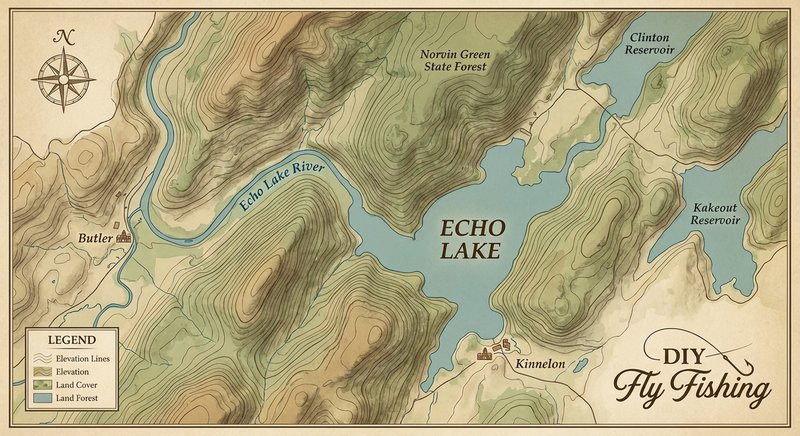
Echo Lake
Fly fishing in New Jersey · beginner · Best seasons: spring, fall
Target Species
Rainbow Trout, Brown Trout
About This Water
Passaic County mountain lake with trout stocking. Scenic setting in Pequannock Watershed.
Fishing Recommendations
As an expert guide who has spent years navigating the diverse waters of the Garden State, I can tell you that Echo Lake (specifically the one located in Mountainside, Union County) is a classic example of New Jersey’s successful "Put-and-Take" trout program.
While New Jersey isn't always the first state that comes to mind for fly fishing, Echo Lake offers a fantastic suburban escape for anglers looking to hook into hard-fighting rainbows and browns during the peak stocking months.
🎣 Location Overview
Echo Lake is a centerpiece of the Union County Park System. It is a relatively shallow, 12-acre impoundment characterized by its accessible shoreline and scenic, park-like atmosphere.
What makes it special for the fly angler is the accessibility. Unlike the high-gradient streams of North Jersey, Echo Lake allows for ample back-casting room in many spots, making it an excellent location for beginners to practice their cast or for seasoned veterans to test new patterns. The water is generally murky to stained (typical of NJ lowland lakes), which means your presentation needs to focus on vibration, silhouette, and movement rather than ultra-fine tippets.
🐟 Target Species & Behavior
The primary targets here are Rainbow Trout and Brown Trout, which are stocked heavily by the NJ Division of Fish and Wildlife.
- Rainbow Trout: These are the most common. They tend to cruise the upper and middle water columns. They are aggressive and often school together near the dam or the inlets after stocking.
- Brown Trout: These are more elusive and tend to hold deeper or near structure (like the bridge pilings or fallen wood). They are more likely to be active during low-light conditions.
- Behavior: Because these are hatchery-raised fish, they initially look for "pellet-like" shapes or bright colors. However, after a few days in the lake, they begin to key into the lake's natural forage: midge larvae, small leeches, and the occasional damselfly nymph.
📅 Best Times to Fish
Echo Lake is a "seasonal" trout fishery. Because it is shallow, it warms up significantly in the summer, making trout survival difficult.
- Spring (Late March – May): This is the prime window. The water temperatures are in the 50s, and the fish are most active.
- Fall (October – November): NJ usually conducts a fall stocking program. This is often the best time for fly anglers as the summer crowds have thinned out, and the trout become aggressive again as temperatures drop.
- Time of Day: Early morning (sunrise to 10:00 AM) and late evening (two hours before sunset) are the "magic hours." On overcast days, the fishing can remain steady all afternoon.
🪰 Recommended Flies & Techniques
Top Fly Patterns
- Streamers:
- Woolly Bugger (Size 8-12) in Black, Olive, or White. This is the #1 producer at Echo Lake.
- Mickey Finn (Size 10): The bright yellow and red colors trigger the "stocked fish" instinct.
- Nymphs (Under an Indicator):
- Zebra Midge (Size 18-20) in Red or Black.
- Hare’s Ear Nymph (Size 14-16).
- Pheasant Tail (Size 14-16).
- The "Attractors":
- Egg patterns (Glo-bug) in Peach or Orange.
- Squirmy Wormies (Pink or Red) – incredibly effective after a rain when the water is turbid.
Techniques
- The "Slow Strip": Cast a Woolly Bugger on a weight-forward floating line (or a 5ft sink tip), let it sink for 5–10 seconds, and use 4-inch slow, rhythmic strips.
- Static Nymphing: Use a slip-indicator to suspend a Zebra Midge or Egg pattern about 4–6 feet deep. The slight wind chop on the lake will give the fly enough movement.
- Float Tubes: If you have one, getting 30 yards off the bank allows you to reach the cooler, deeper center channel where fish congregate as the sun rises.
💡 Pro Tips & Local Knowledge
- Focus on the Inlets: After a heavy rain, the small feeder streams bring in oxygenated water and food. The trout will stack up at the mouth of these inlets.
- The Dam Area: The water near the dam is often the deepest. During the tail end of the spring season (late May), the fish move toward the dam seeking the last bit of cool water.
- Stealth Matters: Even though it’s a public park, the water is shallow. Try to avoid wearing bright white or yellow shirts. Earth tones will keep you from spooking fish cruising the shoreline.
- "Match the Pellet": If the fishing is slow, try a small, tan "mop fly" or a "shuttlecock" midge. Sometimes these fish remember their hatchery days and will hit anything that looks like a high-protein snack.
⚠️ Important Information
- Regulations: You must have a valid New Jersey Fishing License and a Trout Stamp.
- Access: Echo Lake Park is located off Mountain Ave in Mountainside. There is ample parking, and most of the lake is accessible via a paved walking path.
- Catch and Release: While many people "limit out" to take fish home, practicing catch and release helps sustain the fishery between stocking dates.
- Proximity: If Echo Lake is crowded, Nomahegan Park in Cranford is just a few miles away and is also stocked, offering similar conditions.
Guide’s Final Word: Echo Lake is a "numbers" game. It’s about being there the day of or the days following a stocking. Check the NJ Division of Fish & Wildlife stocking schedule online religiously—it is the most important tool in your kit for this specific water!
Bug Hatches & Matching Flies
| Hatch | Type | Peak months | Time of day | Hook sizes | Matching flies |
|---|---|---|---|---|---|
| Midges Chironomidae | midge | March, April, September, October | All Day | #18-24 | Zebra Midge #18-22, Griffith's Gnat #20-24, Palomino Midge #20-22 |
| Blue-Winged Olive Baetis spp. | mayfly | April, May, September, October | Afternoon | #18-22 | RS2 #20-22, Parachute Adams #18-22, Pheasant Tail Nymph #18-20 |
| Cinnamon Sedge Hydropsyche | caddis | May, June | Evening | #14-16 | Elk Hair Caddis #14-16, LaFontaine's Deep Sparkle Pupa #14-16, Iris Caddis #14-16 |
| Damselfly Enallagma spp. | other | June, July | Mid-day | #10-14 | Marabou Damsel Nymph #10-12, Adult Damsel #12-14 |
| Great Olive Winged Drake Hexagenia limbata | mayfly | June, July | Late Evening/Night | #6-10 | Hexagenia Spinner #6-8, Hexagenia Nymph #8-10 |
| Speckled Spinner Callibaetis | mayfly | May, August | Morning | #14-16 | Callibaetis Cripple #14-16, Hare's Ear Nymph #14-16, Callibaetis Spinner #14-16 |
| Black Carpenter Ant Camponotus pennsylvanicus | terrestrial | July, August, September | All Day | #12-16 | Black Foam Ant #12-16, Chernobyl Ant #10-14 |
| Green Darner Anax junius | other | July, August | Afternoon | #4-8 | Dragonfly Nymph (Labellum) #4-8, Blue Foam Dragonfly #6-10 |