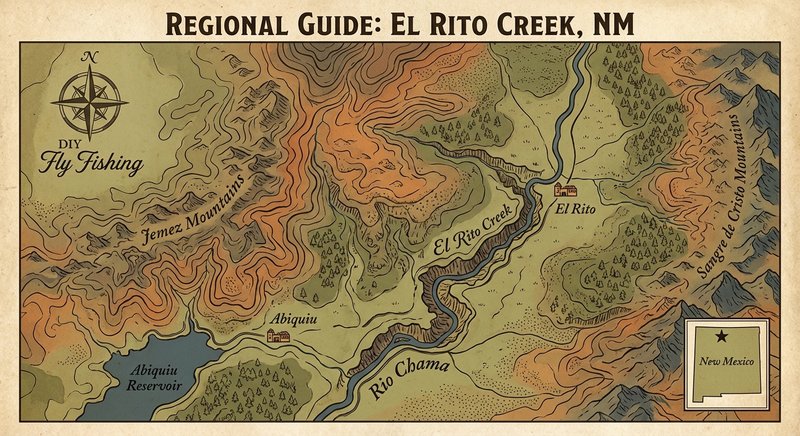
El Rito Creek
Fly fishing in New Mexico · Advanced · Best seasons: Summer, Fall
Target Species
Cutthroat Trout
About This Water
Small stream with native Rio Grande cutthroat. Remote and technical fishing.
Fishing Recommendations
As an expert guide who has spent years navigating the high-desert drainages and alpine streams of the Land of Enchantment, I can tell you that El Rito Creek is a hidden gem for the angler seeking solitude and the chance to hook a piece of living history.
Located in the Carson National Forest, north of the small village of El Rito, this creek offers a quintessential small-stream experience. Here are my comprehensive recommendations for fishing these waters.
🎣 Location Overview
El Rito Creek is a classic high-elevation freestone stream. What makes it special is its "pocket water" character—it is a sequence of small plunges, tight riffles, and deep, undercut banks. It flows through a mix of ponderosa pine forests and meadow stretches, offering a diverse landscape for a day of hiking and fishing.
Anglers love El Rito because it is often overlooked in favor of the nearby Rio Chama or the larger San Juan. It is a place where you can find complete solitude. The water is crystalline and cold, staying oxygenated even in the heat of summer. It is a "blue line" experience that rewards stealth and precision over long-distance casting.
🐟 Target Species & Behavior
The crown jewel of El Rito Creek is the Rio Grande Cutthroat Trout (RGCT), New Mexico’s state fish. While you may find the occasional brown or rainbow trout in the lower reaches near the town, the upper headwaters are managed specifically for the conservation of these native beauties.
- Behavior: These fish are opportunistic but incredibly wary. In such small water, they are highly sensitive to shadows and vibrations on the bank.
- Holding Patterns: Look for them in the "cushion" just in front of boulders, in the deep dark water of undercut banks, and at the very tail-outs of pools during the evening rise.
- Feeding: They are not particularly picky eaters due to the short growing season, but they are "one-and-done" feeders—if you spook them or miss a strike, they likely won't rise again for an hour.
📅 Best Times to Fish
Optimal Seasons: Summer & Fall
- Summer (Late June – August): This is the prime window. The runoff from the San Pedro Parks Wilderness has subsided, and the terrestrial activity is at its peak.
- Fall (September – October): My personal favorite time. The Rio Grande Cutthroats take on their most brilliant spawning colors (deep oranges and reds), and they become aggressive as they bulk up for winter.
Best Times of Day
- Mid-Morning to Late Afternoon: Unlike lower elevation rivers, the water here stays cool. You don’t need to be on the water at dawn. Wait for the sun to hit the water and activate the insect life (usually around 10:00 AM).
Prime Conditions
- Look for days with a light breeze (which knocks terrestrials into the water) or "monsoon" afternoons where a light rain can trigger a feeding frenzy.
🪰 Recommended Flies & Techniques
Because the creek is small and often brushy, your gear should be light. I recommend a 2-weight or 3-weight rod, 7 to 8 feet in length.
Top Fly Patterns
- Dry Flies:
- Royal Wulff or Royal Coachman (#14-16): High visibility is key in the broken water.
- Elk Hair Caddis (#16-18): A staple for NM mountain streams.
- Amy’s Ant or Fat Albert (#12-14): Perfect for the "Hopper-Dropper" rig in late summer.
- Nymphs:
- Bead-head Pheasant Tail (#16-20): The gold standard for these waters.
- Copper John (#18): Use this as a dropper to get down fast in plunge pools.
- Streamers:
- Small Black or Olive Wooly Buggers (#10-12) can work in the deeper holes, though dry flies are generally more effective and fun here.
Presentation Tips
- Dries Only: In many stretches, the water is too shallow for a dropper. A single, high-floating dry fly is often all you need.
- The "Dapping" Technique: In heavy brush, don't try to cast. Simply extend your rod over the water and drop the fly into the pocket.
💡 Pro Tips & Local Knowledge
- The "Crawl" Approach: The most successful anglers on El Rito Creek are those who stay low. If you can see the fish, they have already seen you. Kneel as you approach a pool.
- Upper Reach Focus: For the best native Cutthroat fishing, head as far north as the forest roads allow, specifically above the El Rito Campground. The water gets smaller, but the fish get "purer."
- Watch the Monsoons: New Mexico's July and August afternoons often bring heavy thunderstorms. These can turn the creek muddy (chocolate milk) in minutes. If you see dark clouds over the mountains, keep an eye on the water clarity.
- Long Leaders: Use a 9-foot leader tapered to 5X or 6X. Even though the water is fast, the fish are leader-shy in the calmer tail-outs.
⚠️ Important Information
Access
- Follow NM State Road 554 north from the village of El Rito. It turns into Forest Road 106. This road parallels much of the creek, providing excellent "park and wade" access. High-clearance vehicles are recommended but not always necessary depending on recent road maintenance.
Regulations & Permits
- License: A valid New Mexico Fishing License and a "Habitat Management & Access Validation" are required.
- Special Rules: Check the current NM Department of Game & Fish (NMDGF) proclamation. Much of this water is Catch and Release only or has very specific bag limits for native Cutthroats to protect the population.
- Barbless Hooks: I strongly recommend using barbless hooks to ensure the safe release of these delicate native fish.
Special Considerations
- Bear Country: This is active Black Bear country. Carry bear spray and keep any food secured.
- Navigation: Cell service is non-existent once you enter the canyon. Download offline maps or carry a physical topo map of the Carson National Forest.
Bug Hatches & Matching Flies
| Hatch | Type | Peak months | Time of day | Hook sizes | Matching flies |
|---|---|---|---|---|---|
| Blue Winged Olive Baetis spp. | mayfly | March, April, September, October | Late Morning/Afternoon | #18-22 | RS2 #18-22, Parachute Adams #18-20, Pheasant Tail #18-22 |
| Western March Brown Rhithrogena morrisoni | mayfly | April, May | Mid-day | #12-14 | March Brown Dry #12-14, Gold Ribbed Hare's Ear #12-14 |
| American Grannom Brachycentrus occidentalis | caddis | May, June | Afternoon/Evening | #14-16 | Elk Hair Caddis (Olive) #14-16, Peacock Caddis Larva #14-16 |
| Pale Morning Dun Ephemerella excrucians | mayfly | June, July | Morning/Early Afternoon | #16-18 | PMD Sparkle Dun #16-18, Mercer's Poxyback PMD #16-18 |
| Yellow Sally Isoperla spp. | stonefly | June, July, August | Late Afternoon/Evening | #14-16 | Yellow Sally Stimulator #14-16, Iron Lotus #16 |
| Common Midge Chironomidae | midge | January, February, March, November, December | All Day | #20-26 | Zebra Midge #20-24, Griffith's Gnat #20-22 |
| Golden Stonefly Hesperoperla pacifica | stonefly | June | Morning/Evening | #8-12 | Pats Rubber Legs #8-12, Golden Rogue Stone #10-12 |
| Grasshopper Acrididae | terrestrial | August, September | Late Morning/Afternoon | #10-14 | Hopper Juan #12-14, Dave's Hopper #10-12 |
| Black Ant Formicidae | terrestrial | July, August | Afternoon | #16-20 | Cinnamon Ant #16-18, Black Foam Ant #16-20 |