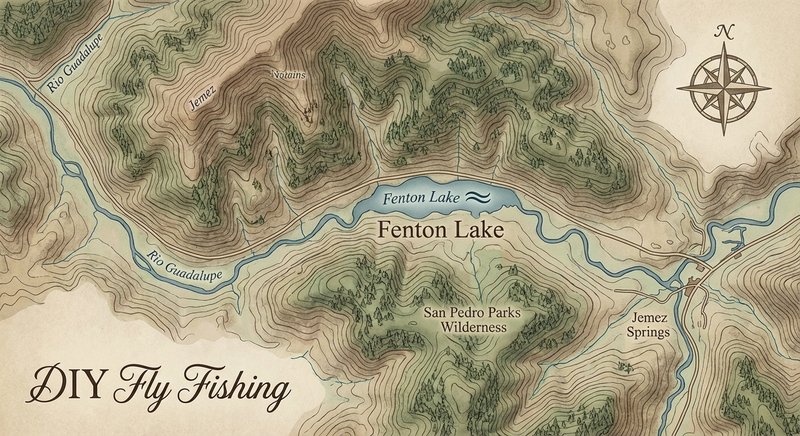
Fenton Lake
Fly fishing in New Mexico · Beginner · Best seasons: Spring, Summer, Fall
Target Species
Rainbow Trout
About This Water
Small mountain lake in the Jemez Mountains. Stocked rainbow trout and easy access.
Fishing Recommendations
Welcome to the Jemez Mountains. As your guide, I’m excited to walk you through one of New Mexico’s most beloved high-mountain stillwaters: Fenton Lake.
At an elevation of 7,650 feet, Fenton Lake is a 37-acre alpine jewel. While it is heavily stocked, it offers a sophisticated fly fishing experience for those who know how to read its shallow, weed-rich waters.
🎣 Location Overview
Fenton Lake State Park is tucked into a lush valley surrounded by ponderosa pines and dramatic mesas. The lake is formed by a dam on the Rio Cebolla. What makes this water special is its accessibility paired with its classic "spring creek" characteristics—it is shallow, clear, and extremely fertile.
Because the lake is shallow (averaging 6–10 feet in most places), it grows a massive amount of aquatic vegetation. This creates a massive "bug factory," leading to trout that grow quickly and can be surprisingly selective. Anglers love it because it offers the chance to catch high volumes of fish in a breathtaking mountain setting, with the added bonus of the Rio Cebolla flowing in at the north end and out at the south.
🐟 Target Species & Behavior
- Rainbow Trout: The primary target. These are heavily stocked by NM Game & Fish, but "holdovers" from previous seasons become wary and behave like wild fish. They cruise the weed edges in "wolf packs" looking for midge clusters and damselfly nymphs.
- Brown Trout: While less common than rainbows, wild Browns inhabit the lake. They are more nocturnal and secretive, often holding near the dam or under the undercut banks near the Rio Cebolla inlet.
- Rio Grande Cutthroat: Occasionally found near the inlet, having drifted down from the protected headwaters of the Rio Cebolla.
Behavior: During the day, fish move from the deeper center toward the shallower weed beds to feed. They are extremely light-sensitive; on bright days, they will retreat to the shadows of the dam or the deepest channels.
📅 Best Times to Fish
- Spring (April – May): This is "Ice-Off" season. As soon as the ice thaws, the trout are ravenous. This is arguably the best time for trophy-sized holdovers.
- Summer (June – August): Focus on the "Golden Hours"—dawn and dusk. Mid-day can be slow due to heat and heavy recreational pressure. This is prime time for dry fly action and terrestrial patterns.
- Fall (September – November): My personal favorite. The crowds thin out, the aspen trees turn gold, and the Brown Trout become aggressive as they prepare to spawn.
- Prime Window: 30 minutes before sunrise until 10:00 AM, and 6:00 PM until dark.
🪰 Recommended Flies & Techniques
Top Fly Patterns
- Midges: Zebra Midges (Size 18-22) in Red, Black, or Silver. Griffith’s Gnat for surface clusters.
- Attractor Nymphs: Prince Nymphs, Hare’s Ears, and Pheasant Tails (Size 14-18).
- Lecches/Streamers: The Olive Woolly Bugger is the king of Fenton Lake. Also, try small Simi Seal Leeches in black or blood red.
- Damselflies: Near the weed beds in July, an Olive Marabou Damsel nymph is lethal.
- Terrestrials: Foam Ants and Beetles (Size 14-16) during the summer breeze.
Effective Techniques
- The "Hanging" Nymph: Use a strike indicator with a two-fly rig (e.g., a Prince Nymph followed by a Zebra Midge). Set your depth so the bottom fly sits just 6 inches above the top of the submerged weed beds.
- The Slow Strip: Use an intermediate sinking line or a long leader on a floating line. Cast a Woolly Bugger or Leeches, let it sink, and use a very slow, rhythmic 2-inch strip.
- Dry-Dropper: In the shallow northern end near the inlet, use a Parachute Adams as your "bobber" and hang a small unweighted Pheasant Tail 18 inches below it.
💡 Pro Tips & Local Knowledge
- Beat the Bank: Fenton is heavily fished from the shore. To truly unlock this water, use a float tube or kayak. Getting 50 yards off the bank allows you to fish the "drop-off" where the weed line meets the deeper channel—this is where the biggest fish patrol.
- The Inlet Secret: The northern end where the Rio Cebolla enters provides the most oxygenated water. In the heat of summer, the fish stack up here. It’s shallow and silty, so stay back and make long casts to avoid spooking them.
- Wind is your Friend: A slight "chop" on the water breaks up the fish’s window of vision, making them less likely to see your leader or your silhouette. If it’s windy, fish the "leeward" shore where insects are being blown into the water.
- Size Down: Because the water is clear and the fish see a lot of lures, use 5X or 6X fluorocarbon tippet for your sub-surface flies. It will significantly increase your hook-up rate.
⚠️ Important Information
- Access: Managed by New Mexico State Parks. A daily vehicle fly or an annual pass is required.
- Boating: No gas-powered motors are allowed. Electric trolling motors, canoes, kayaks, and float tubes are permitted.
- Regulations: Check the current NM Department of Game & Fish proclamation. Generally, there is a bag limit, but many fly anglers practice catch-and-release to preserve the fishery.
- Safety: The Jemez Mountains are prone to sudden afternoon thunderstorms in the summer ("Monsoon Season"). If you hear thunder, get off the water immediately; you are the tallest thing on the lake in a float tube!
Guide’s Final Word: Fenton Lake is the perfect place to hone your stillwater skills. It rewards patience and delicate presentation. Tight lines!
Bug Hatches & Matching Flies
| Hatch | Type | Peak months | Time of day | Hook sizes | Matching flies |
|---|---|---|---|---|---|
| Chironomids Chironomidae | midge | March, April, May, October | All Day | #18-24 | Zebra Midge #18-22, Ice Cream Cone #16-20, Griffith's Gnat #20-24 |
| Callibaetis (Speckled Duns) Callibaetis | mayfly | June, July, August | Morning/Early Afternoon | #12-16 | Parachute Adams #14-16, Hare's Ear Nymph #12-16, Callibaetis Spinner #14-16 |
| Blue-Winged Olive Baetis | mayfly | April, May, September, October | Mid-day/Afternoon | #18-22 | RS2 #20-22, BWO Parachute #18-20, Pheasant Tail Nymph #18-22 |
| Cinnamon Sedge Hydropsyche | caddis | July, August | Evening | #14-18 | Elk Hair Caddis #14-16, LaFontaine's Sparkle Pupa #16-18 |
| Grasshoppers Acrididae | terrestrial | July, August, September | Afternoon | #8-12 | Dave's Hopper #10-12, Amy's Ant #12 |
| Black Carpenter Ants Camponotus | terrestrial | June, July | All Day | #14-18 | Black Foam Ant #14-18, Chernobyl Ant #12-14 |
| Little Black Caddis Chimarra | caddis | April, May | Morning/Evening | #18-20 | Z-Caddis #18-20, Black Elk Hair Caddis #18-20 |
| Terrestrial Beetles Coleoptera | terrestrial | July, August | Afternoon | #12-16 | Black Foam Beetle #14-16, Peacock Beetle #16 |