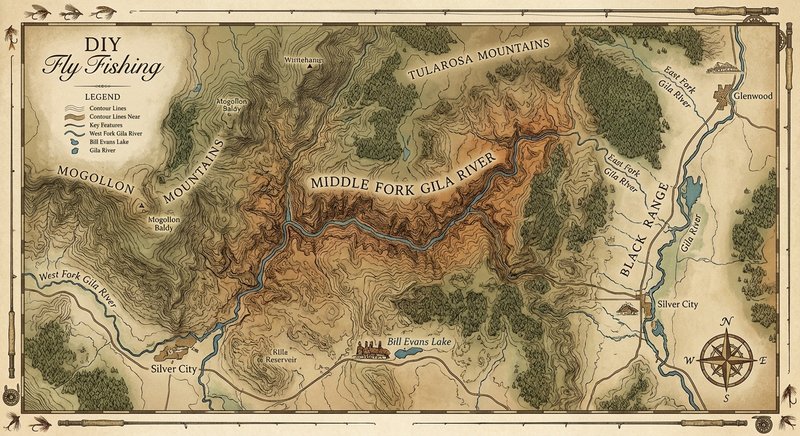
Gila River (Middle Fork)
Fly fishing in New Mexico · Advanced · Best seasons: Spring, Summer, Fall
Target Species
Brown Trout, Rainbow Trout
About This Water
Remote wilderness stream with excellent wild trout. Multi-day backpacking access.
Fishing Recommendations
The Middle Fork of the Gila River is one of the most rugged, remote, and rewarding fly fishing destinations in the American Southwest. Tucked away in the Gila Wilderness—the world's first designated wilderness area—this river offers a true "backcountry" experience.
As your guide, I’m excited to walk you through how to tackle this high-desert canyon gem.
🎣 Location Overview
The Middle Fork is defined by its dramatic volcanic canyon walls, towering ponderosa pines, and technical water. Unlike the wider, slower stretches of the main stem, the Middle Fork is a classic mountain stream characterized by boulder-strewn pocket water, deep emerald pools, and shimmering riffles.
What makes it special is the solitude. You aren’t just fishing; you are embarking on a wilderness expedition. The water is crystalline, the scenery is prehistoric, and the fish are opportunistic. Because of the canyon's depth, the water stays cooler here than in other parts of the Gila system, making it a sanctuary for trout.
🐟 Target Species & Behavior
While the Gila River is famous for the native Gila Trout, the Middle Fork holds a healthy population of Brown and Rainbow Trout.
- Brown Trout: These are the apex predators of the Middle Fork. They are wary and love structure. Look for them tucked under overhanging banks, behind large boulders, or in the deep shadows of the canyon walls. They tend to be more active during low-light periods.
- Rainbow Trout: Generally more willing to rise than the Browns, Rainbows occupy the swifter riffles and the "heads" of pools where oxygen levels are highest.
- Behavior: These fish are not particularly "size-picky" due to the sterile nature of high-desert freestones, but they are extremely spook-sensitive. The water is often low and clear; if you can see them, they have likely already seen you. Stealth is more important than fly choice here.
📅 Best Times to Fish
Seasons
- Spring (Late March – May): This is prime time. As the high-country snow melts, the river rises. This is the best window for larger Browns. However, be wary of heavy runoff in late April.
- Summer (June – August): Early June is excellent for dry fly action. Warning: July and August bring the "Monsoon Season." Flash floods are a deadly serious risk in the narrow canyons of the Middle Fork. Always check the radar.
- Fall (September – November): My personal favorite. The water cools, the Browns become aggressive as they prepare to spawn, and the cottonwoods turn gold.
Timing
- Time of Day: During the heat of summer, fish early (dawn to 10:00 AM) and late (6:00 PM to dusk). In the spring and fall, the midday sun warms the water enough to trigger insect activity.
- The "Shadow Window": Because of the deep canyons, the "golden hour" happens earlier here. When the sun dips behind the canyon rim and casts a shadow over the water, the fish lose their inhibitions.
🪰 Recommended Flies & Techniques
Top Fly Patterns
- Dry Flies:
- Chubby Chernobyl (Size 10-14): The ultimate attractor. Use it as the "foam" in a dry-dropper rig.
- Parachute Adams (Size 14-18): The gold standard for matching general mayfly hatches.
- Elk Hair Caddis (Size 14-16): Great for the evening caddis dip.
- Nymphs:
- Bead-head Prince Nymph (Size 14-16): High visibility in moving water.
- Pheasant Tail Nymph (Size 16-18): Mimics the natural mayfly nymphs found under river rocks.
- Copper John (Red or Blue): Adds weight and flash in deeper pools.
- Streamers:
- Woolly Bugger (Black or Olive, Size 8-10): Dead-drifted or swung through deep holes for big Browns.
Techniques
- Dry-Dropper: This is the most effective way to cover the Middle Fork. Hang a small nymph 18-24 inches below a buoyant foam dry fly.
- The "High Stick": Because the current is complex with many eddies, use a long rod (9ft 4wt or 5wt) to keep your line off the water, preventing drag.
- Stealth Approach: Fish upstream. Stay low, wear drab clothing (camo or earth tones), and avoid casting your shadow over the pools.
💡 Pro Tips & Local Knowledge
- The "V" in the Pool: On the Middle Fork, the biggest fish often sit right at the very tail-out of a pool (the "V" shape before it drops into the next riffle) at dusk. Approach from downstream and cast to the tail before you fish the head.
- Wading is Optional (and sometimes a mistake): The water is so clear that stepping in can send shockwaves through a pool. Fish from the bank whenever possible.
- The Gila Hike-In: The best fishing starts about 2-3 miles in from the TJ Corral or Middle Fork trailhead. The further you hike, the less pressured the fish are.
- Observe the "Wall Crawl": During the summer, look for grasshoppers falling off the canyon walls. A well-placed terrestrial pattern slammed against a rock wall and dropped into the water can trigger a violent strike.
⚠️ Important Information
Access
- Access is primarily via the Gila Cliff Dwellings National Monument area.
- The Middle Fork Trail (Trail 157) requires frequent river crossings. Be prepared to get your feet wet—wear high-quality wading boots with felt or sticky rubber and studs.
Regulations & Permits
- License: A valid New Mexico Fishing License and a Habitat Management & Access Validation (HMAV) are required.
- Special Rules: Check current NM Department of Game & Fish regulations. Some areas of the Gila are Catch and Release only or have specific barbless hook requirements to protect the native Gila Trout.
Special Considerations
- Safety: This is rattlesnake country. Watch your step on sunny rocks and near logs.
- Communication: There is zero cell service in the canyon. Carry a satellite communicator (like a Garmin inReach).
- Flash Floods: If the water turns murky or you hear a low rumble, get to high ground immediately. The canyon walls offer very few escape routes.
Tight lines, and enjoy the silence of the Gila!
Bug Hatches & Matching Flies
| Hatch | Type | Peak months | Time of day | Hook sizes | Matching flies |
|---|---|---|---|---|---|
| Blue Winged Olive Baetis spp. | mayfly | March, April, October, November | Mid-day | #18-22 | Parachute Adams #18-22, RS2 #20-22, Pheasant Tail #18-20 |
| Pale Morning Dun Ephemerella excrucians | mayfly | June, July | Late Morning/Early Afternoon | #16-18 | PMD Sparkle Dun #16-18, Frenchie #16, PMD Quigley Cripple #16-18 |
| Golden Stonefly Hesperoperla pacifica | stonefly | May, June | Morning/Evening | #8-12 | Pat's Rubber Leg #8-12, Chubby Chernobyl (Gold) #10-12, Golden Rogue Stone #10 |
| Spotted Sedge Hydropsyche spp. | caddis | May, June, July, August | Evening | #14-18 | Elk Hair Caddis (Tan) #14-16, LaFontaine's Deep Sparkle Pupa #14-16, Goddard Caddis #14 |
| Trico Tricorythodes spp. | mayfly | August, September | Early Morning | #20-24 | Trico Spinner #22-24, Zebra Midge #20-22 |
| Yellow Sally Isoperla spp. | stonefly | June, July | Afternoon/Evening | #14-16 | Yellow Sally Stimulator #14-16, Iron Lotus (Yellow) #16 |
| Grasshopper Acrididae | terrestrial | July, August, September | Mid-day/Afternoon | #8-12 | Morrish Hopper #10-12, Dave's Hopper #10-12, Amy's Ant #12 |
| Grannom Caddis Brachycentrus occidentalis | caddis | April, May | Afternoon | #14-16 | Peacock Caddis #14-16, Holy Grail (Olive) #14-16 |
| Midges Chironomidae | midge | January, February, March, December | All Day | #20-24 | Griffith's Gnat #20-22, Top Secret Midge #20-24, Black Zebra Midge #18-22 |