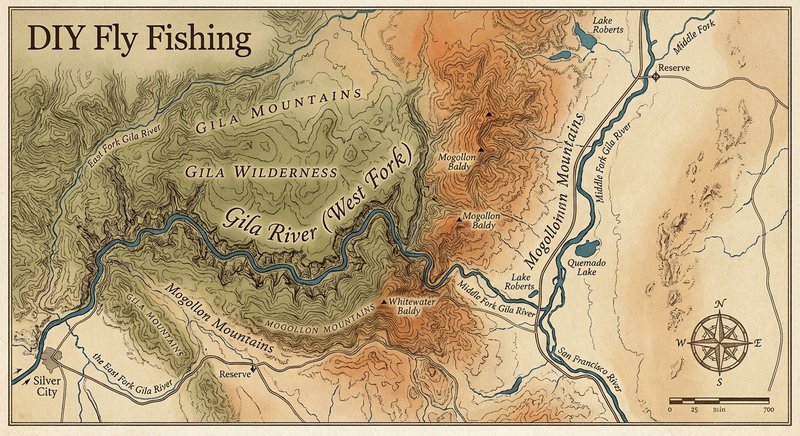
Gila River (West Fork)
Fly fishing in New Mexico · Advanced · Best seasons: Spring, Summer, Fall
Target Species
Brown Trout, Rainbow Trout, Gila Trout
About This Water
Historic waters in Gila Wilderness. Wild trout and hot springs.
Fishing Recommendations
Welcome to the Gila Wilderness. As a guide, there are few places I find as soul-stirring as the West Fork of the Gila River. This isn't just a fishing trip; it’s a journey into the first designated wilderness area in the world. It is rugged, remote, and home to one of the rarest trout on the planet.
Here is your comprehensive guide to fly fishing the West Fork.
🎣 Location Overview
The West Fork of the Gila River is a stunning freestone stream carved into deep rhyolite canyons and high-desert forests of ponderosa pine and sycamore. What makes this water special is its wildness. Unlike the tailwaters of the San Juan, the West Fork is dynamic—it changes with every monsoon season and spring runoff.
The water is characterized by crystal-clear "pocket water," deep emerald pools, and long, shallow riffles. It is a "hike-in" fishery. While you can catch fish near the Gila Cliff Dwellings trailhead, the true magic happens 3 to 5 miles deep into the wilderness where the canyon walls tighten and the pressure disappears.
🐟 Target Species & Behavior
- Gila Trout: The crown jewel. Once nearly extinct, these native fish have been heroically restored. They are beautiful, with a golden-yellow hue and fine spots. They are opportunistic but notoriously spooky in the clear, thin water.
- Brown Trout: The dominant species in the lower sections of the West Fork. They are wild, aggressive, and tend to hold in the "darker" water—under logs, beneath undercut banks, and in the shadows of canyon walls.
- Rainbow Trout: Found primarily in the lower reaches and near access points. They behave predictably, sitting in the "seams" where fast water meets slow water.
Behavior Note: These fish are highly sight-oriented. Because the Gila is a nutrient-poor environment compared to limestone creeks, the fish aren't usually picky about what they eat, but they are very picky about how you approach them. If they see you, the fishing is over.
📅 Best Times to Fish
- Spring (April – Early June): This is the prime window. The "Mother’s Day Caddis" hatch can be spectacular. Be wary of snowmelt runoff in late May; check flow gauges before heading out.
- Summer (July – August): This is Monsoon Season. Fishing can be world-class in the mornings, but heavy afternoon thunderstorms can turn the river into chocolate milk in minutes. Flash floods are a serious danger in the canyons.
- Fall (September – November): My favorite time. The cottonwoods turn gold, the air is crisp, and the Brown Trout become aggressive as they prepare to spawn. Water levels are usually low and stable.
Best Time of Day: During the heat of summer, fish early (dawn to 10:30 AM). In the spring and fall, the "banker's hours" (10:00 AM to 4:00 PM) are best as the sun warms the water and activates insect life.
🪰 Recommended Flies & Techniques
Top Fly Patterns
- Dries: Parachute Adams (#14-18), Elk Hair Caddis (Tan or Orange, #14-16), Stimulators (Yellow or Orange, #12-16).
- Terrestrials: Foam Ants (Black or Red, #16), Beetles, and small Dave’s Hoppers (#12) are deadly in late summer.
- Nymphs: Bead-head Pheasant Tails (#16-18), Gold-ribbed Hare’s Ears (#14-16), and Prince Nymphs.
- Streamers: Small Wooly Buggers (Olive or Black, #10-12) for the deeper pools where the big Browns hide.
Techniques
- The Dry-Dropper: This is the "bread and butter" of the Gila. Use a high-floating Stimulator or Parachute Adams as your indicator and hang a small Pheasant Tail nymph about 18–24 inches below it.
- Stealth Approach: Kneel before you reach the bank. Cast from behind boulders. Use long leaders (9ft 5X or 6X) to avoid lining the fish.
- Pocket Water Picking: Don't just fish the big pools. Drop your fly into the tiny pockets behind rocks; a Gila Trout is often waiting there for a quick meal.
💡 Pro Tips & Local Knowledge
- The "Yellow" Rule: Gila Trout seem to have a biological preference for yellow and gold. If the fishing is slow, switch to a Yellow Stimulator or a Gold-ribbed Hare's Ear.
- Hike the "Cliff Dwellings" Trail: Park at the Gila Cliff Dwellings National Monument. Take Trail #151. Most people fish the first mile; if you hike past the third river crossing, the fish size and frequency increase significantly.
- Watch the Water Temp: The Gila is a fragile ecosystem. If the water temperature hits 68°F, stop fishing. Fighting a trout in warm water is a death sentence for the fish, especially the sensitive Gila Trout.
- Look for "Wood": In the Gila, "Wood is Good." Large downed ponderosa pines in the river create the best cover for trophy-sized Browns.
⚠️ Important Information
- Access: Access is via NM State Highway 15 north of Silver City. It is a very windy, "stomach-churning" road—allow plenty of time.
- Regulations: You must have a valid New Mexico Fishing License. Special Permit: You often need a free "Gila Trout Permit" (available on the NM Game & Fish website) to fish certain restored sections. Check current proclamations for "Catch and Release" only zones.
- Wilderness Safety: There is zero cell service. This is rattlesnake country (Black-tailed and Western Diamondback). Carry a first aid kit and plenty of water.
- Wading: The West Fork requires multiple river crossings. Felt soles or high-traction rubber boots are recommended as the rocks can be extremely "greasy" with algae.
Tight lines, and enjoy the silence of the Gila!
Bug Hatches & Matching Flies
| Hatch | Type | Peak months | Time of day | Hook sizes | Matching flies |
|---|---|---|---|---|---|
| Blue-Winged Olive (BWO) Baetis spp. | mayfly | March, April, October, November | Mid-day | #18-22 | Parachute Adams #18-22, RS2 (Grey or Olive) #20-22, Pheasant Tail Nymph #18-20 |
| Pale Morning Dun (PMD) Ephemerella excrucians | mayfly | June, July | Late Morning to Early Afternoon | #16-18 | PMD Sparkle Dun #16-18, Hare's Ear Nymph #14-16, PMD Cripple #16-18 |
| Golden Stonefly Hesperoperla pacifica | stonefly | June, July | Morning/Evening | #8-12 | Pats Rubber Legs #8-12, Rogue River Stone #8-10, Golden Stone Nymph #10-12 |
| Grannom Caddis Brachycentrus occidentalis | caddis | April, May | Afternoon/Evening | #14-16 | Elk Hair Caddis (Olive/Tan) #14-16, LaFontaine's Deep Sparkle Pupa #14-16, Peacock Caddis #14-16 |
| Grasshoppers Melanoplus spp. | terrestrial | July, August, September | Mid-day/Afternoon | #8-12 | Dave's Hopper #8-12, Parachute Hopper #10-12, Morrish Hopper #10 |
| Trico Tricorythodes spp. | mayfly | August, September | Early Morning | #20-24 | Trico Spinner #22-24, Sunken Trico Spinner #22-24 |
| Yellow Sally Isoperla spp. | stonefly | June, July | Afternoon/Evening | #14-16 | Yellow Stimulator #14-16, Little Yellow Sloan #16 |
| Midges Chironomidae | midge | January, February, March, December | All Day | #20-26 | Zebra Midge (Black or Red) #20-24, Griffith's Gnat #20-22, Morgan's Midge #22-24 |