Goose Pond
Fly fishing in Massachusetts · Beginner · Best seasons: Spring, Summer, Fall
Target Species
Brown Trout, Rainbow Trout
About This Water
Berkshire County pond with trout. Lee/Tyringham area.
Fishing Recommendations
Welcome to the Berkshires. As your guide, I’m excited to highlight Goose Pond, located in the towns of Lee and Tyringham, Massachusetts. This is one of the premier "two-story" fisheries in the state, offering a unique blend of deep, cold water and classic mountain scenery.
While many anglers head to the Deerfield or Housatonic Rivers, Goose Pond offers a specialized stillwater experience that can be incredibly rewarding for the patient fly fisher.
🎣 Location Overview
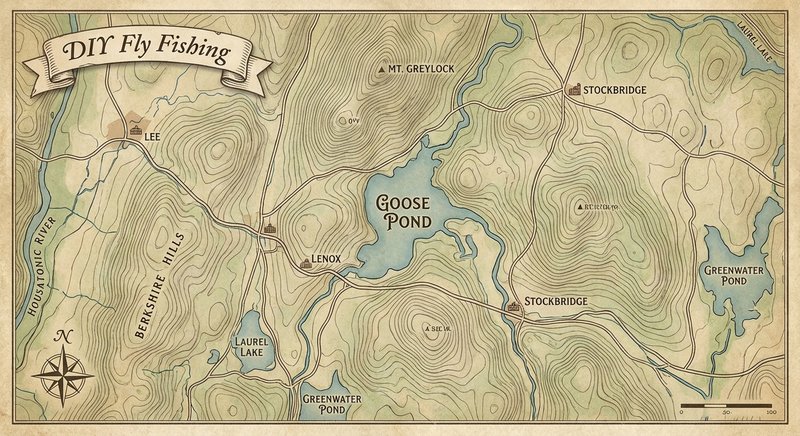
Goose Pond is divided into two distinct sections: Lower Goose Pond (the larger, main body of water) and Upper Goose Pond.
Lower Goose Pond covers about 225 acres and reaches depths of over 50 feet. It is characterized by its crystal-clear water and steep drop-offs. What makes it special is its ability to hold trout year-round. While many Massachusetts ponds get too warm in the summer, Goose Pond’s depth provides a "thermocline" where oxygenated cold water persists, allowing Brown Trout to reach impressive sizes.
Upper Goose Pond is smaller, shallower, and accessible only by water or the Appalachian Trail. It offers a remote, wilderness feel that is rare in Southern New England.
🐟 Target Species & Behavior
- Rainbow Trout: These are heavily stocked by MassWildlife in both spring and fall. They tend to cruise the upper 10–15 feet of the water column in the spring and move deeper as the sun rises or the season progresses. They are opportunistic feeders, targeting midges, small crustaceans, and terrestrial insects.
- Brown Trout: The "prized" residents of Goose Pond. Because the pond is deep and cold, some Browns hold over from year to year, becoming "holdovers" or "wild-acting" fish. They are more nocturnal and piscivorous (fish-eating) than Rainbows. They hold near the steep underwater ledges and shadows of downed timber.
- Incidental Species: You will also encounter Smallmouth Bass and Chain Pickerel, which can provide excellent sport on a 6-weight fly rod.
📅 Best Times to Fish
- Spring (Late April – June): This is the prime window. As the ice thaws and the water turns over, trout are found near the surface and close to the shoreline. The "Ice Out" period is legendary for big, hungry Browns.
- Summer (July – August): Fishing becomes more technical. You must fish early in the morning (dawn to 9:00 AM) or late in the evening. Trout will be holding deep (20–30 feet) near the thermocline, requiring sinking lines.
- Fall (September – November): As water temperatures drop, trout become active again in the shallows. This is the best time to target large Browns as they become aggressive before winter.
- Optimal Conditions: Overcast, "fishy" days are best. The water is very clear, so bright sun can make the fish skittish and drive them deep.
🪰 Recommended Flies & Techniques
Techniques
- Stripping Streamers: The most effective way to find active fish. Use a 5 or 6-weight rod with a Type 3 or Type 5 sinking line to get the fly down to the 10–20 foot range.
- Indicator Nymphing: In the spring, suspending a midge or scud 4–8 feet below a slip indicator along the rocky drop-offs can be deadly.
- Dry Fly Action: On calm summer evenings, look for "dimples" on the surface. This usually indicates trout taking midges or small caddis.
Top Fly Patterns
- Streamers: Woolly Buggers (Olive, Black, and White) size 6-10, Grey Ghosts (classic NE pattern), and Zonkers to mimic the local forage fish.
- Nymphs/Larvae: Zebra Midges (Black/Silver) size 18-22, Prince Nymphs size 14, and Pheasant Tails.
- Terrestrials: During late summer, Foam Beetles or Ants dropped near the overhanging trees of the shoreline can trigger aggressive strikes.
💡 Pro Tips & Local Knowledge
- Focus on the Drop-offs: The eastern shore of Lower Goose Pond has some dramatic underwater ledges. Use a fish finder if you have one, or look for where the water color changes from light green to dark blue.
- The "Channel" Connection: The narrow channel connecting the two ponds is a high-traffic area for fish. Small streamers swung through this area can be very productive.
- Long Leaders: Because the water is exceptionally clear, use long fluorocarbon leaders (9–12 feet). 4X or 5X tippet is usually necessary to avoid spooking the fish.
- Upper Goose Pond Stealth: If you have a canoe or kayak, portage into Upper Goose. It is much quieter, and the fish see far less pressure. The scenery along the Appalachian Trail side is spectacular.
⚠️ Important Information
- Access: There is a public boat ramp on the western end of Lower Goose Pond (off Ridge St/Goose Pond Rd). It is suitable for small motorboats, canoes, and kayaks. Parking is limited, so arrive early on weekends.
- Regulations:
- A Massachusetts freshwater fishing license is required.
- The pond is managed under General Statewide Regulations for trout, but always check the MassWildlife Abstracts for the most current bag limits and seasonal closures.
- Boating Note: Lower Goose Pond allows motors, but it is a "no-wake" zone near the shores. Be mindful of paddlers and swimmers.
- Invasive Species: Ensure your boat and gear are clean, drained, and dry to prevent the spread of zebra mussels or invasive weeds, which are a major concern in Berkshire County lakes.
Guide’s Final Thought: Goose Pond isn't a "numbers" water every day, but it offers the best chance in the region for a trophy-sized holdover Brown Trout on a fly. Bring a sinking line, stay quiet, and watch those depth changes!
Bug Hatches & Matching Flies
| Hatch | Type | Peak months | Time of day | Hook sizes | Matching flies |
|---|---|---|---|---|---|
| Giant Michigan Mayfly (Hex) Hexagenia limbata | mayfly | June, July | Late Evening/Night | #6-10 | Hexagenia Paradun #6-8, Hexagenia Emerger #8, Hex Nymph #6-10 |
| Midges Chironomidae | midge | April, May, September, October | All Day | #18-24 | Zebra Midge #18-22, Griffith's Gnat #20-24, Brooks Sprout Midge #20-22 |
| Speckled Dun Callibaetis | mayfly | June, July, August, September | Morning | #12-16 | Callibaetis Spinner #14-16, Hare's Ear Nymph #12-16, Callibaetis Cripple #14-16 |
| Damselfly Enallagma | other | June, July | Morning/Afternoon | #10-14 | Marabou Damsel Nymph #10-12, Adult Blue Damselfly #12-14 |
| Blue-Winged Olive Baetis | mayfly | April, May, September, October | Afternoon | #18-22 | BWO Parachute #18-22, RS2 #20-22, Pheasant Tail #18-20 |
| Cinnamon Sedge Hydropsyche | caddis | July, August | Evening | #14-16 | Elk Hair Caddis (Cinnamon) #14-16, LaFontaine's Deep Sparkle Pupa #14-16 |
| Flying Ants Formicidae | terrestrial | August, September | Afternoon | #14-20 | Black Foam Ant #16-18, Translucent Flying Ant #14-18 |
| Hendrickson Ephemerella subvaria | mayfly | April, May | Afternoon | #12-14 | Red Quill #12-14, Hendrickson Emerger #12-14 |