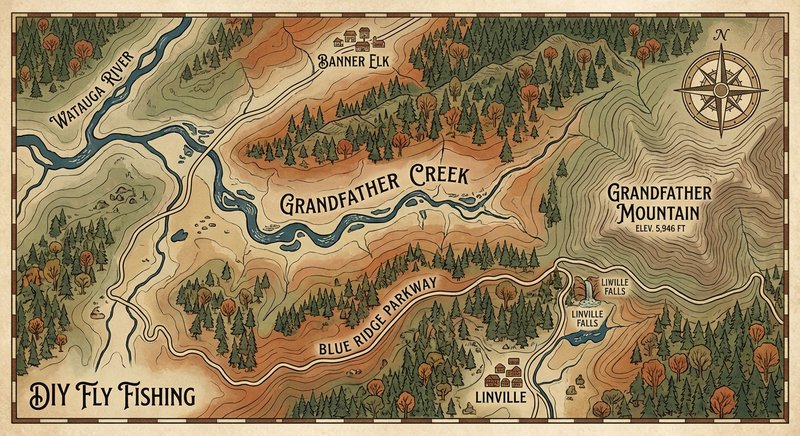
Grandfather Creek
Fly fishing in North Carolina · Intermediate · Best seasons: Spring, Summer, Fall
Target Species
Brook Trout, Rainbow Trout
About This Water
Small stream flowing from Grandfather Mountain. Native brook trout habitat.
Fishing Recommendations
Grandfather Creek is a hidden gem of the High Country in North Carolina. Flowing from the rugged slopes of Grandfather Mountain toward the Watauga River, this freestone stream offers a quintessential Southern Appalachian fly fishing experience. Because of its high elevation, it remains cooler than many other regional streams, providing a sanctuary for trout even during the warmer months.
🎣 Location Overview
Grandfather Creek is characterized by its steep gradient, crystal-clear water, and classic "stair-step" pool-and-drop structure. Located near the towns of Banner Elk, Seven Devils, and Foscoe, the creek transitions from a tiny, rhododendron-choked brook in its headwaters to a medium-sized mountain stream as it nears its confluence with the Watauga River.
What makes this water special is the elevation. Many sections sit above 3,500 feet, meaning the water is highly oxygenated and cold. Anglers love it because it offers a "wild" feel despite being relatively close to civilization. You can expect to navigate slick boulders, crawl through laurel thickets, and find fish that—while small—are incredibly vibrant and aggressive.
🐟 Target Species & Behavior
The creek is primarily a Wild Trout fishery, though some lower sections may see "escapees" from the stocked sections of the Watauga.
- Southern Appalachian Brook Trout: Found in the highest reaches and smallest tributaries. They are the "crown jewels" of the creek. They are extremely spooky and dwell in the deepest parts of tiny plunge pools.
- Wild Rainbow Trout: These dominate the mid-to-lower sections. They are hardy, athletic, and often hold in the faster "bubble line" at the head of pools.
- Behavior: Due to the nutrient-poor nature of high-elevation freestone streams, these fish are opportunistic. They don't have the luxury of being picky; if it looks like food and the presentation is natural, they will strike. However, their "flight" response is highly tuned—if they see you, the fishing in that pool is over.
📅 Best Times to Fish
- Spring (April – June): This is the prime window. As the water warms to the 50°F range, insect activity explodes. You’ll see Quill Gordons, March Browns, and various Caddis species.
- Summer (July – August): While other NC streams might get too warm, Grandfather Creek stays fishable. This is Terrestrial Season. Look for shadows and overhanging banks.
- Fall (September – October): The most beautiful time to be on the water. Brook trout move into their spawning colors (vibrant oranges and reds). The water is often low and clear, requiring the ultimate stealth.
- Best Time of Day: In Spring/Fall, the 10:00 AM to 4:00 PM window is best as the sun warms the water. In the heat of Summer, focus on the "magic hour" at dawn and dusk.
🪰 Recommended Flies & Techniques
Top Fly Patterns
- Dry Flies:
- Yellow Stimulator (Size 14-16): Mimics stoneflies and serves as a great high-vis attractor.
- Royal Wulff or Royal Coachman (Size 16-18): The classic attractor for wild brookies.
- Elk Hair Caddis (Tan or Olive, Size 16-18): A staple for any NC mountain stream.
- Nymphs:
- Bead-head Pheasant Tail (Size 16-20): The best all-around nymph for these waters.
- Prince Nymph (Size 14-16): Effective in the faster, deeper plunge pools.
- Terrestrials:
- Black Ants or Foam Beetles (Size 16-18): Essential for summer fishing under rhododendron overhangs.
Techniques
- The "Dry-Dropper": This is the most effective way to fish Grandfather Creek. Use a buoyant dry fly (like a Stimulator) and hang a small unweighted nymph 12–18 inches below it.
- Bow-and-Arrow Cast: Because of the dense rhododendron "hells," you will often lack the room for a traditional backcast. Mastering the bow-and-arrow cast is mandatory here.
- High-Sticking: Since the pools are small and the currents are complex, keep as much fly line off the water as possible to avoid drag.
💡 Pro Tips & Local Knowledge
- Stay in the Water: The banks are often impenetrable. The easiest way to move is to wade upstream. Always fish upstream so you are approaching the fish from behind (their blind spot).
- Dress Like a Ninja: Wear olive, brown, or camo clothing. If you wear a bright white shirt, the wild trout will see you from 20 feet away and dart under a rock.
- Focus on the "Pocket Water": Don’t just fish the big pools. Some of the biggest rainbows in the creek live in "pockets" no larger than a dinner plate behind a single rock.
- The Seven Devils Area: Look for access points near the base of the Seven Devils resort area, but be mindful of private property boundaries.
⚠️ Important Information
- Regulations: Much of Grandfather Creek is classified under Wild Trout Waters regulations (check the latest NCWRC maps). This generally means:
- Artificial lures/flies only (Single hook).
- No natural bait.
- Specific size and creel limits (though most anglers here practice 100% Catch & Release).
- Access: Much of the land surrounding the creek is private. Always look for NC Wildlife "Public Mountain Trout Waters" signs. Respect "No Trespassing" signs—landowners in this area take them seriously.
- Safety: The rocks in Grandfather Creek are notorious for being "greased lightning" slick. Felt-soled boots or studs are highly recommended. Also, be aware that this is black bear country; keep a clean camp if you are hiking in.
- Permits: A standard North Carolina fishing license with a Trout Privilege is required for all anglers 16 and older.
Guide’s Final Word: Grandfather Creek isn't about trophy-sized fish; it's about the purity of the pursuit. Bringing a 10-inch wild Rainbow to the net in such a rugged environment feels like more of an achievement than catching a 20-inch pellet-fed fish in a valley river. Tight lines!
Bug Hatches & Matching Flies
| Hatch | Type | Peak months | Time of day | Hook sizes | Matching flies |
|---|---|---|---|---|---|
| Blue Winged Olive Baetis | mayfly | March, April, October, November | Midday | #18-22 | RS2 #20-22, Parachute Adams #18-22, BWO Emerger #20 |
| Quill Gordon Epeorus pleuralis | mayfly | March, April | Early Afternoon | #12-14 | Quill Gordon Dry #12-14, Gold Ribbed Hare's Ear #12-14 |
| Yellow Sally Isoperla | stonefly | May, June, July | Late Afternoon/Evening | #14-16 | Yellow Sally Dry #14-16, Iron Lotus #16 |
| Light Cahill Stenacron interpunctatum | mayfly | June, July | Evening | #12-16 | Light Cahill #14-16, Pheasant Tail Nymph #14-16 |
| Cinnamon Caddis Hydropsyche | caddis | May, June, August | Morning/Evening | #14-18 | Elk Hair Caddis (Tan) #14-18, Holy Grail #16, Pupa #14-16 |
| Golden Stonefly Acroneuria | stonefly | June, July | Morning/Evening | #6-10 | Pat's Rubber Legs #8-12, Stimulator (Orange/Yellow) #8-12 |
| Green Drake Ephemera guttulata | mayfly | May, June | Evening | #10-12 | Green Drake Dry #10-12, Drake Cripple #10 |
| Terrestrial (Beetles/Ants) Coleoptera/Formicidae | terrestrial | July, August, September | All Day | #12-18 | Black Foam Beetle #14-16, Cinnamon Ant #16-18 |