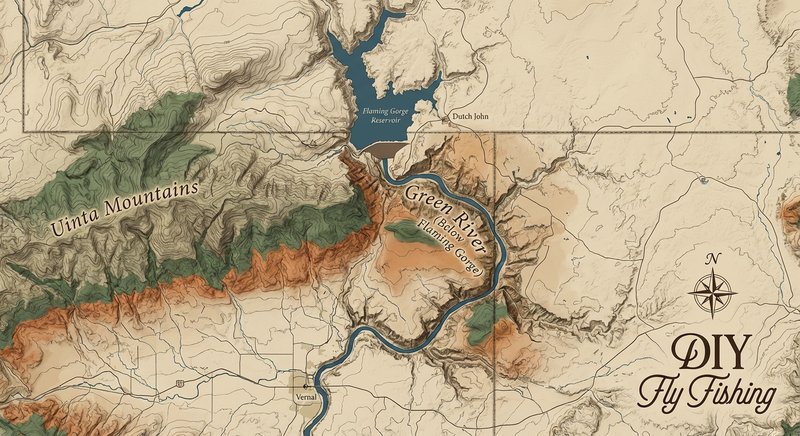
Green River (Below Flaming Gorge)
Fly fishing in Utah · Intermediate · Best seasons: Spring, Summer, Fall, Winter
Target Species
Brown Trout, Rainbow Trout, Cutthroat Trout
About This Water
World-class tailwater with trophy trout. Crystal clear water and prolific hatches year-round.
Fishing Recommendations
The Green River below Flaming Gorge Dam is arguably one of the most scenic and productive tailwater fisheries in the world. Flowing through the towering red rock canyons of Northeast Utah, it offers remarkably clear water and a massive trout population that can exceed 10,000 fish per mile in certain stretches.
Here is your comprehensive guide to fly fishing the "Green."
🎣 Location Overview
The Green River is divided into three distinct sections, known locally as the A, B, and C sections:
- Section A (Dam to Little Hole - 7 miles): This is the most famous stretch. It winds through a spectacular 1,000-foot-deep red rock canyon. The water is crystal clear, cold, and holds the highest density of fish. It is primarily a "drift boat" canyon, though the Little Hole trail allows for excellent wade access.
- Section B (Little Hole to Indian Crossing - 9 miles): As the canyon opens up, the river gains more character with large boulders, deeper pools, and grassy banks. It offers a mix of browns and rainbows and feels more "wild" than Section A.
- Section C (Indian Crossing to the Colorado Border - 12+ miles): This section is slower, lower in elevation, and warmer. It is home to very large Brown Trout and is the best place for those seeking solitude and streamer-eating monsters.
What makes the Green special is the visibility. You can often sight-fish to specific trout in 10 feet of water, watching them rise or take a nymph.
🐟 Target Species & Behavior
- Brown Trout: The dominant species. They are predatory and love structure. In the summer, they hug the canyon walls waiting for terrestrials. In the fall, they become aggressive as they prepare to spawn.
- Rainbow Trout: Found primarily in Section A. They prefer the faster riffles and the "seams" where fast and slow water meet. They are known for their aerial acrobatics.
- Cutthroat Trout: Though less common than the others, beautiful Bear Lake Cutthroats are present, often holding in the same water as the Rainbows.
Behavior Note: These fish are "educated." Because the water is so clear, they can see you just as well as you see them. Stealth and long leaders are mandatory.
📅 Best Times to Fish
The Green is a 365-day-a-year fishery, but the experience changes drastically with the seasons.
- Spring (March – May): Prime time for the Blue Winged Olive (BWO) hatch. On cloudy days, the dry fly fishing is world-class.
- Summer (June – August): The most famous window. This is Cicada Season. When the big black bugs start hitting the water, the largest fish in the river look up. This is also the peak for Hoppers and Mormon Crickets.
- Fall (September – November): My personal favorite. The crowds thin out, the Browns turn a deep buttery gold, and the Trico hatch provides technical dry fly challenges. Streamer fishing is highly productive now.
- Winter (December – February): Solitude. The fishing is primarily nymphing with Midges or small Scuds. It’s cold, but the fish are still active in the deeper, slower runs.
🪰 Recommended Flies & Techniques
Dry Flies
- Terrestrials: Black Cicadas (size 6-10), Chubby Chernobyls, Parachute Hoppers, and Mormon Crickets.
- Mayflies: Parachute Adams (16-22), BWO Sparkle Duns, and RS2s.
- Midges: Griffith’s Gnat and Mother’s Day Caddis (in late spring).
Nymphs
- Scuds & Sowbugs: Ray Charles (grey or orange), Soft Hackle Sowbugs. These are the "bread and butter" of the Green.
- Midges: Zebra Midges (black, red, olive - size 18-22).
- Attractors: San Juan Worms (red or tan) especially after a rain or flow increase.
Streamers
- Patterns: Sex Dungeons, Wooly Buggers (olive/black), and Gold Bead Head streamers.
- Technique: "Pounding the banks" from a drift boat is the most effective way to trigger a big Brown.
💡 Pro Tips & Local Knowledge
- The "Cicada Fall": If you are there during the Cicada hatch, don't just fish the middle. Cast your fly literally inches from the canyon walls. The bugs fall off the rocks, and the fish wait underneath the ledges.
- Long Leaders are Key: In the crystal-clear water of Section A, use at least a 9-foot to 12-foot leader. 6X tippet is often necessary for dry flies to avoid spooking the fish.
- The Little Hole Trail: If you don't have a boat, the 7-mile trail from Little Hole heading upstream is one of the best "wade-access" paths in the United States.
- Watch the Flows: Check the Bureau of Reclamation website for Flaming Gorge release schedules. A sudden "bump" in flows usually pushes worms and scuds into the drift, making for incredible nymphing.
⚠️ Important Information
- Regulations: The Green River is a Special Regulation water. You must use artificial flies or lures only. No bait is allowed.
- Permits: A valid Utah Fishing License is required. If you are floating from Section C into Colorado, you will eventually need a Colorado license.
- Shuttles: If you are floating, several local shops in Dutch John (like Trout Creek Flies or Flaming Gorge Resort) provide vehicle shuttle services for a fee.
- Safety: The water is cold (40-45°F) year-round. Even in the summer, if you fall in, hypothermia is a risk. Always wear a PFD while in a boat.
- Etiquette: Section A can get crowded. If wading, give drift boats space to pass. If boating, try not to anchor in the middle of a prime wade-fishing run.
Guide’s Final Word: The Green River is a "bucket list" destination for a reason. Whether you are throwing a size 8 Cicada to a 20-inch Brown or a size 22 Midge to a rising Rainbow, it is a place that rewards patience and observation. Tight lines!
Bug Hatches & Matching Flies
| Hatch | Type | Peak months | Time of day | Hook sizes | Matching flies |
|---|---|---|---|---|---|
| Midge Chironomidae | midge | January, February, March, December | All Day | #18-24 | Zebra Midge #18-22, Griffith's Gnat #20-24, Morgan's Midge #20-22 |
| Blue Winged Olive Baetis | mayfly | March, April, May, September, October | Late Morning/Afternoon | #18-22 | RS2 #18-22, Parachute Adams #18-22, WD-40 #18-20 |
| Cicada Okanagana bella | terrestrial | May, June, July | Late Morning/Afternoon | #4-10 | Mormon Girl #6-10, Fat Albert #6-10, Card's Cicada #8-10 |
| Pale Morning Dun Ephemerella invaria | mayfly | June, July | Late Morning/Early Afternoon | #16-18 | PMD Sparkle Dun #16-18, Pheasant Tail Nymph #16-18, Quill Gordon #16-18 |
| Mother's Day Caddis Brachycentrus | caddis | May | Afternoon/Evening | #14-16 | Elk Hair Caddis #14-16, LaFontaine's Sparkle Pupa #14-16, Peacock Caddis #14-16 |
| Yellow Sally Isoperla | stonefly | June, July | Afternoon/Evening | #14-16 | Yellow Sloppy Joe #14-16, Little Yellow Sally Nymph #14-16, Stimulator #14-16 |
| Trico Tricorythodes | mayfly | August, September | Early Morning | #20-24 | Trico Spinner #22-24, Sunken Trico Spinner #20-22, Hi-Vis Trico #20-22 |
| Scud Gammarus | crustacean | March, April, May, June, July, August, September, October | All Day | #14-20 | Ray Charles #16-20, Orange Scud #14-18, Soft Hackle Scud #16-18 |
| Grasshopper Acrididae | terrestrial | July, August, September | Afternoon | #8-12 | Parachute Hopper #10-12, Chernobyl Ant #8-12, Morrish Hopper #10-12 |