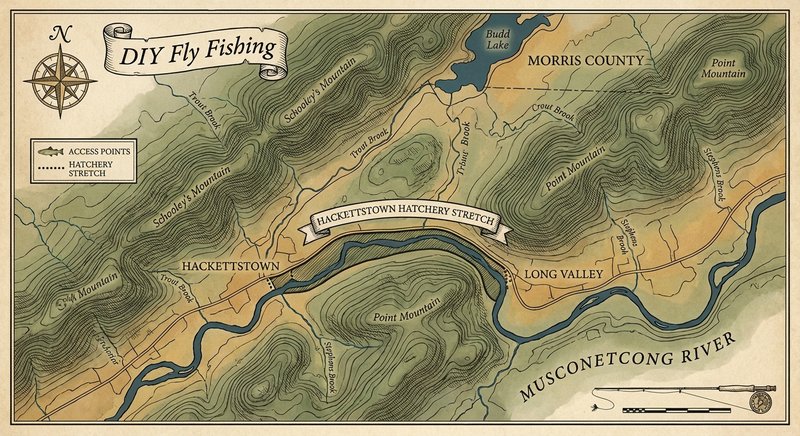
Hackettstown Hatchery Stretch
Fly fishing in New Jersey · beginner · Best seasons: spring
Target Species
Rainbow Trout, Brown Trout, Brook Trout
About This Water
Musconetcong River section near state hatchery. Heavily stocked with excellent public access.
Fishing Recommendations
The Hackettstown Hatchery Stretch of the Musconetcong River (locally known as "The Musky") is one of New Jersey’s most storied fly fishing destinations. Located in Warren and Morris Counties, this stretch benefits from its proximity to the state’s fish culture facilities, ensuring some of the highest fish densities in the Northeast.
As your guide, I’m going to break down how to fish this productive water, particularly during the peak spring window.
🎣 Location Overview
The "Hatchery Stretch" generally refers to the waters of the Musconetcong flowing through and around the Hackettstown State Fish Hatchery and the adjacent Alumni Field/Grand Avenue area.
What makes this water special is its character: it is a classic freestone river with a slight limestone influence. You’ll find a perfect mix of bubbly riffles, deep limestone-carved pools, and long, slow glides. Because of the heavy stocking and excellent habitat, it is a "numbers" game here. It is highly accessible, making it a favorite for both beginners practicing their cast and veterans looking for a consistent midday hatch.
🐟 Target Species & Behavior
- Rainbow Trout: These are the "workhorses" of the stretch. They are aggressive, often holding in the faster, highly oxygenated water at the heads of pools. They love colorful flies and flashy nymphs.
- Brown Trout: You will find both freshly stocked "truck trout" and "holdovers." The holdovers are savvy; they tuck into undercut banks and deep slots near the bridge abutments. They are more likely to rise to a well-presented dry fly.
- Brook Trout: Typically stocked in the early spring. They are opportunistic and often hold in the softer "inside" seams of the river.
Behavior Note: Because this area is heavily fished, the trout become "educated" quickly. After the first week of the season, a drag-free drift becomes non-negotiable.
📅 Best Times to Fish
Optimal Months
- April: The "Prime Time." This coincides with the peak of the NJ stocking schedule and the start of the major hatches.
- May: The best month for dry fly enthusiasts. Water temperatures hit the 55–62°F "sweet spot."
Best Times of Day
- Early Spring (April): Fish the "warmth window." 11:00 AM to 4:00 PM is usually most productive as the sun warms the water enough to trigger insect activity.
- Late Spring (Late May): Shift to early morning or the "magic hour" at dusk to catch the caddis and spinner falls.
Prime Conditions
Look for a receding water level two days after a spring rain. A slight "stain" (greenish tint) to the water is ideal—it hides your tippet and makes the fish less spooky.
🪰 Recommended Flies & Techniques
Top Fly Patterns
- Nymphs:
- The Mop Fly (Cream or Chartreuse): It sounds like cheating, but for freshly stocked hatchery fish, it’s a killer.
- Pheasant Tail Jig (Size 14-18): A staple for the Musky's natural mayfly nymphs.
- Zebra Midge (Black/Silver, Size 20): Essential for cold spring mornings.
- Dry Flies:
- Grannom Caddis (Size 14-16): The most important hatch in Hackettstown during late April.
- Hendrickson (Size 12-14): Look for these on overcast afternoons in late April.
- Blue Winged Olive (Size 18-22): The go-to on rainy or drizzly spring days.
- Streamers:
- Woolly Bugger (Black or Olive, Size 8-10): Strip these through the deep pools near the hatchery walls.
Effective Techniques
- Tight-Line (Euro) Nymphing: This is the most effective way to fish the Hatchery Stretch. The river has many micro-seams that traditional indicator rigs will drag through. A heavy jig nymph stayed "on the floor" will out-fish anything else.
- The "Hatchery Swing": If you see fish rising but can't match the hatch, swing a small wet fly (like a Partridge and Orange) across the current.
💡 Pro Tips & Local Knowledge
- Focus on the "Pocket Water": Many anglers crowd the big, obvious pools. Experienced guides look for "pockets"—small areas behind rocks about the size of a hula-hoop. These often hold the biggest holdover Browns.
- The Bridge Influence: The water under and immediately downstream of the bridges in Hackettstown provides shade and structure. Fish these areas thoroughly, even if they look "too urban."
- Go Small and Long: By mid-May, the water clears up. Switch to 5X or 6X fluorocarbon tippet. The fish see thousands of flies; a thinner diameter often makes the difference.
- Check the Gauge: Check the USGS gauge for the Musconetcong at Hackettstown. Ideal wading flows are between 100 cfs and 250 cfs. Above 400 cfs, it becomes dangerous to wade.
⚠️ Important Information
Access
- Access is excellent through Alumni Field in Hackettstown. There is ample parking, and you can walk the trail upstream toward the hatchery.
- Respect all "No Trespassing" signs near the actual hatchery buildings and raceways. Stay in the river or on designated park paths.
Regulations
- License: You must have a valid New Jersey Fishing License and a Trout Stamp.
- Closures: Be aware of Pre-Season Closures. The river is typically closed to all fishing for several weeks in late March/early April leading up to Opening Day.
- In-Season Closures: The Musky is usually subject to Weekly Stocking Closures (often Fridays). Check the NJ Division of Fish & Wildlife stocking schedule to ensure the river is open on the day you plan to visit.
Special Considerations
The Musconetcong is a popular river. Practice Good Stream Etiquette: Give other anglers at least 50 feet of space, and if you see someone hooked up, wait for them to land the fish before moving past.
Bug Hatches & Matching Flies
| Hatch | Type | Peak months | Time of day | Hook sizes | Matching flies |
|---|---|---|---|---|---|
| Blue-Winged Olive Baetis / Acerpenna | mayfly | April, October, November | Late Morning/Afternoon | #18-22 | RS2 #20-22, BWO Parachute #18-22, Pheasant Tail #18-20 |
| Hendrickson Ephemerella subvaria | mayfly | April, May | Afternoon | #12-14 | Red Quill #12-14, Hendrickson Emerger #14, Gold Ribbed Hare's Ear #12-14 |
| Sulphur Ephemerella invaria/dorothea | mayfly | May, June | Evening | #14-18 | Sulphur Parachute #14-18, Sulphur Snowshoe Emerger #16-18, Sulphur Spinner #14-18 |
| Tan Caddis Hydropsyche | caddis | May, June | Morning/Evening | #14-18 | Elk Hair Caddis (Tan) #14-18, LaFontaine's Deep Sparkle Pupa #14-16, Holy Grail #16-18 |
| Light Cahill Stenonema / Stenacron | mayfly | June, July | Evening | #12-14 | Light Cahill #12-14, Cream Usual #14 |
| Trico Tricorythodes | mayfly | July, August, September | Early Morning | #22-26 | Trico Spinner #22-26, Trico Parachute #24 |
| Slate Drake Isonychia bicolor | mayfly | June, September | Afternoon/Evening | #10-12 | Isonychia Parachute #10-12, Zug Bug #10-12, Prince Nymph #10-14 |
| Zebra Midge Chironomidae | midge | January, February, March | All Day | #18-24 | Zebra Midge #18-22, Griffith's Gnat #20-24, Mercury Midge #20-22 |
| Terrestrials Formicidae / Coleoptera | terrestrial | July, August, September | Afternoon | #12-18 | Black Foam Beetle #14-16, Cinnamon Ant #16-18, Dave's Hopper #10-12 |