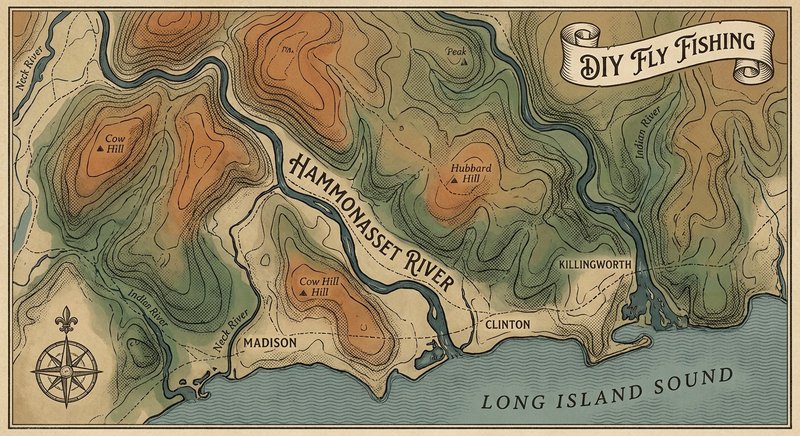
Hammonasset River
Fly fishing in Connecticut · Beginner · Best seasons: Spring, Fall
Target Species
Brown Trout, Sea-Run Brown Trout
About This Water
Middlesex County stream with trout. Near state beach park.
Fishing Recommendations
Welcome to the Hammonasset River, one of Connecticut’s most storied coastal gems. As a guide, I find the "Hammo" particularly fascinating because it offers two distinct personalities: it is both a classic New England trout stream and a tidal gateway for migratory fish.
Here is your comprehensive guide to fly fishing the Hammonasset.
🎣 Location Overview
The Hammonasset River flows through the towns of Killingworth, Madison, and Clinton before emptying into Long Island Sound. It is a relatively small, intimate river characterized by a mix of gravel runs, deep tea-colored pools, and large glacial boulders.
What makes it special is its Trout Management Area (TMA) and its status as one of the few rivers in the Northeast where a wild, sea-run brown trout population still persists (though they are rare and highly prized). The river feels secluded, often shaded by heavy canopy, providing a "wild" feel despite being just minutes from I-95.
🐟 Target Species & Behavior
- Brown Trout (Stocked & Holdover): These are the primary targets. The DEEP stocks the river heavily. Holdover fish become wary and tend to tuck under undercut banks or behind large boulders.
- Sea-Run Brown Trout: These are "salters"—brown trout that have migrated to the estuary to feed on protein-rich saltwater forage before returning to the river. They are silver, incredibly strong, and very aggressive when they first enter the system.
- Behavior: In the upper reaches, trout behave traditionally, feeding on aquatic insects. In the lower, tidal reaches, trout become highly piscivorous (fish-eaters), focusing on mummichogs, silversides, and glass eels.
📅 Best Times to Fish
Optimal Seasons
- Spring (April – June): This is the prime window. Water levels are usually good, and the first major hatches (Hendricksons, Caddis) bring fish to the surface.
- Fall (September – November): This is the best time for Sea-Run Browns. As water temperatures drop and autumn rains arrive, migratory fish push up from the salt. The fall foliage combined with aggressive, pre-spawn browns makes for world-class fishing.
Best Times of Day
- Early Morning/Dusk: Essential for sea-run trout, which are notoriously light-sensitive.
- Tidal Windows: In the lower sections (below Route 1), the outgoing tide is often best, as it flushes baitfish out of the marshes into the main channel where trout lie in wait.
🪰 Recommended Flies & Techniques
Top Fly Patterns
- Nymphs: Pheasant Tail (#14-18), Hare’s Ear (#12-16), and Zebra Midges. For the deeper pools, use a "Walts Worm" or a heavy perdigon.
- Dry Flies: Elk Hair Caddis (#14-18) is the staple. During the spring, have Hendrickson and Blue Winged Olive patterns ready.
- Streamers (The Local Secret): This is streamer water. Woolly Buggers (Olive or Black), Muddler Minnows, and small White Zonkers (to mimic glass eels/silversides) are deadly for sea-run fish.
Effective Techniques
- Tight-Line Nymphing: Highly effective in the pocket water sections near Route 80.
- The "Swing": For sea-run trout, cast a streamer across and slightly downstream, letting it swing through the tail of a pool. Give it short, erratic strips.
- Dry-Dropper: In the summer/early fall, a buoyant foam beetle or hopper with a small nymph dropped 18 inches below is the best way to pick apart the riffles.
💡 Pro Tips & Local Knowledge
- Focus on the TMA: The Trout Management Area (from the bridge at Route 80 downstream to the breached dam at Paper Mill Road) provides the best year-round trout habitat and catch-and-release opportunities.
- The "Saltwater" Influence: If you are targeting sea-runs, don't be afraid to fish the brackish water sections near the Hammonasset Beach State Park boundary. Look for "seams" where the fresh water meets the salt.
- Stealth is Key: The Hammo is clear and often shallow. Wear drab clothing, keep a low profile, and avoid splashing. If you can see the fish, they have likely already seen you.
- Post-Rain Strategy: The river can get "tannic" (tea-colored) after rain. This is actually an advantage—use a slightly larger, darker streamer (Black or Dark Olive) to create a silhouette that fish can track.
⚠️ Important Information
Access Points
- Route 80: Small parking areas near the bridge provide access to the upper TMA.
- Summer Hill Road: Provides access to several beautiful runs.
- Hammonasset Beach State Park: Best for exploring the lower tidal sections and the river mouth.
Regulations & Permits
- License: A Connecticut Fishing License and a Trout & Salmon Stamp are required.
- TMA Rules: The Trout Management Area is Catch and Release Only from September 1st through the third Saturday in April. Check current DEEP regulations as they are subject to change.
- Gear: A 9ft 5-weight rod is perfect for general trout, but if you're specifically hunting large sea-runs in the lower river, a 6-weight will help you handle the wind and larger streamers.
Special Considerations
- Ticks & Poison Ivy: The banks of the Hammonasset are notorious for both. Wear long sleeves/pants and do a tick check after your session.
- Wading: Generally easy wading on gravel, but watch out for "bowling ball" rocks that can be slick with algae. Felt soles or studs are recommended.
Guide’s Final Word: The Hammonasset is a "thinking angler's" river. It doesn't always give up its secrets easily, but if you fish the tides and stay stealthy, you might just hook into the silver ghost of a sea-run brown—the ultimate prize in Connecticut fly fishing. Tight lines!
Bug Hatches & Matching Flies
| Hatch | Type | Peak months | Time of day | Hook sizes | Matching flies |
|---|---|---|---|---|---|
| Blue Winged Olive Baetis / Pseudocloeon | mayfly | April, May, September, October | Late Morning/Afternoon | #18-24 | RS2 #20-22, Parachute BWO #18-22, Pheasant Tail Nymph #18-20 |
| Hendrickson Ephemerella subvaria | mayfly | April, May | Afternoon | #12-14 | Red Quill #12-14, Hendrickson Emerger #14, Hare's Ear Nymph #12-14 |
| Grannom Caddis Brachycentrus | caddis | April, May | All Day/Evening | #14-16 | Peacock Caddis #14-16, LaFontaine's Deep Sparkle Pupa #14-16, Elk Hair Caddis (Olive/Black) #14-16 |
| Sulphur Ephemerella invaria / dorothea | mayfly | May, June | Evening | #14-18 | Sulphur Parachute #14-18, Pheasant Tail (Flashback) #16-18, Sulphur Spinner #14-18 |
| Light Cahill Stenacron / Stenonema | mayfly | June, July | Evening | #12-14 | Light Cahill #12-14, Cream Usual #12-14, Gold Ribbed Hare's Ear #12-14 |
| Common Midges Chironomidae | midge | January, February, March, December | Mid-day | #20-26 | Zebra Midge #20-24, Griffith's Gnat #20-22, Mercury Midge #20-22 |
| Slate Drake Isonychia bicolor | mayfly | June, September | Afternoon/Evening | #10-12 | Zug Bug #10-12, Iso Parachute #10-12, Prince Nymph #10-14 |
| Terrestrials (Ants & Beetles) Formicidae / Coleoptera | terrestrial | July, August, September | All Day | #12-18 | Black Foam Ant #14-18, Cinnamon Ant #16-18, Crowe Beetle #14-16 |