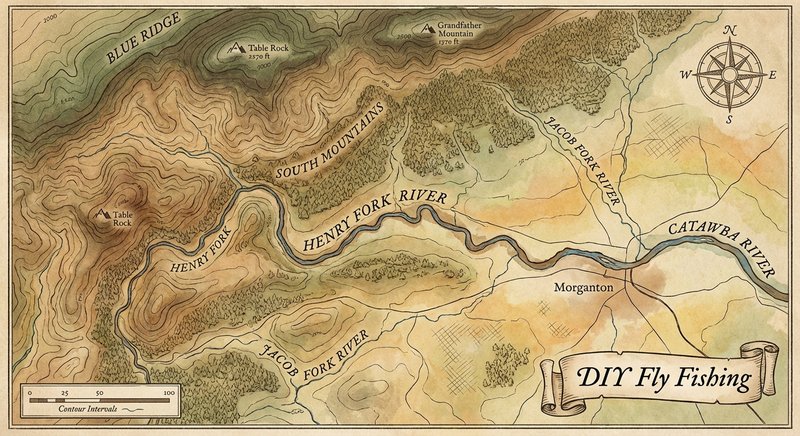
Henry Fork River
Fly fishing in North Carolina · Beginner · Best seasons: Spring, Summer, Fall
Target Species
Brown Trout, Rainbow Trout
About This Water
South Mountains stream with wild trout. Less crowded than nearby waters.
Fishing Recommendations
The Henry Fork River, particularly the section flowing through South Mountains State Park near Connelly Springs, North Carolina, is a hidden gem of the Piedmont/Blue Ridge transition zone. While often overshadowed by the larger rivers of the High Country, the Henry Fork offers some of the most scenic and rewarding trout fishing in the state.
🎣 Location Overview
The Henry Fork is a classic Appalachian freestone stream. Within the boundaries of South Mountains State Park, it transforms from a tumbling, high-gradient creek with plunging waterfalls into a gentler, boulder-strewn river as it winds through the valley.
What makes this water special is its accessibility paired with its rugged beauty. The centerpiece of the river is the 80-foot High Shoals Falls. Below the falls, the river is wider and more manageable; above the falls, it becomes a technical "blue-lining" experience for wild fish. Because it is managed largely as Delayed Harvest (from the park entrance to the powerhouse), it offers high catch rates and a mix of stocked and stream-born fish.
🐟 Target Species & Behavior
- Rainbow Trout: These are the primary residents in the lower sections. They tend to hold in the swifter "pocket water" and at the heads of pools. They are opportunistic and will often rise to attractor dry flies during warmer months.
- Brown Trout: The "heavy hitters" of the Henry Fork. Browns prefer the deeper, undercut banks and the dark shadows beneath overhanging rhododendrons. They are more wary and tend to feed more aggressively during low-light periods or after a light rain when the water has a slight "tea" stain.
- Behavior: In the DH (Delayed Harvest) section, fish can be quite eager in the fall. However, by mid-winter and early spring, they become "educated" and require more technical presentations and smaller flies.
📅 Best Times to Fish
- Spring (March – May): This is the prime window. The Delayed Harvest is in full swing, water temperatures are rising into the 50s, and insect activity (especially Quill Gordons and March Browns) begins.
- Fall (October – November): The river is restocked for the DH season in October. The fall foliage is stunning, and the Brown Trout become more aggressive as they prepare for the spawn.
- Summer (June – August): Focus on the headwaters above High Shoals Falls where the water stays cooler. Lower sections can get too warm for trout health in late July—if the water is over 68°F, please give the fish a break.
- Optimal Window: Mid-morning to late afternoon in Spring/Fall. In the heat of Summer, fish exclusively at "first light" (dawn until 10:00 AM).
🪰 Recommended Flies & Techniques
Dry Flies
- Attractors: Royal Wulff, Stimulators (Orange or Yellow, size 12-16).
- Match the Hatch: Elk Hair Caddis (Tan, size 14-18), Parachute Adams (size 16-20), and Blue Winged Olives (size 18-22) for overcast days.
- Terrestrials: In late summer, a foam beetle or a Dave’s Hopper dropped tight to the bank is deadly.
Nymphs (The Bread & Butter)
- DH Classics: Squirmy Wormies (Pink/Red), Egg patterns, and Mop Flies (Chartreuse) work well on freshly stocked fish.
- Natural Patterns: Pheasant Tail (flashback, size 16-20), Hare’s Ear (size 14-16), and Zebra Midges (Black or Red, size 18-22).
- Technique: Tight-line (Euro) nymphing is incredibly effective in the boulder gardens and pocket water.
Streamers
- Patterns: Woolly Buggers (Black or Olive, size 8-12), Muddler Minnows.
- Technique: Use a "swing and twitch" method through the deeper pools, especially for the larger Brown Trout.
💡 Pro Tips & Local Knowledge
- The "Hike-to-Fish" Rule: The further you walk from the main parking lots at the picnic area, the better the fishing gets. Most anglers crowd the bridge pools; hike a mile upstream toward the falls to find less pressured fish.
- High Shoals Challenge: If you are physically fit, hike the trail above High Shoals Falls. The water here is much smaller and the fish are smaller (mostly wild Rainbows), but they are incredibly beautiful and rarely see a fly.
- Stealth is Key: Because the water is often crystal clear, wearing earthy tones (camo, olive, tan) and staying low to the bank will prevent you from spooking the larger, more experienced fish.
- The "Sucker Spawn": In early spring, look for large white suckers spawning in the shallows. Trout will often sit directly behind them eating drifted eggs.
⚠️ Important Information
- Regulations: The section within South Mountains State Park is primarily Delayed Harvest Trout Water.
- Oct 1 to the first Saturday in June: Catch and release only, single-hook artificial lures only.
- Summer months: It reverts to Hatchery Supported rules (check current NCWRC regulations for specific dates).
- Access: Ample parking is available within the State Park. There is no fee to enter the park or fish, but you must have a valid North Carolina Fishing License with a Trout Ribbon/Privilege.
- Safety: The rocks in the Henry Fork are notoriously slippery. Felt-soled boots or studs are highly recommended. Cell service is almost non-existent in the valley, so let someone know your plan before you head in.
Bug Hatches & Matching Flies
| Hatch | Type | Peak months | Time of day | Hook sizes | Matching flies |
|---|---|---|---|---|---|
| Blue Winged Olive (BWO) Baetis | mayfly | March, April, October, November | Midday/Afternoon | #18-22 | RS2 #20-22, Parachute BWO #18-22, WD-40 #20-22 |
| Quill Gordon Epeorus pleuralis | mayfly | March, April | Midday | #12-14 | Quill Gordon Dry #12-14, Pheasant Tail Nymph #12-14, Quill Gordon Wet #12-14 |
| March Brown Maccaffertium vicarium | mayfly | April, May | Afternoon | #10-14 | March Brown Dry #10-12, Gold Ribbed Hare's Ear #10-14, March Brown Emerger #12 |
| Light Cahill Stenonema | mayfly | May, June | Evening | #12-16 | Light Cahill #12-16, Cahill Wet Fly #14, Mercer's Poxyback #14-16 |
| Yellow Sally Isoperla | stonefly | May, June, July | Late Afternoon/Evening | #14-16 | Yellow Sally Dry #14-16, Little Yellow Stone Nymph #14-16, Stimulator (Yellow) #14-16 |
| Cinnamon Caddis Hydropsyche | caddis | May, June, September | Morning/Evening | #14-18 | Elk Hair Caddis (Tan) #14-18, Holy Grail Caddis #14-16, Pupa-X #16 |
| Golden Stonefly Acroneuria | stonefly | June, July | Evening/Night | #6-10 | Kaufmann's Stone (Gold) #8-10, Golden Stimulator #8-10, Pat's Rubber Leg #8-12 |
| Zebra Midge Chironomidae | midge | December, January, February | All Day | #18-24 | Zebra Midge (Red or Black) #20-22, Griffith's Gnat #20-22, Morgan's Midge #22 |
| Terrestrials (Ants/Beetles) Formicidae/Coleoptera | terrestrial | July, August, September | Midday | #12-18 | Black Foam Ant #16-18, Cricket #12-14, Beetle #14-16 |