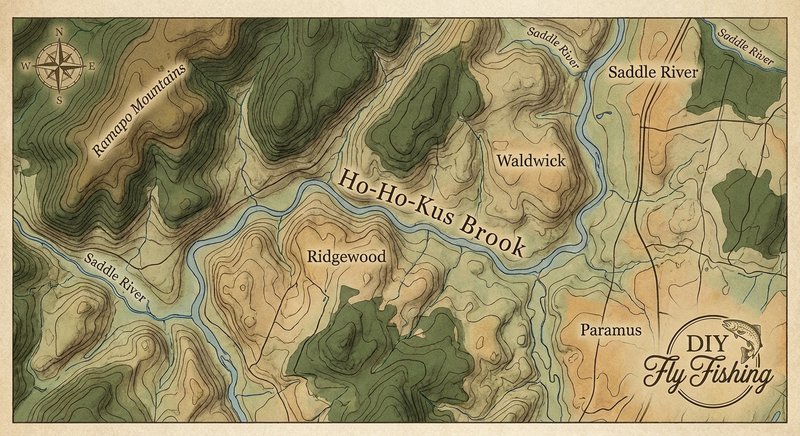
Ho-Ho-Kus Brook
Fly fishing in New Jersey · beginner · Best seasons: spring
Target Species
Rainbow Trout
About This Water
Small Bergen County stream with surprising trout. Stocked annually in spring.
Fishing Recommendations
Welcome to the Garden State’s hidden gems. While many anglers flock to the Musconetcong or the Pequest, the Ho-Ho-Kus Brook offers a unique suburban angling experience right in the heart of Bergen County. As your guide, I’ll help you navigate this small but productive tributary of the Saddle River.
🎣 Location Overview
The Ho-Ho-Kus Brook is a primary tributary of the Saddle River, flowing through suburban landscapes including towns like Wyckoff, Waldwick, Ho-Ho-Kus, and Ridgewood.
What makes it special is its "pocket water" character. Despite being in a densely populated area, parts of the brook feel surprisingly secluded. It is a freestone stream characterized by a mix of rocky runs, small plunges, and slow-moving silted pools. Anglers love it because it is heavily stocked by the NJ Division of Fish and Wildlife, making it an excellent "action" stream for those who want to catch trout without driving two hours to the Delaware Water Gap.
🐟 Target Species & Behavior
The primary target here is the Rainbow Trout, though you will occasionally encounter Brown Trout and even some Brookies early in the season.
- Rainbow Behavior: These fish are primarily hatchery-raised. Upon release, they tend to pod up in deeper pools. However, as the spring progresses, they spread out into the "riffle-run" transitions where oxygen levels are higher.
- Holding Spots: Look for "the seam"—where fast water meets slow water. Rainbows here love to sit just behind large rocks or in the undercut banks where the current has carved out a hiding spot.
- Feeding: Early spring fish are opportunistic. They respond well to "attractor" patterns but will switch to aquatic insects (mayflies and caddis) as the water warms into May.
📅 Best Times to Fish
Spring is the undisputed king on the Ho-Ho-Kus.
- Optimal Months: April and May. This coincides with the NJ state stocking schedule. By mid-June, water temperatures often rise above the "trout comfort zone" (68°F+), making fishing unethical and unproductive.
- Best Times of Day:
- Early Spring (April): Late morning to mid-afternoon (11 AM – 3 PM) when the sun warms the water slightly, triggering insect activity.
- Late Spring (May): Early morning and "the evening rise" (last 90 minutes of light).
- Prime Conditions: 48 hours after a moderate rain. The brook clears quickly, and a slight "stain" to the water gives you the cover needed to approach these wary suburban fish.
🪰 Recommended Flies & Techniques
Top Fly Patterns
- Nymphs:
- Pheasant Tail (Size 14-18): The gold standard for mimicking small mayflies.
- Prince Nymph (Size 12-16): Great as an attractor pattern.
- Zebra Midge (Size 18-22): Essential for when the water is low and clear.
- Dry Flies:
- Elk Hair Caddis (Size 14-16): High visibility and floats well in choppy water.
- Adams (Size 16-18): The perfect generalist for spring hatches.
- Streamers/Worms:
- Woolly Bugger (Black or Olive, Size 10): Best for high-water days.
- San Juan Worm (Red): Deadly immediately following a rainstorm or a fresh stocking.
Techniques
- Tight-Line Nymphing: Because the brook is narrow, a long fly rod (9ft–10ft) allows you to "dap" nymphs into pockets without having much line on the water, preventing drag.
- The "Swing": Casting a small Woolly Bugger across the current and letting it swing into the bank is a classic way to trigger an aggressive Rainbow strike.
💡 Pro Tips & Local Knowledge
- Target the Bridges: In suburban streams like this, bridges provide two things trout love: deep scour pools and shade. The areas immediately upstream and downstream of road crossings are almost always "fishy."
- Stealth is Key: Because the brook is small, the fish are easily spooked by shadows. Wear drab colors (earth tones) and avoid "lining" the fish (casting your fly line directly over their heads).
- Focus on Waldwick and Ho-Ho-Kus: The stretches near Whites Pond (Waldwick) and the areas near Zabriskie Park are historically productive stocking points.
- Check the USGS Gauge: Look at the nearby Saddle River gauges. If the water is chocolate milk, stay home. If it's "tannic" (tea-colored), get your streamers ready.
⚠️ Important Information
- Regulations: You must have a valid New Jersey Fishing License and a Trout Stamp. The Ho-Ho-Kus Brook follows the general New Jersey trout regulations regarding size and creel limits.
- Closed Dates: Pay close attention to the NJ Trout Pre-Season Closure and the In-Season Closures (usually certain weekdays when no fishing is allowed to permit stocking). Always check the NJ Fish & Wildlife website.
- Access: Much of the brook runs through private backyards. Respect "No Trespassing" signs. Stick to public parks, bridge right-of-ways, and designated town land.
- Wading: The brook is generally shallow and easy to wade, but be careful of slippery "snot rock" (algae-covered stones). Felt soles or studs are highly recommended.
Tight lines, and remember to "keep 'em wet" if you're practicing catch and release!
Bug Hatches & Matching Flies
| Hatch | Type | Peak months | Time of day | Hook sizes | Matching flies |
|---|---|---|---|---|---|
| Blue Winged Olive Baetis | mayfly | March, April, September, October | Late Morning/Afternoon | #18-22 | RS2 #20-22, Parachute Adams #18-22, Pheasant Tail Nymph #18-20 |
| Hendrickson Ephemerella subvaria | mayfly | April, May | Afternoon | #12-14 | Red Quill #12-14, Hendrickson Emerger #14, Hare's Ear Nymph #12-14 |
| Sulphur Ephemerella invaria / dorothea | mayfly | May, June | Evening | #14-18 | Sulphur Parachute #14-18, CDC Sulphur Emerger #16, Pheasant Tail #16-18 |
| Tan Caddis Hydropsyche | caddis | May, June, July | Evening | #14-16 | Elk Hair Caddis #14-16, LaFontaine's Deep Sparkle Pupa #14-16, Gold Ribbed Hare's Ear #14-16 |
| Light Cahill Stenacron / Stenonema | mayfly | June, July | Evening/Dusk | #12-14 | Light Cahill #12-14, Cream Usual #14 |
| Grannom Caddis Brachycentrus | caddis | April | Morning/Afternoon | #14-16 | Peacock Caddis #14-16, Green Weenie #14-16 |
| Zebra Midge Chironomidae | midge | January, February, March, December | Morning/Afternoon | #20-24 | Zebra Midge #20-24, Griffith's Gnat #20-22, Mercury Midge #20-22 |
| Terrestrials Formicidae / Coleoptera | terrestrial | July, August, September | All Day | #12-18 | Black Foam Ant #16-18, Dave's Hopper #12, Crowe Beetle #14-16 |
| March Brown Maccaffertium vicarium | mayfly | May | Afternoon | #10-12 | March Brown #10-12, Gold Ribbed Hare's Ear #10-12 |