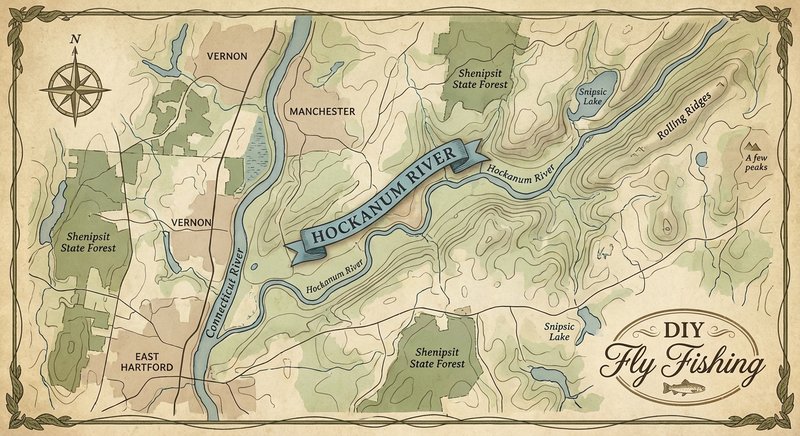
Hockanum River
Fly fishing in Connecticut · Beginner · Best seasons: Spring, Fall
Target Species
Brown Trout, Rainbow Trout
About This Water
Hartford County stream with stocked trout. Urban park fishing.
Fishing Recommendations
The Hockanum River in Connecticut is one of the state’s most unique "urban" fisheries. Flowing through the heart of Manchester, Vernon, and East Hartford, the "Hock" is a testament to conservation success. While it may not offer the mountain vistas of the Berkshires, it provides some of the most productive trout fishing in central Connecticut, often hiding surprisingly large fish in plain sight.
🎣 Location Overview
The Hockanum River is a tailwater-freestone hybrid that winds through suburban and industrial landscapes. What makes it special is its Trophy Trout Area designation (specifically in the Manchester and Vernon sections).
The river is characterized by a mix of slow-moving glides, deep undercut banks, and classic riffle-pool sequences. Because the river flows through developed areas, it is nutrient-rich, which supports a high biomass of aquatic insects and baitfish. Anglers love it for its accessibility; you can find solitude in the wooded pockets of the Hockanum River Linear Park even while being minutes away from town.
🐟 Target Species & Behavior
The primary targets are Brown Trout and Rainbow Trout.
- Stocked & Holdover Fish: The state heavily stocks this river with "Trophy" sized fish (often 12–18+ inches). Because of the deep pools and thermal refuges, a fair number of Brown Trout "hold over," becoming wilder and more predatory as they grow.
- Holding Patterns: Look for fish in the "trash water"—under bridge abutments, behind submerged shopping carts (a reality of urban fishing), and deep under overhanging banks.
- Feeding: Hockanum trout are opportunistic. They transition from feeding on heavy insect hatches in the spring to a protein-heavy diet of crayfish and minnows as they grow larger.
📅 Best Times to Fish
Optimal Seasons
- Spring (April – June): This is the "Golden Era" on the Hockanum. The water levels are usually perfect, and the stocking trucks have recently visited. This coincides with the major insect hatches.
- Fall (September – November): As water temperatures drop, the Brown Trout become aggressive and territorial ahead of the spawn. This is your best chance to land a "Wall Hanger."
Best Times of Day
- Early Morning: Best for dry fly action before the sun hits the water.
- Late Evening: The "spinner fall" hour can be electric during the late spring.
Prime Windows
Watch the USGS gauges. The Hockanum can get "flashy" (rise and muddy quickly) after a heavy rain due to urban runoff. The best fishing occurs 24–48 hours after a rain event as the water begins to clear but remains high enough to give the fish a sense of security.
🪰 Recommended Flies & Techniques
Top Fly Patterns
- Nymphs:
- The Mop Fly (Chartreuse or Tan): It’s an urban river; these fish love the "junk."
- Pheasant Tail (Size 14-18): A staple for mimicking the river's mayfly population.
- Pat’s Rubber Legs (Coffee/Black): Excellent for imitating the large stoneflies found in the riffles.
- Dry Flies:
- Blue Winged Olive (BWO) (Size 18-22): Productive on overcast, drizzly days.
- Elk Hair Caddis (Size 14-16): Great for the heavy evening caddis hatches in May.
- Streamers:
- Black or Olive Woolly Bugger: The most consistent producer.
- Sculpzilla: For targeting the large holdover browns in the deep holes.
Techniques
- Tight-Line (Euro) Nymphing: This is arguably the most effective way to fish the Hockanum. The river has many varied currents; keeping your fly line off the water prevents drag and gets your flies into the narrow "strike zones."
- Streamer Stripping: Cast toward the opposite bank, specifically under overhanging brush, and use erratic strips to mimic a wounded baitfish.
💡 Pro Tips & Local Knowledge
- The "Shopping Cart" Rule: In urban rivers, man-made debris acts like natural logs. If you see a piece of structure in a deep hole, a big Brown Trout is likely sitting right behind it. Don't be afraid to lose a fly to fish these spots.
- Stealth Matters: Despite being in a developed area, the water can be quite clear. Use a 5X or 6X fluorocarbon tippet for nymphing to avoid spooking the larger, more educated holdover fish.
- Focus on the Linear Park: The stretches along the Hockanum River Linear Park in Manchester offer the best combination of access and "fishy" water. The section near Hilliard St. and the New State Rd. area are local favorites.
⚠️ Important Information
- Access: Use the Hockanum River Linear Park trail system. There are numerous small parking lots in Vernon and Manchester specifically for trail and river access.
- Regulations:
- A Connecticut Fishing License and a Trout & Salmon Stamp are required.
- Trophy Trout Area: Parts of the river have specific creel limits (usually 2 fish per day) and no minimum length, but many locals practice 100% catch and release to preserve the fishery. Always check the current CT DEEP Fishing Guide for the most up-to-date regulations.
- Safety: Wear sturdy wading boots with felt or studs. Being an urban river, there can be glass or metal on the riverbed. Always be aware of your surroundings when fishing in more isolated urban pockets.
- Water Quality: While significantly improved over the decades, it is still an urban river. Most anglers choose not to consume fish from the Hockanum; catch and release is highly encouraged.
Bug Hatches & Matching Flies
| Hatch | Type | Peak months | Time of day | Hook sizes | Matching flies |
|---|---|---|---|---|---|
| Blue Winged Olive Baetis spp. | mayfly | April, May, September, October | Mid-day/Afternoon | #18-22 | RS2 #18-22, BWO Sparkle Dun #18-20, Pheasant Tail #18-22 |
| Tan Caddis Hydropsyche | caddis | May, June | Late Afternoon/Evening | #14-18 | Elk Hair Caddis #14-16, LaFontaine's Deep Sparkle Pupa #14-18, Holy Grail #16 |
| Sulphur Ephemerella invaria/dorothea | mayfly | May, June | Evening | #14-18 | Sulphur Parachute #16-18, Pheasant Tail #14-16, Sulphur Emerger #16 |
| Midges Chironomidae | midge | January, February, March, December | Anytime | #20-26 | Zebra Midge #20-24, Griffith's Gnat #20-22, Top Secret Midge #22-24 |
| Terrestrials Formicidae/Coleoptera | terrestrial | July, August, September | Mid-day/Afternoon | #12-18 | Black Foam Ant #16-18, Coffee's Sparkle Beetle #14-16, Dave's Hopper #12 |
| Light Cahill Stenacron/Stenonema | mayfly | June, July | Evening | #12-14 | Light Cahill Dry #12-14, Gold Ribbed Hare's Ear #12-14 |
| Green Caddis Rhyacophila | caddis | April, May | Morning/Evening | #12-16 | Caddis Green Larva #12-16, Iris Caddis #14-16 |
| Trico Tricorythodes | mayfly | August, September | Early Morning | #22-26 | Trico Spinner #22-24, Drowned Trico #24 |