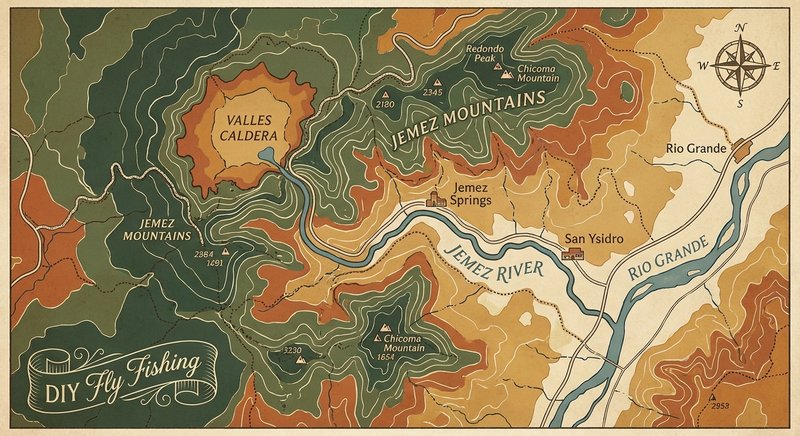
Jemez River
Fly fishing in New Mexico · Beginner · Best seasons: Spring, Summer, Fall
Target Species
Rainbow Trout, Brown Trout
About This Water
Mountain stream in the Jemez Mountains. Stocked trout and some wild browns in upper reaches.
Fishing Recommendations
The Jemez River, located within the Santa Fe National Forest and the Valles Caldera National Preserve, is one of New Mexico’s most cherished fly fishing destinations. It offers a classic "mountain creek" experience characterized by stunning volcanic geology, red rock canyons, and high-alpine meadows.
Here is your comprehensive guide to fly fishing the Jemez River.
🎣 Location Overview
The Jemez River is a small-to-medium freestone stream formed by the confluence of the East Fork and the San Antonio River. What makes this area special is the diversity of water types within a short drive. You can fish the meandering, "S-curve" meadow streams of the Valles Caldera, the tight, technical pocket water of the East Fork, or the lower main stem near the town of Jemez Springs.
Anglers love the Jemez because it is intimate. You aren’t casting 60 feet of line here; you are hunting fish in tight quarters, practicing precision drifts, and enjoying some of the most unique high-desert scenery in the American Southwest.
🐟 Target Species & Behavior
- Brown Trout: The stars of the Jemez. These are largely wild fish. They are wary, territorial, and favor overhead cover. Look for them in undercut banks, beneath overhanging willows, and at the very tail-outs of pools during low light.
- Rainbow Trout: Found throughout the system. The state stocks certain high-traffic areas (like near Battleship Rock), but wild rainbows persist in the higher reaches. They tend to hold in faster "bubbly" water and the heads of pools.
Behavior: Because the water is often clear and shallow, these fish are "spooky." Stealth is more important than fly choice. If they see your shadow or your fly line splashing, the hole is done for the next hour.
📅 Best Times to Fish
- Spring (March – April): Excellent fishing before the snowmelt (runoff). Look for Midge hatches and early Blue Winged Olives (BWO).
- Summer (June – August): This is Dry Fly Season. However, be mindful of water temperatures; if the water exceeds 68°F, stop fishing to protect the trout. Monsoon Season (July/August) can bring afternoon flash floods that turn the water chocolate milk brown—always check the sky.
- Fall (September – November): Arguably the best time. The Brown trout become aggressive as they prepare to spawn, and the Aspen trees turn gold. The water is low and clear, making for technical but rewarding dry-fly fishing.
Best Time of Day: In the heat of summer, fish early (dawn to 11 AM). In the spring and fall, the "banker's hours" (10 AM to 3 PM) are most productive as the sun warms the water.
🪰 Recommended Flies & Techniques
Top Fly Patterns
- Dries: Parachute Adams (#14–20), Elk Hair Caddis (#14–18), Stimulators (Orange or Yellow, #12–16), and Amy’s Ant (#12–14) for terrestrial season.
- Nymphs: Bead-head Pheasant Tail (#16–20), Copper John (#16–18), and the San Juan Worm (essential after a rain).
- Streamers: Small Wooly Buggers in Olive or Black (#10–12).
Effective Techniques
- Dry-Dropper: This is the "Jemez Standard." Use a high-visibility dry fly (like a Stimulator) with a small nymph tied 18–24 inches below it. This allows you to cover two columns of water and acts as a strike indicator.
- Tight-Line Nymphing: In the rocky canyons, use a short line to "dip" nymphs into pocket water behind boulders.
- Stealth Approach: Kneel when approaching the bank. Use long leaders (9ft 5X or 6X) to avoid lining the fish.
💡 Pro Tips & Local Knowledge
- The Valles Caldera "Magic": If you can get a permit for the Valles Caldera National Preserve (San Antonio Creek), do it. It is world-class meadow fishing. The fish hide in deep undercuts; you often won't see them until they rise to a hopper.
- Avoid the Crowds: The areas near Battleship Rock and the Soda Dam get heavy foot traffic. To find better fishing, hike at least half a mile away from any paved pull-out. The "Box Canyon" stretches of the East Fork offer solitude and hungrier fish.
- The "Jemez Twitch": When fishing terrestrial patterns (ants/hoppers) in the summer, give the fly a tiny twitch to mimic a struggling insect. This often triggers a strike from a cautious Brown trout.
⚠️ Important Information
- Access: Much of the river is within the Santa Fe National Forest (Public), but there are pockets of private land. Respect "No Trespassing" signs near the town of Jemez Springs.
- Regulations: New Mexico Department of Game and Fish (NMDGF) rules apply.
- Special Trout Water: Certain sections of the East Fork and the Valles Caldera are Catch and Release Only or have barbless hook requirements. Always check the current NMDGF Proclamation.
- Permits: You need a valid New Mexico Fishing License plus a Habitat Management & Access Validation (HMAV) and a Habitat Stamp.
- Safety: This is mountain lion and bear country. Carry bear spray if hiking deep into the canyons. Also, be aware of "Flash Flood" warnings—the Jemez watershed reacts violently to heavy rain.
Guide’s Final Word: The Jemez isn't about trophy sizes; it’s about the beauty of the desert-alpine transition and the purity of the take. Bring a 3-weight or 4-weight rod, move slowly, and enjoy the scenery.
Bug Hatches & Matching Flies
| Hatch | Type | Peak months | Time of day | Hook sizes | Matching flies |
|---|---|---|---|---|---|
| Blue Winged Olive (BWO) Baetis spp. | mayfly | March, April, September, October | Late Morning/Afternoon | #18-22 | Parachute Adams #18-22, RS2 #20-22, Pheasant Tail Nymph #18-20 |
| Midges Chironomidae | midge | January, February, March, December | All Day | #20-24 | Zebra Midge #20-22, Griffith's Gnat #20-24, Top Secret Midge #22-24 |
| Pale Morning Dun (PMD) Ephemerella excrucians | mayfly | June, July | Late Morning/Early Afternoon | #16-18 | PMD Sparkle Dun #16-18, Split Case PMD #16-18, Pale Morning Dun Parachute #16-18 |
| Mother's Day Caddis Brachycentrus occidentalis | caddis | May | Afternoon/Evening | #14-16 | Elk Hair Caddis (Dark) #14-16, Holy Grail Caddis #14-16, Peacock Caddis Larva #14-16 |
| Golden Stonefly Hesperoperla pacifica | stonefly | June, July | Morning/Evening | #8-12 | Pats Rubber Legs #8-12, Rogue River Stone #10-12, Golden Stone Nymph #8-10 |
| Yellow Sally Isoperla spp. | stonefly | June, July, August | Late Afternoon/Evening | #14-16 | Yellow Sally Parachute #14-16, Iron Sally #14-16, Stimulator (Yellow) #14-16 |
| Grasshoppers Orthoptera | terrestrial | July, August, September | Midday/Afternoon | #10-14 | Dave's Hopper #10-12, Amy's Ant #12-14, Parachute Hopper #10-14 |
| Trico Tricorythodes spp. | mayfly | August, September | Early Morning | #20-24 | Trico Spinner #20-24, Sunken Trico Spinner #22-24, Drowned Trico #20-22 |