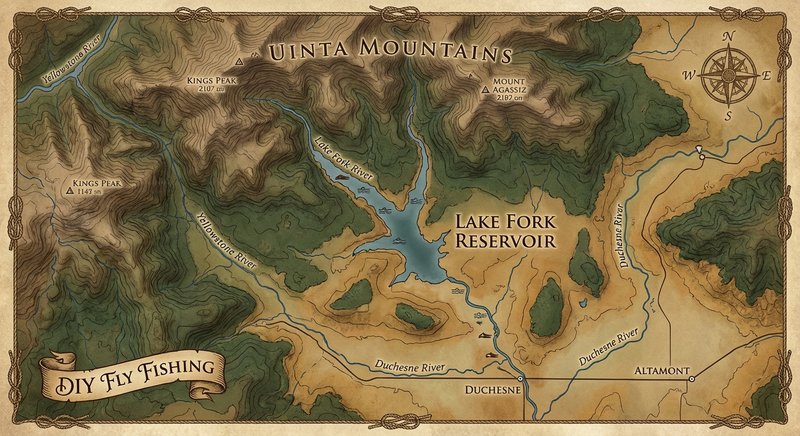
Lake Fork Reservoir
Fly fishing in Utah · Beginner · Best seasons: Summer, Fall
Target Species
Rainbow Trout, Brown Trout
About This Water
Moon Lake area reservoir with rainbow trout. Good shore access.
Fishing Recommendations
Lake Fork Reservoir—specifically the area surrounding Moon Lake and the Upper Lake Fork River—is a gem of the High Uintas Wilderness in northeastern Utah. At an elevation of approximately 8,100 feet, this is a high-country fishery that offers a classic alpine experience: crystal-clear water, jagged mountain backdrops, and hard-fighting trout.
Here is your comprehensive guide to fly fishing Lake Fork Reservoir/Moon Lake.
🎣 Location Overview
Lake Fork Reservoir (Moon Lake) serves as the gateway to the High Uintas. It is a large, deep glacial lake fed by the Lake Fork River. The water is characterized by its clarity and cold temperatures, which remain chilly even in the height of summer.
Anglers love this area because it offers a "choose your own adventure" experience. You can fish the deep ledges of the reservoir from a float tube or kayak, or you can hike up the Lake Fork River inlet for classic small-stream pocket water fishing. The shoreline is a mix of rocky scree slopes, sandy flats near the inlet, and dense lodgepole pine forests.
🐟 Target Species & Behavior
The primary draws here are Rainbow Trout and Brown Trout, though you will also encounter Brook Trout and the occasional Kokanee Salmon (which spawn in the fall).
- Brown Trout: These are the predators of the lake. They tend to hold near the rocky drop-offs and submerged timber. In the fall, they become highly aggressive and move toward the inlet to prepare for spawning.
- Rainbow Trout: Often found cruising the shallower flats near the north end of the lake (the inlet) or rising to midges and caddis during the evening "glass-off."
- Behavior: Because the growing season is short at 8,000+ feet, these fish are opportunistic. However, in the clear water, they can be surprisingly leader-shy on bright, calm days.
📅 Best Times to Fish
Optimal Seasons
- Summer (Late June – August): This is the prime window. Ice-off usually happens in May, but the road access and insect activity peak in mid-summer. This is the best time for dry fly action.
- Fall (September – October): This is the "trophy" season. As temperatures drop, the big Brown trout move into the shallows and toward the river mouth. The crowds thin out, and the fish are eager to bulk up for winter.
Best Times of Day
- Morning/Evening: The transition periods are best for surface activity.
- Mid-Day: In the summer, terrestrial fishing (hoppers/ants) peaks between 11:00 AM and 3:00 PM when the wind picks up and knocks bugs into the water.
🪰 Recommended Flies & Techniques
Top Fly Patterns
- Dry Flies: Parachute Adams (#14-18), Elk Hair Caddis (#14-16), and Stimulators (#10-14) for the river. For the lake, use Terrestrials: Fat Alberts, Chernobyl Ants, and Foam Beetles.
- Nymphs: Zebra Midges (black or red, #18-22), Gold-Ribbed Hare’s Ear (#14-16), and Pheasant Tails.
- Streamers: This is often the "secret weapon" here. Woolly Buggers (Olive, Black, or White) and Muddler Minnows mimic the small sculpins and baitfish present in the system.
Effective Techniques
- The "Inlet Focus": The most productive area is where the Lake Fork River enters the reservoir. The moving water brings a constant conveyor belt of food. Use a dry-dropper rig here.
- Stillwater Stripping: If fishing the main body of the lake, use an intermediate sinking line with a slow, erratic strip-strip-pause retrieve using a leech or streamer pattern.
- Sight Fishing: On calm mornings, walk the sandy flats near the north end and look for cruising Rainbows. Long leaders (9ft–12ft) and 5x or 6x tippet are required.
💡 Pro Tips & Local Knowledge
- The Afternoon Wind: Like most Uinta lakes, Moon Lake gets a "witching hour" wind in the afternoon. Don't head back to camp! This wind pushes terrestrial insects toward the eastern shore. Fish the "windward" banks with a large foam hopper—the fish will be waiting for the buffet.
- The "River Hike": If the lake fishing is slow, hike two miles up the Lake Fork Trail. The river becomes a series of beautiful meadow meanders and pocket water where the fish are less pressured and very willing to rise to a Royal Wulff or Humpy.
- Go Deep for Browns: If you want the larger Browns, fish the steep rocky walls on the western side of the lake. Use a heavy sink-tip line and a large articulated streamer in the fall.
⚠️ Important Information
Access
- Access is via Highway 87 to Mountain Home, then north on the Moon Lake Road. The road is paved most of the way but becomes graded dirt/gravel as you approach the lake.
- Moon Lake Resort offers some amenities, but this is a remote area—ensure you have a full tank of gas and plenty of supplies.
Regulations & Permits
- A valid Utah State Fishing License is required.
- Ute Tribal Lands: Be careful if you explore south of the National Forest boundary. Much of the lower Lake Fork River runs through the Uintah and Ouray Indian Reservation, which requires a separate Tribal Fishing Permit. Stick to the Forest Service land (Moon Lake and north) to stay on your state license.
Special Considerations
- Weather: Afternoon thunderstorms are frequent and dangerous in the Uintas. If you see clouds building over the peaks, get off the water immediately.
- Wildlife: This is bear and moose country. Keep a clean camp and give moose a wide berth—they are often found standing in the river inlet.
Bug Hatches & Matching Flies
| Hatch | Type | Peak months | Time of day | Hook sizes | Matching flies |
|---|---|---|---|---|---|
| Blue Winged Olive Baetis spp. | mayfly | April, May, September, October | Mid-day | #18-22 | RS2 #18-22, Parachute BWO #18-20, WD-40 #20-22 |
| Pale Morning Dun Ephemerella excrucians | mayfly | June, July, August | Late Morning to Afternoon | #14-18 | PMD Sparkle Dun #16-18, Pheasant Tail Nymph #14-18, Split Case PMD #16-18 |
| Spotted Sedge Hydropsyche spp. | caddis | July, August | Evening | #12-16 | Elk Hair Caddis #14-16, LaFontaine's Deep Sparkle Pupa #14-16, Goddard Caddis #12-14 |
| Golden Stonefly Hesperoperla pacifica | stonefly | June, July | Morning/Afternoon | #8-12 | Pat's Rubber Legs #8-12, Rogue River Stone #10-12, Golden Chubby Chernobyl #8-12 |
| Chironomids Chironomidae | midge | May, June, September | All Day | #18-24 | Zebra Midge #18-22, Griffith's Gnat #20-24, Ice Cream Cone #18-20 |
| Terrestrial Ants and Beetles Formicidae / Coleoptera | terrestrial | July, August, September | Afternoon | #12-18 | Cinnamon Ant #14-16, Foam Beetle #12-16, Amy's Ant #12-14 |
| Yellow Sally Isoperla spp. | stonefly | July, August | Afternoon/Evening | #14-16 | Yellow Sally Foam Dry #14-16, Iron Lotus #16, Little Yellow Sloan #14-16 |
| Trico Tricorythodes spp. | mayfly | August, September | Early Morning | #20-24 | Trico Spinner #22-24, Sunken Trico Spinner #22-24, Drowned Trico #20-22 |