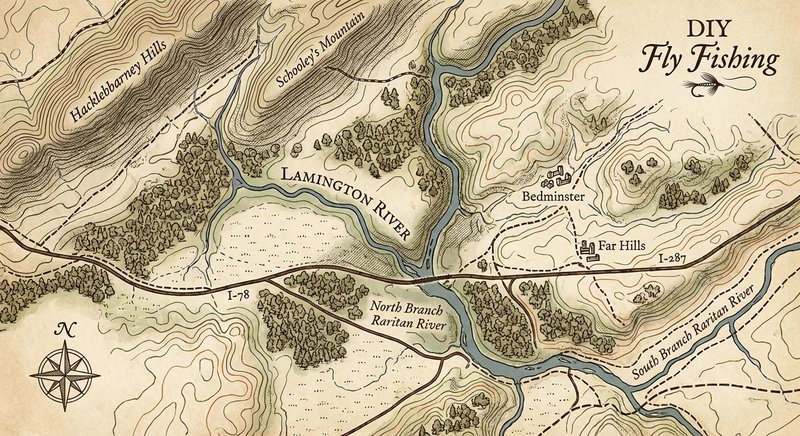
Lamington River
Fly fishing in New Jersey · intermediate · Best seasons: spring, fall
Target Species
Brown Trout
About This Water
Hunterdon County tributary with wild brown trout. Meandering meadow stream with technical fishing.
Fishing Recommendations
The Lamington River (often referred to locally as the Black River in its upper reaches) is one of New Jersey’s most scenic and rewarding trout streams. Flowing through the rolling hills of Morris, Somerset, and Hunterdon counties, it offers a classic Northeast freestone experience with a surprising amount of "pocket water" and technical challenges that keep seasoned anglers coming back.
🎣 Location Overview
The Lamington is a river of two personalities. Its upper section, known as the Black River, flows through the lush Hacklebarney State Park, characterized by steep hemlock-lined gorges and massive boulders. As it moves downstream and becomes the Lamington, it transitions into a more pastoral meadow stream with undercut banks and long, glassy glides.
What makes the Lamington special is its wild character. While New Jersey is the most densely populated state, sections of the Lamington feel remarkably remote. The river features excellent oxygenation due to its gradient, and the rocky substrate provides a perfect habitat for a diverse range of aquatic insects.
🐟 Target Species & Behavior
The primary draw here is the Brown Trout.
- Wild vs. Stocked: The river receives generous stockings of rainbows and browns from the state, but there is a significant population of holdover and wild Brown Trout, particularly in the cooler, rockier stretches near Pottersville.
- Behavior: Lamington Browns are notoriously "spooky." In the clear, shallower flats, they will bolt at the sight of a shadow or a heavy landing.
- Holding Zones:
- Pocket Water: Look for "pillows" in front of boulders or the soft seams behind them.
- Undercut Banks: In the lower meadow stretches, the big browns tuck deep under the banks during the day.
- Tail-outs: During evening hatches, fish move to the very tail-ends of pools to intercept drifting insects.
📅 Best Times to Fish
Optimal Seasons
- Spring (April – June): This is the prime window. As water temperatures hit the 50s and low 60s, the major hatches begin.
- Fall (September – November): My personal favorite. The crowds thin out, and the Brown Trout become aggressive and colored up for the spawn. The cooler nights drop water temps back into the "sweet spot."
Best Times of Day
- Spring: Mid-morning to late afternoon (matching the heat of the day for hatches).
- Fall/Late Spring: Early morning and "The Magic Hour" (last 60 minutes of light).
Prime Conditions
Look for a falling barometer or a slight tint to the water after a light rain. "Lamington Tea"—a slight tannin stain common in this river—actually helps mask your presence from the fish.
🪰 Recommended Flies & Techniques
Top Fly Patterns
- Dry Flies:
- Hendrickson (April): Size 12-14.
- Tan/Olive Caddis (May/June): Size 14-18 (Elk Hair or CDC).
- Blue Winged Olives (BWO): Size 18-22 (Essential for overcast days).
- Terrestrials (Late Summer/Early Fall): Size 14-16 Foam Ants or Beetles.
- Nymphs:
- Pheasant Tail: Size 14-18 (Bead-head and unweighted).
- Zebra Midge: Size 18-22 in black or red.
- Frenchie: Size 14-16 (great for the faster pocket water).
- Streamers:
- Black or Olive Wooly Buggers: Size 8-10.
- Muddler Minnow: To mimic the sculpins found in the rocky reaches.
Effective Techniques
- Tight-Line (Euro) Nymphing: In the Pottersville gorge, this is the most effective way to pick apart the deep pockets between boulders where a traditional indicator would get caught in conflicting currents.
- Delicate Dry Fly: In the meadow stretches, use a long leader (9-12 feet) tapering to 6X or 7X tippet. A "reach cast" is essential to prevent drag.
- The "Swing": Swinging a small wet fly or soft hackle through the riffles is a local secret during a caddis emergence.
💡 Pro Tips & Local Knowledge
- The Pottersville Bridge: This is the most famous access point. While it gets pressured, the fishing just upstream and downstream in the boulder gardens is world-class for NJ.
- Stealth is Key: Because the river isn't overly wide, wading loudly will kill a hole for 30 minutes. Move slowly, stay low, and try to fish "upstream" so you are approaching the trout from behind their field of vision.
- Temperature Check: The Lamington can get warm in July and August. If the water hits 68°F, stop fishing. This river relies on holdover fish; stressing them in warm water leads to high mortality rates.
- The "Black River" Section: If the lower Lamington is running high/muddy, head upstream into Hacklebarney State Park. The canopy and steep terrain keep the water cooler and clearer.
⚠️ Important Information
Access
- Hacklebarney State Park: Excellent public access with hiking trails.
- Pottersville: Access near the bridge and certain marked "Fish & Wildlife" pull-offs.
- Private Property: Much of the Lamington flows through private estates. Always look for "Posted" signs. If it’s not marked and you are in the water, stay within the high-water marks, but be respectful of homeowners.
Regulations
- License: You must have a valid New Jersey Fishing License and a Trout Stamp.
- Regulations: Check the current NJ Freshwater Fishing Digest. Most of the Lamington is managed under statewide Trout Regulations, but sections may have specific "Catch and Release" or "Seasonal" rules.
Gear Recommendation
- Rod: A 7.5' to 9' 4-weight or 5-weight rod is perfect.
- Waders: Studded boots are highly recommended. The rocks in the Pottersville section are notoriously "greasy" with algae.
Bug Hatches & Matching Flies
| Hatch | Type | Peak months | Time of day | Hook sizes | Matching flies |
|---|---|---|---|---|---|
| Blue-Winged Olive Baetis spp. | mayfly | March, April, September, October | Afternoon | #18-22 | RS2 #18-22, Blue-Winged Olive Sparkle Dun #18-22, Pheasant Tail Nymph #18-20 |
| Hendrickson Ephemerella subvaria | mayfly | April, May | Afternoon | #12-14 | Hendrickson Dark #12-14, Red Quill #14, Hendrickson Emerger #12-14 |
| Grannom Caddis Brachycentrus | caddis | April | All day | #14-16 | LaFontaine's Deep Sparkle Pupa #14-16, Elk Hair Caddis (Olive/Apple) #14-16, Peacock Caddis #16 |
| Sulphur Ephemerella invaria/dorothea | mayfly | May, June | Evening | #14-18 | Sulphur Parachute #14-18, Comparison Dun #16-18, Sulphur Emerger #16-18 |
| March Brown Maccaffertium vicarium | mayfly | May | Afternoon | #10-12 | March Brown American #10-12, Gold Ribbed Hare's Ear #10-12, March Brown Wet Fly #12 |
| Tan Caddis Hydropsyche | caddis | June, July, August | Evening | #14-18 | Tan Elk Hair Caddis #14-18, Hydropsyche Larva #14-16, Iris Caddis #16 |
| Trico Tricorythodes | mayfly | July, August, September | Morning | #22-26 | Trico Spinner #22-26, Trico Parachute #24, Zebra Midge #22-24 |
| Isonychia Isonychia bicolor | mayfly | June, September | Late Afternoon | #10-12 | Isonychia Parachute #10-12, Zug Bug #10-12, Isolynchia Nymph #10-12 |
| Light Cahill Stenacron interpunctatum | mayfly | June, July | Evening | #12-14 | Light Cahill #12-14, Cream Usual #14, Gold Ribbed Hare's Ear (Light) #14 |
| Terrestrials Formicidae / Coleoptera | terrestrial | July, August, September | Mid-day | #12-18 | Black Foam Beetle #14-16, Cinnamon Ant #16-18, Dave's Hopper #12 |