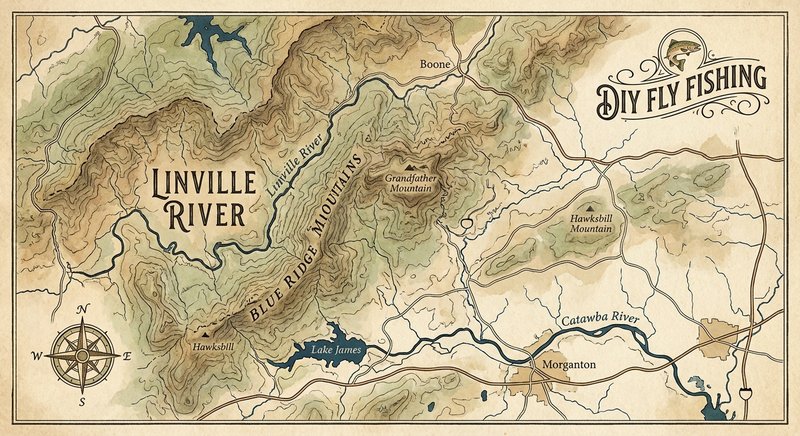
Linville River
Fly fishing in North Carolina · Advanced · Best seasons: Spring, Summer, Fall
Target Species
Brown Trout, Rainbow Trout
About This Water
Scenic river near Linville Falls with wild trout. Challenging gorge fishing.
Fishing Recommendations
As an expert guide who has spent years navigating the rugged terrain of the Blue Ridge Mountains, I can tell you that the Linville River is one of the most iconic, rewarding, and physically demanding trout fisheries in the Eastern United States.
Specifically, the stretch within the Linville Gorge Wilderness (often called the "Grand Canyon of the East") offers a true backcountry experience that separates the casual anglers from the dedicated woodsmen.
🎣 Location Overview
The Linville River is a masterpiece of Appalachian geology. Starting high on Grandfather Mountain, it winds through the town of Linville before plunging over the famous Linville Falls and into a 12-mile-long, 2,000-foot-deep wilderness gorge.
What makes it special: This is "Big Water" by North Carolina standards. The river is characterized by massive boulders (some the size of houses), deep emerald pools, and pocket water. Unlike the manicured banks of private water, the Linville is raw. You are fishing in a federally designated wilderness area where the scenery is as breathtaking as the fishing is challenging.
Water Characteristics: High gradient, cold, and well-oxygenated. The water can be technical due to complex currents created by the boulders, requiring precise mending and physical agility.
🐟 Target Species & Behavior
The Linville is home to Wild Brown Trout and Wild Rainbow Trout, with some stocked fish found in the upper reaches above the falls.
- Wild Browns: These are the kings of the Gorge. They are notoriously spooky and tend to hold in "unreachable" spots—under cut banks, deep in the shadows of boulders, or at the very tail-outs of deep pools during low light. They are predatory and will move for a large meal.
- Wild Rainbows: Found in the faster water, riffles, and oxygenated "pockets." They are opportunistic feeders but remain wary of clumsy wading and overhead shadows.
- Behavior: Because the river is nutrient-poor compared to limestone streams, these fish are opportunistic but highly attuned to their environment. If they see you, the game is over.
📅 Best Times to Fish
Optimal Seasons
- Spring (April – June): This is the prime window. The water temperatures hit the "magic" 50–55°F range, and the major hatches (Quill Gordons, March Browns, and Light Cahills) occur.
- Fall (Late September – November): The Brown Trout become aggressive as they prepare for the spawn. The foliage is world-class, and the water levels are usually stable.
- Summer (July – August): Fishing remains viable due to the depth of the gorge and tree canopy, but you must focus on early mornings and evenings. Terrestrial fishing (beetles/ants) is at its peak.
Prime Fishing Windows
- Low Light: The hour before dusk is legendary on the Linville. Large Browns that hide all day will move into the shallows to feed.
- Post-Rain: As the river begins to clear after a rain (the "drop and clear"), the fish lose their inhibitions. This is the best time for streamers.
🪰 Recommended Flies & Techniques
Top Fly Patterns
- Dry Flies:
- Stimulators (Orange or Yellow, size 12-16) – Great attractor/indicator.
- Parachute Adams (size 14-18) – The gold standard.
- Yellow Sallies (size 14-16) – A staple in the late spring.
- Nymphs:
- Pheasant Tail (size 14-18) – Mimics many mayfly nymphs.
- Prince Nymph (size 12-14) – Works well in the heavy pocket water.
- Pat’s Rubber Legs (size 8-12) – Essential for high water or targeting big Browns.
- Streamers:
- Wooly Bugger (Black or Olive, size 6-10).
- Game Changers – For those targeting the "Gorge Monsters."
Effective Techniques
- High-Sticking/Tight-Line Nymphing: Given the massive boulders and micro-currents, traditional fly line on the water often causes drag. Keeping your rod high and only your leader in the water is the best way to fish the pockets.
- Dry-Dropper: A buoyant Stimulator with a heavy nymph (like a Bead-head Pheasant Tail) 24 inches below it is the most effective way to cover the varying depths of the Linville.
- The "Stealth Approach": Fish upstream. Always. Approach pools from behind and stay low.
💡 Pro Tips & Local Knowledge
- The "Gorge Tax": Be prepared to lose flies. The bottom of the Linville is a graveyard of tackle due to the jagged rocks. Bring extra leaders and tippet (4x and 5x are standard).
- Focus on the "Back Eddies": In the heavy current of the Gorge, trout look for "soft" water. Look for the small recirculating bubbles behind large rocks—often, a trophy Brown is sitting right in that foam line.
- The Babelay Factor: Local legends often use heavy "Babelay" style nymphs (oversized and weighted) to get deep into the plunges where the biggest fish reside.
- Conditioning is Key: Fishing the Gorge is more like mountaineering with a fly rod. The trails (like the Babel Tower or Pinch-In trails) are incredibly steep. Pack light, carry plenty of water, and wear high-traction wading boots (felt with studs is highly recommended).
⚠️ Important Information
Access Information
- Upper Linville: Accessible via the Blue Ridge Parkway near the Linville Falls Visitor Center.
- The Gorge: Access via NC 181 or the Linville Falls Highway (US 221). Use the rugged wilderness trails (Babel Tower, Spence Ridge, or Conley Cove). Note: These trails can be dangerous in wet conditions.
Regulations & Permits
- Wild Trout Waters: Much of the river is classified as Wild Trout Waters. This means Single-Hook Artificial Lures Only and a size limit of 7 inches (though most wilderness anglers practice 100% catch and release).
- Permits: A valid North Carolina Fishing License with a Trout Buffer is required. If camping overnight in the Gorge (weekends/holidays), a wilderness permit from the Forest Service is required.
Special Considerations
- Safety: Cell service is non-existent in the bottom of the Gorge. Always tell someone your entry and exit points.
- Wildlife: This is Copperhead and Timber Rattlesnake country. Watch your step on the sunny rocks and when climbing over logs.
- Flash Floods: The Linville watershed is large. If you see the water turning murky or rising, exit the river immediately; the Gorge walls offer few escape routes.
Bug Hatches & Matching Flies
| Hatch | Type | Peak months | Time of day | Hook sizes | Matching flies |
|---|---|---|---|---|---|
| Quill Gordon Epeorus pleuralis | mayfly | March, April | Midday | #12-14 | Quill Gordon Dry #12-14, Quill Gordon Wet Fly #12-14 |
| Blue Winged Olive Baetis | mayfly | March, April, October, November | Overcast Afternoons | #18-22 | RS2 #20-22, BWO Parachute #18-22 |
| Yellow Sally Isoperla | stonefly | May, June, July | Late Afternoon/Evening | #14-16 | Yellow Sally Stimulator #14-16, Little Yellow Stone Nymph #14-16 |
| March Brown Maccaffertium vicarium | mayfly | April, May | Midday/Afternoon | #10-14 | March Brown Parachute #12-14, Hare's Ear Nymph #10-14 |
| Golden Stonefly Acroneuria | stonefly | May, June | Morning/Evening | #6-10 | Pat's Rubber Legs #6-10, Golden Stimulator #8-10 |
| Grannom Caddis Brachycentrus | caddis | April | All Day | #14-16 | Elk Hair Caddis (Dark) #14-16, Holy Grail Nymph #14-16 |
| Light Cahill Stenacron/Stenonema | mayfly | June, July | Evening/Dusk | #12-14 | Light Cahill Dry #12-14, Cream Usual #14 |
| Terrestrials Formicidae/Coleoptera | terrestrial | July, August, September | Midday | #12-18 | Cinnamon Ant #14-18, Foam Beetle #12-16 |
| Tan Caddis Hydropsyche | caddis | May, June, September | Late Afternoon/Evening | #14-18 | Pupa-tator #14-16, Peeping Caddis #14-16 |
| Midges Chironomidae | midge | January, February, December | Midday | #20-24 | Zebra Midge #20-22, Griffith's Gnat #20-24 |