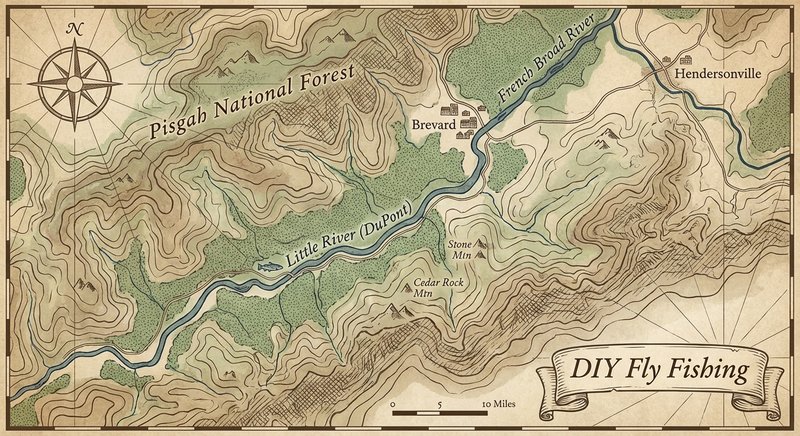
Little River (DuPont)
Fly fishing in North Carolina · Intermediate · Best seasons: Spring, Summer, Fall
Target Species
Brown Trout, Rainbow Trout
About This Water
Scenic stream in DuPont State Forest with waterfalls. Wild brown and rainbow trout.
Fishing Recommendations
The Little River, flowing through the heart of DuPont State Recreational Forest in North Carolina, is one of the most scenic and unique fly fishing destinations in the Southeast. Known for its massive waterfalls and ancient granite riverbeds, this river offers a mix of classic Appalachian freestone fishing and "meadow-style" flats.
As your guide, here is everything you need to know to find success on the Little River.
🎣 Location Overview
The Little River is a "tea-colored" freestone stream that drains the high plateaus of the DuPont State Forest. What makes it special is the geology; the river flows over massive granite shelves, creating iconic landmarks like High Falls, Triple Falls, and Hooker Falls.
The water is stained with tannins, giving it a dark, whiskey-like hue. This provides excellent cover for fish but requires anglers to adjust their fly selection for visibility. The river transitions from slow-moving, sandy-bottomed "meadow" sections to high-gradient pocket water and deep plunge pools beneath the falls. Because it is managed primarily as Delayed Harvest (DH) water, it boasts high fish densities for much of the year.
🐟 Target Species & Behavior
- Rainbow Trout: These are the primary targets during the Delayed Harvest season. They tend to congregate in the oxygenated riffles and at the heads of deep pools. They are opportunistic and will often move into shallower water to feed during a hatch.
- Brown Trout: The "residents" of the Little River. While many are stocked, there are wild and holdover browns that grow quite large by hiding under the massive granite ledges and submerged timber. They are more light-sensitive and prefer the deeper, darker undercut banks.
- Behavior: Due to the stained water, trout here rely heavily on their lateral lines and silhouette recognition. They aren't quite as "leader shy" as fish in crystal-clear spring creeks, but they are wary of overhead movement due to the high volume of hikers in the park.
📅 Best Times to Fish
Optimal Seasons
- Spring (March – May): The absolute prime time. The water temperatures are perfect (50–60°F), and the Delayed Harvest stocking is at its peak. This coincides with major insect hatches.
- Fall (October – November): The restart of the DH season. The cooler air and changing leaves make for a beautiful backdrop. Fish are aggressive as they prepare for winter.
- Summer (June – August): Use caution. The Little River is at a lower elevation than many high-mountain streams. Water temperatures can exceed 70°F, which is lethal for trout. Only fish early in the morning and carry a thermometer; if it’s over 68°F, give the fish a break.
Best Times of Day
- Early Morning: Best for summer and late spring.
- Mid-Day: In late fall and winter, the sun warming the water by just 2-3 degrees can trigger a midge or BWO hatch.
🪰 Recommended Flies & Techniques
Top Fly Patterns
- Nymphs:
- Sexy Walt’s Worm (Size 12-16): Great for the stained water.
- Pheasant Tail (Flashback) (Size 14-18): A staple for mimicking Mayflies.
- Squirmy Wormies/Egg Patterns: Highly effective for recently stocked DH fish.
- Girdle Bug (Pat’s Rubber Legs): Essential for the larger holdover Browns.
- Dry Flies:
- Elk Hair Caddis (Size 14-16): Tan or Olive.
- Parachute Adams (Size 16-20): The best general searcher.
- Yellow Stimulator (Size 12-14): Great for the "Little Yellow Sally" hatches in late spring.
- Streamers:
- Black or Olive Wooly Bugger: The tea-colored water makes dark silhouettes stand out.
- Gamechanger (Small): For those hunting the trophy browns in the plunge pools.
Techniques & Presentation
- Tight-Line Nymphing: In the rocky sections below Hooker Falls, a Euro-nymphing rig is deadly. It allows you to feel the take in the turbulent pocket water.
- Dry-Dropper: In the flatter meadow sections, use a buoyant foam hopper or large Stimulator with a small pheasant tail dropped 18 inches below.
- Swinging Streamers: Below the major falls, cast large streamers into the "foam lines" and swing them through the deep eddies.
💡 Pro Tips & Local Knowledge
- The "Hooker Falls" Strategy: Most anglers crowd the area immediately at the base of Hooker Falls. If you hike downriver toward the Triple Falls trail, you will find less pressured water and more "natural" holding lies.
- Mind the Granite: The rock in DuPont is notoriously slippery. Felt-soled boots with carbide studs are highly recommended. Rubber soles will act like ice skates on the submerged granite shelves.
- The Color Factor: Because the water is dark, use flies with a bit of "flash" (bead heads, tinsel ribs) or very dark silhouettes (black/coffee colors).
- Stealth is Key: Despite the hikers, the fish are sensitive to bank vibrations. Stay low and avoid wading in the middle of a pool if you can cast from the edge.
⚠️ Important Information
Access
- Hooker Falls Access Area: The most popular entry point. Plenty of parking and easy access to the river.
- High Falls Access: Requires a longer hike but offers access to the "Upper" sections which see fewer anglers.
Regulations & Permits
- Delayed Harvest (DH): From October 1 to the first Saturday in June, the Little River (from Cascade Lake to the DuPont boundary) is Catch and Release ONLY, and you must use single-hook artificial lures.
- License: A valid North Carolina Fishing License with a Trout Signoff is required.
- Park Hours: DuPont State Forest is a day-use park. Be sure to check closing times (usually dusk) so you don't get your vehicle locked in the lot.
Special Considerations
- Safety: Do not attempt to wade near the crest of the waterfalls. The current is stronger than it looks, and the rocks are slick.
- Multi-Use: You will share the trails with hikers, bikers, and photographers. Be a good ambassador for the sport—keep your backcast clear of the trails!
Bug Hatches & Matching Flies
| Hatch | Type | Peak months | Time of day | Hook sizes | Matching flies |
|---|---|---|---|---|---|
| Blue Winged Olive Baetis | mayfly | March, April, October, November | Mid-day/Afternoon | #18-22 | RS2 #20-22, Parachute BWO #18-20, WD-40 #20-22 |
| Quill Gordon Epeorus pleuralis | mayfly | March, April | Mid-day | #12-14 | Quill Gordon Dry #12-14, Pheasant Tail Nymph #12-14, Wet Quill Gordon #12-14 |
| March Brown Maccaffertium vicarium | mayfly | April, May | Afternoon | #10-14 | American March Brown #10-12, Hare's Ear Nymph #10-14, March Brown Emerger #12 |
| Yellow Sally Isoperla | stonefly | May, June, July | Late Afternoon/Evening | #14-16 | Yellow Sally Dry #14-16, Iron Lotus #16, Kauffman's Stimulator #14-16 |
| Light Cahill Stenacron / Stenonema | mayfly | June, July | Evening | #12-14 | Light Cahill #12-14, Cream Variant #14, Gold Ribbed Hare's Ear #14 |
| Tan Caddis Hydropsyche | caddis | April, May, September | Morning/Evening | #14-18 | Elk Hair Caddis #14-16, Holy Grail #16, LaFontaine's Deep Sparkle Pupa #14-16 |
| Golden Stonefly Acroneuria | stonefly | May, June | Morning/Afternoon | #8-12 | Golden Stone Nymph #8-10, Pat's Rubber Legs #8-12, Golden Stimulator #8-12 |
| Midges Chironomidae | midge | January, February, December | All Day | #18-24 | Zebra Midge #18-22, Griffith's Gnat #20-22, Mercury Midge #20 |
| Terrestrials | terrestrial | July, August, September | All Day | #10-16 | Parachute Ant #14-16, Black Foam Beetle #12-14, Green Weenie #12-14 |