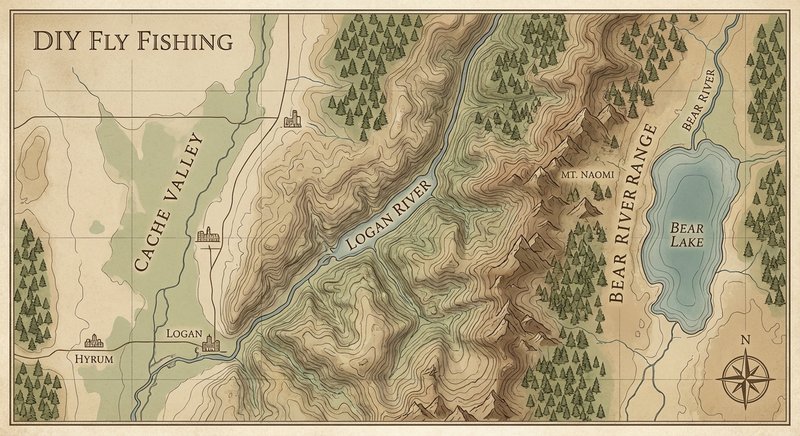
Logan River
Fly fishing in Utah · Beginner · Best seasons: Summer, Fall
Target Species
Brown Trout, Cutthroat Trout
About This Water
Northern Utah freestone stream in beautiful Logan Canyon. Wild brown and cutthroat trout.
Fishing Recommendations
As your guide to the Intermountain West, it is a pleasure to break down the Logan River. This is one of Utah’s premier blue-ribbon fisheries—a classic freestone canyon river that offers everything from technical pocket water to hungry high-alpine trout.
Here is your comprehensive guide to fishing the Logan.
🎣 Location Overview
The Logan River is a high-elevation freestone stream that flows out of the Bear River Mountains through the scenic Logan Canyon. What makes it special is its structural diversity. It is divided into three distinct sections by small dams (1st, 2nd, and 3rd dams), and as you move upstream, the character changes from a medium-sized river to a cascading mountain creek.
Anglers love the Logan because it is incredibly accessible (Hwy 89 runs parallel to it) yet retains a "wild" feel. The water is crystal clear, cold, and highly oxygenated, creating an ideal habitat for wild trout. Unlike the technical, slow-moving currents of the nearby Provo or Weber, the Logan is fast, punchy, and rewards those who can read "bubbly" water.
🐟 Target Species & Behavior
The Logan is a "trout factory," primarily managed for wild populations.
- Brown Trout: Dominant in the lower sections (below the 3rd dam and into the valley). They are opportunistic but can be wary in the slower pools. They hold deep in the shadows of overhanging willows and undercut banks.
- Bear Lake Cutthroat Trout: As you move higher into the canyon (above the 3rd dam and toward Tony Grove), the Cutthroat become the primary residents. They are famous for their willingness to rise to a dry fly and their stunning orange slashes.
- Behavior: These fish are adapted to fast water. They don't have long to decide if something is food. Consequently, they often strike aggressively. They hold in the "cushion" in front of boulders, in the soft seams between fast and slow water, and in the deep tail-outs of pools during the evening.
📅 Best Times to Fish
Optimal Seasons
- Summer (July – August): This is the "Golden Age" on the Logan. Once the spring runoff subsides (usually by late June), the dry fly fishing is world-class.
- Fall (September – October): My personal favorite. The Brown trout become aggressive as they prepare to spawn, and the Cutthroats are eager to bulk up before winter. The canyon colors are spectacular.
Best Times of Day
- Summer: Mid-morning (9 AM) for the start of hatches, and the "Magic Hour" (6 PM to dusk) for caddis activity.
- Fall: Late morning through mid-afternoon. As the water cools, the fish wait for the sun to hit the water to activate the bugs.
🪰 Recommended Flies & Techniques
Top Fly Patterns
- Dry Flies:
- Caddis: Elk Hair Caddis (tan/olive, sizes 14-18) is the bread and butter here.
- Terrestrials: Fat Albert, Amy's Ant, or Dave’s Hopper (July–Sept).
- Mayflies: Parachute Adams (16-20) and PMDs (16-18).
- Nymphs:
- Frenchie or Pheasant Tail (16-20)
- Zebra Midge (18-22) in red or black.
- Pat’s Rubber Legs (8-12) for the deeper holes.
- Streamers:
- Wooly Bugger (Black or Olive) or a Gold Ribbed Hare’s Ear streamer.
Effective Techniques
- Dry-Dropper: This is the most effective way to fish the Logan. Use a buoyant hopper or large caddis on top, with a small pheasant tail nymph 18–24 inches below it.
- High-Sticking/Euro Nymphing: Because the river is rocky with many micro-currents, keeping your fly line off the water is crucial to prevent drag.
- Pocket Water Fishing: Don't just look for the big pools. Cast into the small "pockets" of calm water behind rocks. Often, a trophy fish is sitting in a spot no larger than a dinner plate.
💡 Pro Tips & Local Knowledge
- The "Three Dam" Rule:
- Lower Section: Focus on streamers and large nymphs for big Browns.
- Middle Section: Perfect for dry-dropper rigs.
- Upper Section (Above Card Canyon): Switch to smaller dries and light leaders (5x or 6x) for native Cutthroats.
- Stealth Matters: Even though the water is fast, the fish can see you through the clear surface. Approach pools from downstream and stay low.
- Temple Fork & Right Hand Fork: These are major tributaries. If the main stem is crowded, hike up these forks for smaller water and very eager, albeit smaller, trout.
- The "Logan Lift": When fishing a caddis, let it skitter or swing at the end of your drift. A moving fly often triggers a violent strike on this river.
⚠️ Important Information
Access
Most of the river through Logan Canyon is within the Uinta-Wasatch-Cache National Forest, meaning public access is excellent. There are numerous pull-outs along Hwy 89.
Regulations
- License: A valid Utah Fishing License is required.
- Special Rules: Be aware that certain sections have specific bag limits. From the second dam to the Idaho state line, there are specific restrictions on keeping Cutthroat trout to protect the population. Check the current Utah Fishing Guidebook, as the "Special Regulations" sections can change annually.
- Catch and Release: While not mandatory in all spots, C&R is highly encouraged to maintain the quality of this wild fishery.
Special Considerations
- Safety: The Logan is a "slick" river. The rocks are covered in periphyton (algae). Wading boots with felt or studs and a wading staff are highly recommended.
- Temperature: In the heat of August, monitor water temps. If the water hits 68°F, stop fishing to protect the trout from exhaustion-related mortality.
Bug Hatches & Matching Flies
| Hatch | Type | Peak months | Time of day | Hook sizes | Matching flies |
|---|---|---|---|---|---|
| Blue Winged Olive (BWO) Baetis tricaudatus | mayfly | March, April, October, November | Late Morning/Afternoon | #18-22 | RS2 #18-22, Parachute Adams #18-22, Pheasant Tail Nymph #18-20 |
| Mother's Day Caddis (Grannom) Brachycentrus occidentalis | caddis | May | Late Afternoon/Evening | #14-16 | Elk Hair Caddis (Olive) #14-16, LaFontaine's Deep Sparkle Pupa #14-16, Peacock Caddis #16 |
| Salmonfly Pteronarcys californica | stonefly | June | All Day | #4-8 | Rogue River Stone #4-8, Pat's Rubber Legs #6-10, Stimulator (Orange) #8-10 |
| Golden Stonefly Hesperoperla pacifica | stonefly | June, July | Morning/Evening | #8-12 | Golden Twenty Incher #8-12, Norm Wood Special #8-10, Clark's Stone #10-12 |
| Pale Morning Dun (PMD) Ephemerella inermis | mayfly | June, July, August | Late Morning/Early Afternoon | #16-18 | PMD Sparkle Dun #16-18, Split Case PMD #16-18, Pale Morning Dun Parachute #16-18 |
| Western Green Drake Drunella grandis | mayfly | July | Afternoon/Evening | #10-12 | Green Drake Hairwing #10-12, Drake Paradox #10-12, Picket Pin #10-12 |
| Little Yellow Stonefly (Yellow Sally) Isoperla spp. | stonefly | July, August | Afternoon/Evening | #14-16 | Yellow Sally Foam Stone #14-16, Iron Lotus #16, Crystal Flash Yellow Sally #14-16 |
| Terrestrials Orthoptera / Formicidae | terrestrial | July, August, September | Mid-day/Afternoon | #10-16 | Parachute Hopper #10-14, Cinnamon Ant #16-18, Black Foam Beetle #14-16 |
| Winter Midge Chironomidae | midge | January, February, March | Late Morning/Afternoon | #20-24 | Zebra Midge #18-22, Griffith's Gnat #20-24, Mercury Midge #20-22 |