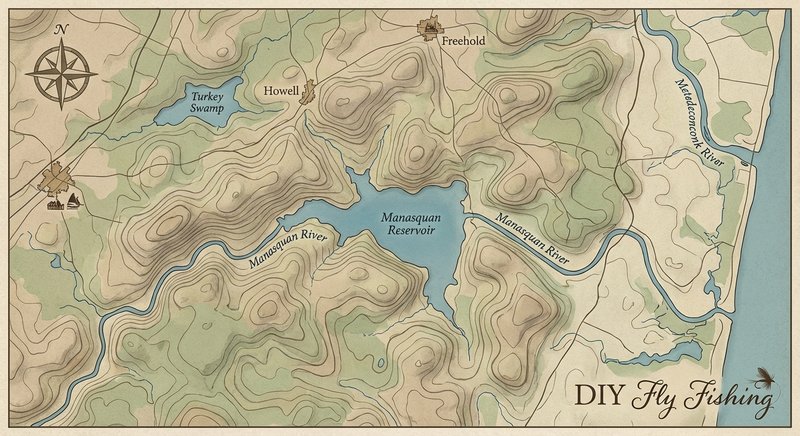
Manasquan Reservoir
Fly fishing in New Jersey · beginner · Best seasons: spring, fall
Target Species
Rainbow Trout, Brown Trout
About This Water
Monmouth County reservoir with good trout fishing. Electric motors only creates peaceful fishing environment.
Fishing Recommendations
As an expert guide who has navigated the varied waters of the Mid-Atlantic, I can tell you that the Manasquan Reservoir in Howell, New Jersey, is a unique beast. While most fly anglers in Jersey head to the Musconetcong or the Pequest for trout, the "Squan" offers a different, stillwater challenge.
It is important to understand that this is a stocked, put-and-take trout fishery. Because it is a coastal plain reservoir, it does not support year-round wild trout populations due to summer thermoclines, but during the spring and fall, it provides some of the best stillwater trout opportunities in Monmouth County.
🎣 Location Overview
The Manasquan Reservoir is a 770-acre man-made impoundment. Unlike the rocky, tumbling streams of North Jersey, this is a deep, expansive body of water surrounded by woods and wetlands.
What makes it special for the fly angler is the sheer volume of water and the quality of the stocking. The NJ Division of Fish & Wildlife treats this as a major "Heavy Stocking" site. Because it’s a reservoir, the trout have room to spread out and "silver up," often becoming more feisty than their creek-dwelling cousins. The water is generally clear but can have a cedar-stained tint typical of South/Central Jersey.
🐟 Target Species & Behavior
- Rainbow Trout: These are the primary residents in the spring. They tend to cruise the upper 5–10 feet of the water column along the rip-rap (the rocky edges of the dam) and near the boat ramps. They are aggressive and will school up.
- Brown Trout: Typically stocked in smaller numbers or as "survivor" fish from the late fall. Browns here are more structure-oriented and light-sensitive. They tend to hold deeper and closer to submerged timber or the steep drop-offs along the dam.
- Forage Base: These trout transition quickly from "pellet-head" behavior to feeding on Chironomids (midges), Scuds, and Alewives (small baitfish).
📅 Best Times to Fish
- Optimal Seasons:
- Spring (April – Late May): This is the "Golden Era." Focus on the weeks immediately following the state stocking dates.
- Fall (October – November): When the water temperatures drop back below 65°F, the state often performs "Winter Trout" stocking. This is a quieter, peaceful time to fish.
- Best Times of Day:
- First Light: Stillwater trout are most active at the surface before the sun hits the water.
- Overcast Days: This is the secret to Manasquan. On cloudy days, trout stay in the shallows longer and are less "spooky."
- Prime Windows: Watch for a "calm before the storm"—a falling barometer often triggers a feeding frenzy among the stocked Rainbows.
🪰 Recommended Flies & Techniques
Top Fly Patterns
- Streamers:
- Woolly Bugger (Size 8-12): Black, Olive, or White (to mimic baitfish).
- Mickey Finn: The classic bright colors work well on freshly stocked fish.
- Nymphs/Midges:
- Zebra Midge (Size 18-22): Red or Black with a silver bead.
- Hare's Ear or Pheasant Tail (Size 14-16): Standard fare for cruising fish.
- Attractors:
- Egg Patterns or Squirmy Wormies: Let’s be honest—for recently stocked fish, these are high-percentage flies.
Effective Techniques
- The "Stillwater Strip": Use an intermediate sinking line or a long leader (12ft+) on a floating line. Cast toward the rip-rap, let it sink for 5–10 seconds, and use a slow, rhythmic "figure-eight" retrieve or short 3-inch strips.
- Indicator Nymphing: In the early morning, hang a Zebra Midge 4–6 feet under a small slip-indicator. The wave action of the reservoir provides all the movement the fly needs.
- Bank Fishing the Rip-Rap: You don't need a boat. Walking the dam and casting parallel to the rocks is the most effective way to find trout looking for a meal.
💡 Pro Tips & Local Knowledge
- Focus on the Dam: The area near the main dam and the visitor center is the deepest part of the reservoir. Trout gravitate here because the water stays cooler and the rocks hold heat in the spring, attracting insects.
- The Wind is Your Friend: If the wind is blowing into a bank, the baitfish and insects are being pushed there. It might be harder to cast, but that’s where the trout will be feeding.
- Watch the Perimeter Trail: There is a 5-mile trail around the water. Use it to find "pockets" away from the main boat ramps. Look for areas where small feeder creeks enter the reservoir after a rain—these are trout magnets.
- Beware the "Hybrids": Manasquan is also famous for Hybrid Striped Bass. If you hook something that peels 50 yards of line off your reel in three seconds, it’s not a trout! Ensure your 5-weight has a decent drag system.
⚠️ Important Information
- Access: The main entry is via Manasquan Reservoir County Park (Windeler Rd, Howell). There is a boat ramp and a visitor center with plenty of parking.
- Regulations:
- A NJ Freshwater Fishing License and a Trout Stamp are mandatory for anyone 16–69.
- Observe all NJ Fish & Wildlife "Closed to Fishing" dates during the spring stocking weeks (usually Mondays).
- Boating: If you bring a kayak or boat, it must be electric motors only. No gas engines are allowed on the water.
- Wading: Wading is generally not permitted or recommended due to the steep drop-offs and reservoir regulations. Fishing is primarily done from the banks, piers, or a boat.
Guide’s Final Word: The Manasquan Reservoir is a "patience" fishery. You aren't reading a stream; you are hunting cruising fish. Keep your fly in the water, vary your retrieve depth, and enjoy the sunset—it's one of the prettiest spots in Central Jersey.
Bug Hatches & Matching Flies
| Hatch | Type | Peak months | Time of day | Hook sizes | Matching flies |
|---|---|---|---|---|---|
| Midges (Chironomids) Chironomidae | midge | March, April, September, October | All Day | #18-24 | Zebra Midge #18-22, Griffith's Gnat #20-22, Palomino Midge #20-22 |
| Damselfly Enallagma spp. | terrestrial | June, July, August | Late Morning/Afternoon | #10-14 | Marabou Damsel Nymph #10-12, Adult Damsel #12-14 |
| Dragonfly Anisoptera | terrestrial | June, July, August | Daytime | #4-10 | Dragonfly Nymph #6-10, Deer Hair Dragonfly #4-8 |
| Callibaetis (Speckled Duns) Callibaetis | mayfly | May, June, September | Morning | #14-16 | Callibaetis Parachute #14-16, Hare's Ear Nymph #14-16 |
| Hexagenia (The Hex) Hexagenia limbata | mayfly | June, July | Dusk/Night | #6-10 | Hex Hagen #6-8, Hex Nymph #6-10 |
| Cinnamon Caddis Hydropsyche | caddis | May, June | Evening | #14-18 | Elk Hair Caddis #14-16, Pupa (Tan/Orange) #16-18 |
| Black Ants Formicidae | terrestrial | July, August, September | Afternoon | #12-18 | Black Foam Ant #12-16, Carpenter Ant #10-14 |
| Japanese Beetle Popillia japonica | terrestrial | July, August | Daytime | #10-14 | Foam Beetle #12-14, Coffee's Sparkle Beetle #12-14 |
| White Mayfly Ephoron leukon | mayfly | August | Late Evening | #12-14 | White Wulff #12-14, Ephoron Dun #14 |
| Water Boatman Corixidae | terrestrial | September, October | All Day | #14-18 | Water Boatman #14-16, Prince Nymph #14-18 |