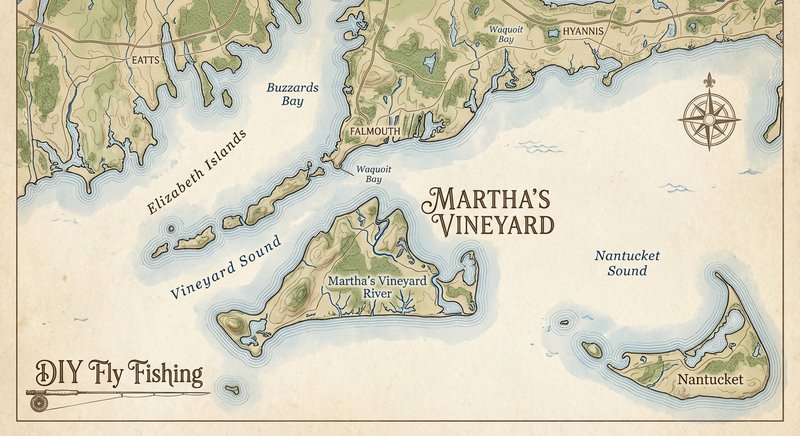
Martha's Vineyard
Fly fishing in Massachusetts · Intermediate · Best seasons: Spring, Summer, Fall
Target Species
Striped Bass, Bluefish, False Albacore, Bonito
About This Water
Island with world-class striped bass fishing. Legendary surf spots.
Fishing Recommendations
Tight lines! You’ve picked one of the most storied saltwater fly fishing destinations in the world. Martha’s Vineyard (MV) is a laboratory of diverse marine environments—ranging from the tranquil, sandy flats of Cape Pogue to the violent, boulder-strewn surf of Aquinnah.
Here is your comprehensive guide to fly fishing "The Vineyard."
🎣 Location Overview
Martha’s Vineyard is an island of contrasts. For the fly angler, it offers three distinct types of water:
- The Sand Flats: Expansive, shallow areas like Cape Pogue and Sengekontacket Pond that offer sight-fishing opportunities reminiscent of the tropics.
- The Breachways and Inlets: Dynamic "moving water" scenarios where salt ponds drain into the ocean, creating a conveyor belt of bait.
- The Deep Suds: The South Shore and the cliffs of Aquinnah, where heavy surf meets deep water and rocky structure, holding the largest resident fish.
What makes it special is the "Islander" culture and the diversity of structure. You can sight-fish for 30-inch Stripers in knee-deep water in the morning and cast into 15-pound Bluefish in heavy rips by afternoon.
🐟 Target Species & Behavior
Striped Bass (Stripers)
- Behavior: The bread and butter of MV. In the spring, they are aggressive and hungry. In the heat of summer, they become "night owls" or hold in deep, cool rips.
- Feed: Sand eels, silversides, crabs, and menhaden (pogies).
Bluefish
- Behavior: The "yellow-eyed devils." They are aggressive, surface-oriented, and will destroy flies. Look for "blitzes" where the water appears to be boiling.
- Feed: Anything that moves. They move in fast-traveling schools.
False Albacore (Albies) & Bonito
- Behavior: The "Funny Fish." These are high-speed tunas that arrive in late summer. They are notoriously fickle, often "slash-feeding" through schools of tiny bait.
- Feed: "Rain bait" (tiny anchovies) and sand eels.
📅 Best Times to Fish
- Spring (Mid-May – June): This is the migration peak. Large schools of "schoolie" bass arrive first, followed by the big "cows." Fishing is excellent during the day.
- Summer (July – August): Best for night fishing or early dawn/late dusk. The flats remain productive for sight-fishing, but the largest bass move to deeper, cooler water. Bonito usually arrive in late July.
- Fall (September – October): The "Fall Run." This is the holy grail. Albies and Stripers are gorging themselves for the migration south. The Martha's Vineyard Striped Bass & Bluefish Derby (Sept/Oct) creates an incredible atmosphere.
The Golden Window: Always fish the tides. The two hours before and after high tide are generally most productive, especially when the tide is "dropping" (ebbing) out of the salt ponds.
🪰 Recommended Flies & Techniques
Top Fly Patterns
- Sand Eel Clouser Minnow: (Chartreuse/White or Olive/White). The #1 must-have fly for MV.
- Mushy/Epoxy Minnows: Essential for Albies and Bonito when they are keyed in on tiny "rain bait."
- Gurglers & Bob’s Bangers: For heart-stopping surface strikes from Bluefish and Bass.
- The Mushmouth: A great imitation for Atlantic Silversides.
- Deceivers: Large (6-10 inch) profiles for the South Shore when big bait is present.
Techniques
- The Strip: For Bass, a steady 6-inch strip works. For Albies, you must use the "Two-Handed Strip" (rod under arm, stripping with both hands) to achieve the high speed required to trigger a strike.
- Sight Fishing: On the flats, lead the fish by 3-5 feet. Don't land the fly on their head, or they will spook.
- Blind Casting: In the surf, look for "seams" or "white water" around boulders. Bass hide in the oxygenated, turbulent water to ambush bait.
💡 Pro Tips & Local Knowledge
- The "Squibnocket" Secret: The boulders at Aquinnah (Gay Head) hold the biggest bass. Use an intermediate or sinking line here to get the fly down into the rocks, but be prepared to lose some flies.
- Cape Pogue (Chappaquiddick): If you want the "Bahamas" experience, take the On-the-Way ferry to Chappy and hike the flats of Cape Pogue. It is world-class sight fishing for Stripers.
- Watch the Birds: "Working birds" (terns and gulls) are your best fish finders. Terns hovering and dipping usually indicate Albies or small Bass; gulls sitting on the water usually mean the blitz just ended.
- The "Wasque" Rip: On Chappaquiddick, the Wasque (pronounced Way-skwee) rip is a legendary spot for Bluefish. The current is incredibly strong—be careful wading.
⚠️ Important Information
Access
- Parking: Many beaches are private or restricted to residents in summer. Public access points like State Beach (Oak Bluffs/Edgartown) and The Jetties at Menemsha are great starting points.
- The Chappy Ferry: If fishing Chappaquiddick, factor in the ferry wait times, which can be long in July.
Regulations & Permits
- Saltwater License: You need a Massachusetts Saltwater Fishing Permit. You can buy it online easily.
- The Derby: If you fish during the Derby (Sept/Oct), you must register to have your fish counted, but be aware that fly-rodding has its own dedicated divisions.
Special Considerations
- Plover Closures: In early summer, parts of the beach (especially on Chappy) may be closed to vehicles and foot traffic to protect nesting Piping Plovers. Always check local beach notices.
- Gear: An 8-weight rod is the all-around king for the Vineyard. Bring a 10-weight if you are targeting large Bluefish or Albies in high wind. Use fluorocarbon leaders (15–20lb) for the clear water on the flats.
Bug Hatches & Matching Flies
| Hatch | Type | Peak months | Time of day | Hook sizes | Matching flies |
|---|---|---|---|---|---|
| Blue-Winged Olive Baetis | mayfly | April, May, September, October | Mid-day | #18-22 | BWO Sparkle Dun #20, Pheasant Tail #18-20, RS2 #20 |
| Sulphur Ephemerella dorothea | mayfly | May, June | Evening | #14-18 | Sulphur Parachute #16, Sulphur Emerger #16-18, Sulphur Spinner #14 |
| Grannom Caddis Brachycentrus | caddis | April, May | Morning/Afternoon | #14-16 | Peacock Caddis #14, Green Weenie #14-16, LaFontaine's Deep Sparkle Pupa #14 |
| Cinnamon Caddis Hydropsyche | caddis | June, July, August | Evening | #16-18 | Elk Hair Caddis (Tan) #16-18, Pupa-X #16, Gold Ribbed Hare's Ear #14-18 |
| Black Carpenter Ant Camponotus pennsylvanicus | terrestrial | June, July, August | All Day | #12-16 | Black Foam Ant #14-16, Flying Ant #16 |
| Japanese Beetle Popillia japonica | terrestrial | July, August | Afternoon | #12-14 | Foam Beetle #12-14, Coffee's Sparkle Beetle #12 |
| Zebra Midge Chironomidae | midge | January, February, March, December | All Day | #18-24 | Zebra Midge #18-22, Griffith's Gnat #20-22, Palomino Midge #20 |
| Light Cahill Stenacron interpunctatum | mayfly | June, July | Evening | #12-14 | Light Cahill #14, Cahill Emerger #14 |