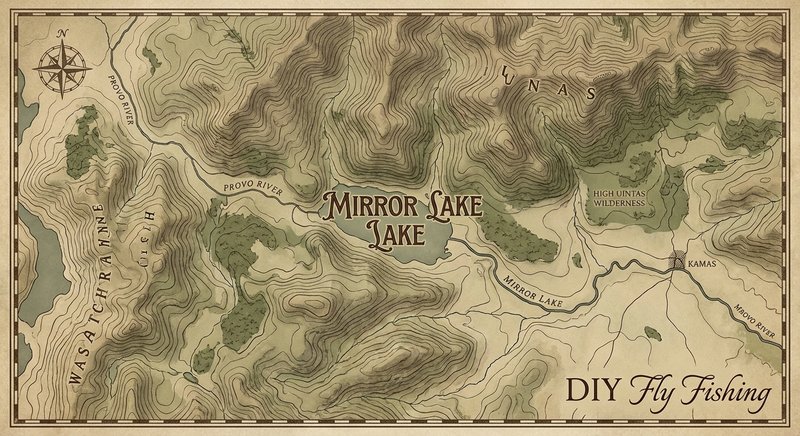
Mirror Lake
Fly fishing in Utah · Beginner · Best seasons: Summer, Fall
Target Species
Brook Trout, Cutthroat Trout
About This Water
Iconic Uinta lake with stunning scenery. Brook and cutthroat trout.
Fishing Recommendations
Welcome to the high country. As a guide who has spent years traversing the Uinta Mountains, I can tell you that Mirror Lake is the crown jewel of the Mirror Lake Highway. Situated at roughly 10,000 feet, it offers some of the most accessible alpine fly fishing in the Western United States.
While it is a popular spot for campers, for the fly angler, it serves as a gateway to high-altitude trout behavior in a breathtaking setting beneath the shadow of Bald Mountain.
🎣 Location Overview
Mirror Lake is a high-alpine natural lake enhanced by a small dam, characterized by its crystal-clear water and diverse shoreline. What makes it special is the accessibility-to-beauty ratio. You can park your truck and be casting into wild-behaving water within five minutes.
The water is cold year-round, which keeps the trout active even in the heat of July. The lake features a mix of rocky drop-offs, shallow flats with woody debris, and lily pad edges. Because of the clarity, this is a "sight-fishing" paradise when the wind is calm, allowing you to watch a Brookie cruise from ten feet away to inhale your dry fly.
🐟 Target Species & Behavior
While the DWR stocks Rainbow Trout here, the real prizes for the fly angler are the Brook Trout and Cutthroat Trout (primarily Bear River Cutthroats).
- Brook Trout: These are the gems of the Uintas. They tend to hug the shoreline, especially where there is submerged timber or overhanging willows. They are aggressive but spook easily in the clear water. In the fall, they take on vibrant orange and red hues.
- Cutthroat Trout: These fish are more nomadic. You’ll often find them cruising the "drop-off" line—where the light turquoise shallow water turns to dark blue. They are opportunistic feeders, often looking up for terrestrial insects blown off the surrounding pines.
- Feeding Behavior: Because the growing season is so short at 10,000 feet, these fish are rarely "picky" in the traditional sense, but they are incredibly wary of heavy leaders and splashing lines.
📅 Best Times to Fish
The window at Mirror Lake is short due to its elevation.
- Summer (July – August): This is prime time. The ice usually clears by mid-to-late June. Once the water warms slightly, the insect activity (midges and caddis) explodes.
- Time of Day: Early morning (6:00 AM – 10:00 AM) offers glass-calm water for dry flies. Evening "power hours" occur as the sun drops behind Bald Mountain.
- Fall (September – Early October): This is my favorite time. The crowds vanish, and the Brook Trout move into the shallows to prepare for spawning.
- Conditions: Look for "Indian Summer" days. If you can catch a calm day before the first major snow, the fish are gorging themselves for winter and will chase streamers aggressively.
🪰 Recommended Flies & Techniques
Top Fly Patterns
- Dry Flies:
- Parachute Adams (Size 16-20): The gold standard for the Uintas.
- Elk Hair Caddis (Size 14-16): Great for the evening hatch.
- Amy’s Ant or Foam Beetles (Size 12-14): Crucial in August when terrestrials are blown onto the water.
- Nymphs:
- Zebra Midge (Black or Red, Size 18-22): Hang this 18 inches under a dry fly.
- Pheasant Tail (Size 16-18): Effective when fished slow along the bottom.
- Streamers:
- Marabou Leech (Black or Olive, Size 10-12): The most effective way to catch larger Cutthroats.
- Pine Squirrel Leech: Small, lifelike, and irresistible to Brookies.
Techniques & Presentation
- The Dry-Dropper: This is the most effective setup for Mirror Lake. Use a high-visibility dry fly (like a Stimulator) and drop a small Zebra Midge or scud 12–24 inches below it.
- The "Slow Strip": If using a leech or bugger, use an intermediate sinking line or a long leader on a floating line. Cast out, let it sink for 5–10 seconds, and use very slow, 2-inch "crawling" strips.
- Long Leaders: Use a 9-foot to 12-foot leader tapered to 5X or 6X tippet. The water is too clear for heavy gear.
💡 Pro Tips & Local Knowledge
- Work the Northwest Shore: Most casual anglers fish near the parking lots on the east and south sides. Hike the trail toward the northwest side where the talus slopes enter the water. The drop-offs here are steeper, and the fish are less pressured.
- Watch the Wind: The wind usually picks up around 11:00 AM. If the surface gets "choppy," switch from small dries to a flashy streamer or a terrestrial pattern. The "chop" breaks up the fish’s window of vision, making them less spooky.
- The "Inlets": Even small trickles of water entering the lake from snowmelt carry oxygen and food. Focus on these "micro-inlets" for concentrated pods of Brookies.
- Float Tubes: If you have a float tube or kayak, use it. Getting just 50 feet off the bank allows you to cast back toward the structure that shore anglers can't reach effectively.
⚠️ Important Information
- Access: You will need a Uinta-Wasatch-Cache National Forest pass (available at fee stations along Highway 150 or the Kamas Ranger Station).
- Regulations: Mirror Lake is managed under general Utah fishing regulations, but always check the current Utah Fishing Guidebook for any emergency changes.
- Catch and Release: While you can keep fish here, I highly recommend releasing the wild Cutthroats to preserve the high-alpine genetics.
- Preparation: Weather changes in minutes at 10,000 feet. Even in July, bring a rain shell and a warm layer. Lightning is a serious threat on the water—if you hear thunder, get off the lake immediately.
- Bear Country: This is black bear country. Keep a clean camp and be mindful of your surroundings.
Tight lines, and enjoy the crisp air of the Uintas!
Bug Hatches & Matching Flies
| Hatch | Type | Peak months | Time of day | Hook sizes | Matching flies |
|---|---|---|---|---|---|
| Chironomids Chironomidae | midge | June, July, August | All Day | #16-24 | Zebra Midge #18-22, Griffith's Gnat #18-20, Ice Cream Cone #16-18 |
| Speckled Wing Quill Callibaetis | mayfly | July, August | Late Morning/Afternoon | #12-16 | Parachute Adams #14-16, Callibaetis Spinner #14-16, Hare's Ear Nymph #14-16 |
| Blue Damselfly Enallagma | terrestrial | July, August | Mid-day | #10-14 | Marabou Damsel #10-12, Adult Damsel #12-14 |
| Cinnamon Caddis Limnephilidae | caddis | August, September | Evening | #14-18 | Elk Hair Caddis #14-16, LaFontaine's Emerger #16 |
| Carpenter Ants Camponotus | terrestrial | July, August | Afternoon | #12-16 | Black Foam Ant #12-16, Chernobyl Ant #10-14 |
| Water Boatman Corixidae | terrestrial | September | All Day | #14-18 | Water Boatman Pattern #14-16, Prince Nymph #14-18 |
| High Country Beetles Coleoptera | terrestrial | July, August | Afternoon | #14-18 | Peacock Beetle #16-18, Foam Beetle #14-16 |
| Little Brown Sedge Lepidostoma | caddis | July, August | Evening/Night | #16-20 | CDC Caddis #18, Soft Hackle Hare's Ear #16-18 |