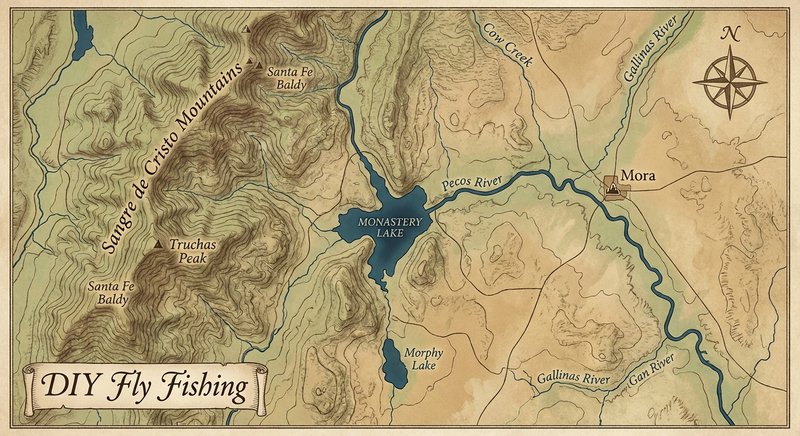
Monastery Lake
Fly fishing in New Mexico · Beginner · Best seasons: Summer, Fall
Target Species
Rainbow Trout, Brown Trout
About This Water
Small scenic lake in the Pecos Wilderness. Stocked trout with easy access.
Fishing Recommendations
Welcome to the Pecos Valley. As a guide in the Sangre de Cristo Mountains, I can tell you that Monastery Lake is one of the most unique "stillwater" experiences in New Mexico. While many seasoned anglers head straight for the Pecos River, the Monastery offers a different challenge: technical spring-fed pond fishing in a breathtaking, spiritual setting.
Here is your comprehensive guide to fly fishing Monastery Lake.
🎣 Location Overview
Monastery Lake is a small, 6-acre impoundment located near the village of Pecos, New Mexico, on the grounds of the Benedictine Monastery of Our Lady of Guadalupe. It is fed by a diversion from the Pecos River, which keeps the water cold and oxygenated.
What makes this water special is its clarity and accessibility. It is one of the few places in the state with paved ADA-accessible paths, making it perfect for families, yet the trout can be surprisingly "educated" due to the high fishing pressure. The lake is surrounded by towering canyon walls and lush meadows, offering a serene backdrop that feels miles away from civilization, even though it's just off the main road.
🐟 Target Species & Behavior
- Rainbow Trout: These are the primary residents. The New Mexico Department of Game and Fish (NMDGF) stocks this lake heavily. You will find standard "stockies," but because the water is rich in nutrients, holdover rainbows can grow quite large and develop vivid coloring.
- Brown Trout: While less common than rainbows, wild Brown Trout often enter the lake through the inlet from the Pecos River. They are more secretive, usually holding deeper or near the submerged weed beds.
Behavior: These fish are notorious "cruisers." Instead of holding in one spot like they do in the river, they patrol the perimeter of the lake in predictable lanes. They feed heavily on Chironomids (midges), Scuds, and Damselfly nymphs.
📅 Best Times to Fish
Seasons
- Summer (June – August): Excellent for early morning and late evening hatches. However, midday can be tough as fish head for the deeper, cooler water near the center.
- Fall (September – October): This is arguably the prime time. The Brown Trout become aggressive as they prepare for the spawn, and the cottonwoods in the Pecos Valley turn a brilliant gold.
Time of Day
- The First Light Window: Be there at sunrise. The water is usually glass-calm, and you’ll see trout sipping midges off the surface.
- The "Evening Rise": About 90 minutes before sunset, the damselflies and midges become active, and the lake can "boil" with rising fish.
🪰 Recommended Flies & Techniques
Top Fly Patterns
- Nymphs:
- Zebra Midge (Size 18-22) in Black/Silver or Red/Silver.
- JujuBaetis (Size 18-20) in Blue or Olive.
- Flashback Pheasant Tail (Size 16-18).
- Streamers/Leeches:
- Pine Squirrel Leech (Size 12) in Black or Olive. This is a local favorite.
- Woolly Bugger (Size 10-12) in Thin Mint or White (to mimic small stockies).
- Dry Flies:
- Parachute Adams (Size 18-22).
- Griffith’s Gnat (Size 20-22) for clusters of midges.
- Adult Damselfly (Size 12) in Bright Blue (Summer months).
Effective Techniques
- The "Static" Midge Rig: Use a long leader (12–15 feet) and a tiny strike indicator. Hang a Zebra Midge 4 to 6 feet below the surface. If there's no wind, give the line a tiny twitch every 30 seconds to trigger a strike.
- Slow-Strip Streamers: Cast toward the center of the lake, let your fly sink for 10 seconds, and use very slow, erratic strips.
- Sight Fishing: On calm days, don't just blind cast. Walk the bank slowly, spot a cruising trout, and lead the fish by 3 feet with your fly.
💡 Pro Tips & Local Knowledge
- The Inlet is King: The area where the Pecos River water flows into the lake is the highest oxygen zone. It’s a magnet for fish, especially when the rest of the lake warms up in the summer.
- Watch the Weed Beds: The lake has significant submerged vegetation. Instead of getting frustrated by snagging weeds, fish a unweighted fly right over the top of them. Big Browns hide in those "forests" waiting to ambush leeches.
- Go Small and Thin: Because the water is clear and the fish are pressured, use 6X or 7X fluorocarbon tippet. If you use 4X, they will see it and turn away every time.
- The Monastery Silence: Remember that you are on Monastery grounds. Keeping a low profile and staying quiet isn't just respectful—it actually helps you catch more fish in this small impoundment.
⚠️ Important Information
- Access & Hours: The lake is generally open from sunrise to sunset. Note that the lake often closes during the winter months (usually November through March) to allow the Monastery privacy and because the lake freezes over. Always check the NMDGF website before heading out.
- Regulations:
- A valid New Mexico Fishing License is required.
- A Habitat Management & Access Validation (HMAV) is required.
- While bait is allowed under state rules, fly anglers should be aware that this is a "put-and-take" water for many, but most fly fishers practice Catch and Release to maintain the quality of the holdover trout.
- No Boating: No float tubes, kayaks, or boats are allowed. This is strictly bank fishing only.
- Facilities: There are clean vault toilets and well-maintained parking areas.
Enjoy the serenity of the Monastery. It's a place where you can find your rhythm and, if the midges are hatching, some of the most rewarding technical stillwater fishing in the Southwest. Tight lines!
Bug Hatches & Matching Flies
| Hatch | Type | Peak months | Time of day | Hook sizes | Matching flies |
|---|---|---|---|---|---|
| Chironomids (Midges) Family Chironomidae | midge | March, April, May, September, October | All Day | #18-24 | Zebra Midge #18-22, Griffith's Gnat #18-20, Palomino Midge #20-22 |
| Callibaetis (Speckled Duns) Callibaetis spp. | mayfly | May, June, August, September | Late Morning/Afternoon | #14-16 | Parachute Adams #14-16, Hare's Ear Nymph #14-16, Callibaetis Spinner #16 |
| Damselflies Suborder Zygoptera | other | June, July | Mid-Day | #10-14 | Marabou Damselfly Nymph #10-12, Adult Damselfly #12-14 |
| Scuds (Freshwater Shrimp) Order Amphipoda | other | April, May, June, October | All Day | #14-18 | Ray Charles #14-16, Olive Scud #14-18 |
| Blue-Winged Olives (BWO) Baetis spp. | mayfly | March, April, October, November | Late Morning/Afternoon | #18-22 | RS2 #20-22, Parachute BWO #18-20 |
| Grasshoppers Family Acrididae | terrestrial | July, August, September | Afternoon | #8-12 | Dave's Hopper #10-12, Parachute Hopper #8-12 |
| Dragonflies Suborder Anisoptera | other | July, August | All Day | #6-10 | Dragon Nymph #8-10, Olive Woolly Bugger #6-10 |
| Black Ants Family Formicidae | terrestrial | June, July, August | Afternoon | #16-20 | Cinnamon Ant #16-18, Black Foam Ant #16-20 |