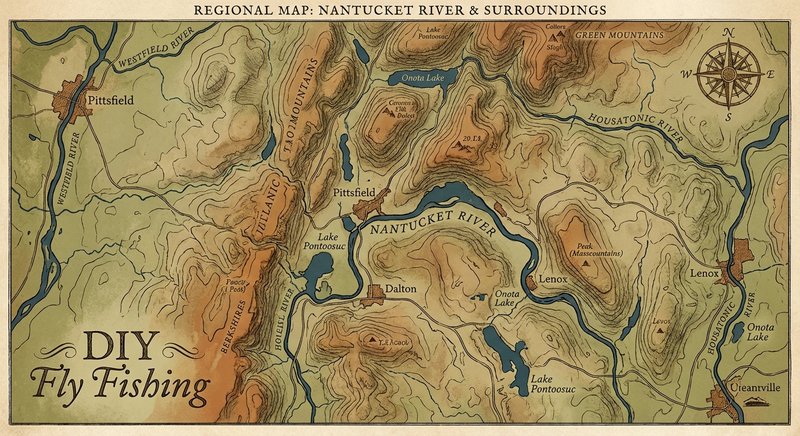
Nantucket
Fly fishing in Massachusetts · Intermediate · Best seasons: Summer, Fall
Target Species
Striped Bass, Bluefish, False Albacore, Bonito
About This Water
Island with excellent striper fishing. Great Point and surrounding flats.
Fishing Recommendations
Welcome to the "Grey Lady." As a guide who has spent countless seasons poling the flats and navigating the rips of Nantucket, I can tell you there is nowhere else on earth like it. Fishing here is a graduate-level course in saltwater fly fishing, offering everything from technical sight-fishing on white sand flats to chaotic offshore blitzes.
Here is your comprehensive guide to fly fishing Nantucket.
🎣 Location Overview
Nantucket is a sand-bottomed island 30 miles out to sea, sitting at the intersection of the cold Labrador Current and the warm Gulf Stream. This unique positioning makes it a massive "filling station" for migratory species.
What makes Nantucket legendary is its diversity of water. You have the calm, shallow waters of Madaket Harbor and Polpis; the high-energy surf of the South Shore; and the world-famous "rips" (underwater hills where the tide accelerates), such as those off Great Point and Smith’s Point. The water is exceptionally clear, often allowing for tropical-style sight fishing for Striped Bass—a rarity in the Northeast.
🐟 Target Species & Behavior
Striped Bass (Stripers)
The bread and butter of the island.
- Behavior: Early season (June) sees them on the flats "sunning." In the heat of summer, they move to the cooler, oxygenated water of the rips or deep harbor channels.
- Feeding: They are keyed in on sand eels, silversides, and green crabs.
Bluefish
The "Yellow-eyed Devils" are omnipresent.
- Behavior: They are aggressive, competitive, and will destroy expensive flies. They often hold in the fastest water of the rips or patrol the beaches in "bluefish blitzes."
- Feeding: Anything that moves. They love large baitfish and squid.
Bonito ("Bones")
The first of the "Funny Fish" to arrive (usually late July).
- Behavior: Fast, nervous, and incredibly picky. They often "slash" through bait rather than gulping it.
- Feeding: Small "rain bait" (anchovies) and sand eels.
False Albacore (Albies)
The undisputed kings of the fall.
- Behavior: They move like tuna, surfacing in explosive "feeds" and disappearing instantly. They require high-speed retrieves and perfect presentations.
- Feeding: Micro-bait. If your fly is 1/2 inch too long, they will ignore it.
📅 Best Times to Fish
- June (The Prime Flats Month): This is the best time for sight-fishing Striped Bass in the harbors. The water is clear, and the fish are hungry after their migration.
- July & August: Great for night fishing the surf for large Stripers. Late August marks the arrival of Bonito.
- September & October (The Fall Run): This is the "Super Bowl." False Albacore and Stripers are gorging themselves for the trip south.
- Daily Windows:
- The Tide: On Nantucket, "No tide, no fish." The middle two hours of an incoming or outgoing tide are usually best.
- Low Light: Dawn and dusk are prime for shore anglers.
- Mid-day: Best for sight-fishing the flats when the sun is high enough to cut through the surface glare.
🪰 Recommended Flies & Techniques
Top Fly Patterns
- Sand Eel Clouser (Chartreuse/White): The most essential fly on the island.
- The Mushmouth: A synthetic baitfish pattern that mimics silversides perfectly.
- Epoxy/Gummy Minnows: Essential for Albies and Bonito.
- Ray’s Fly: A classic flatwing that mimics the profile of a slim baitfish.
- Crease Flies/Poppers: For surface-smashing Bluefish and aggressive morning Bass.
- Crab Patterns (Size 2-4): For "tailing" bass on the Monomoy or Madaket flats.
Effective Techniques
- The "Nantucket Strip": A two-handed retrieve (rod under arm) to keep the fly moving fast and steady—essential for Albies.
- Swinging the Rips: From a boat, cast across the current rip and let the fly "swing" through the turbulent water where bass are waiting to ambush bait.
- Sight Casting: Stay stealthy. Stripers on the flats are as spooky as Bonefish. Cast 3 feet in front of a cruising fish and use short, twitchy strips.
💡 Pro Tips & Local Knowledge
- Great Point: You need a 4WD vehicle and an OSV (Over-Sand Vehicle) permit. It is one of the most productive spots in the world, but the currents are deadly. Do not wade out past your knees at the point.
- The "Bonito Bar": Located off Smith's Point. It’s a graveyard for boats but a paradise for fly anglers. If you're in a boat, watch your depth finder religiously.
- Match the Hatch: If Albies are crashing but ignoring your fly, look at the "rain bait" in the water. You may need to drop down to a tiny #4 or #6 fly and 12lb fluorocarbon leader.
- The Fog: Nantucket is the "Grey Lady" for a reason. Fog can roll in in minutes. If you are on a boat or far out on a flat, always have a GPS/Compass.
⚠️ Important Information
Access
- Public Access: Most beaches are open to the public, but parking is limited.
- The Trustees of Reservations: They manage Great Point and Coskata-Coatue. You need a permit to drive out there.
Regulations & Permits
- Saltwater License: You need a Massachusetts Saltwater Fishing Permit (available online).
- Striper Regs: Rules change annually regarding "slot limits" (the size of fish you can keep). Most fly anglers practice 100% catch and release to preserve the fishery.
Special Considerations
- Gear: 8-weight rods for the flats; 10-weight rods for the rips and Albies. Use a high-quality large arbor reel with a sealed drag—Nantucket salt is brutal on gear.
- Sharks: Be aware that Great White Sharks are increasingly common in these waters, especially near seal colonies (like those at Great Point). Avoid wading deep near seals.
Guide’s Final Word: Nantucket is a demanding fishery, but catching a 30-inch Striper on a 9-weight in knee-deep water is an experience you will never forget. Respect the tides, watch the birds, and keep your fly in the water!
Bug Hatches & Matching Flies
| Hatch | Type | Peak months | Time of day | Hook sizes | Matching flies |
|---|---|---|---|---|---|
| Chironomid (Midge) Chironomidae | midge | April, May, September, October | All Day | #18-24 | Zebra Midge #18-22, Griffith's Gnat #20-24, Chan's Chironomid #16-18 |
| Blue-Winged Olive Baetis | mayfly | May, September, October | Mid-day | #18-22 | BWO Sparkle Dun #20-22, Pheasant Tail #18-20, RS2 #20-22 |
| Damselfly Enallagma | terrestrial | June, July, August | Late Morning/Afternoon | #10-14 | Marabou Damsel Nymph #12-14, Adult Damsel #12-14 |
| Cinnamon Sedge Hydropsyche | caddis | June, July | Evening | #14-16 | Elk Hair Caddis #14-16, LaFontaine's Deep Sparkle Pupa #14-16 |
| Black Carpenter Ant Camponotus pennsylvanicus | terrestrial | August, September | Afternoon | #12-18 | Black Foam Ant #14-18, Chernobyl Ant #12-14 |
| Trico Tricorythodes | mayfly | July, August, September | Early Morning | #22-26 | Trico Spinner #22-24, Trico Nymph #22-24 |
| Japanese Beetle Popillia japonica | terrestrial | July, August | All Day | #12-14 | Foam Beetle #12-14, Coffee's Sparkle Beetle #14 |
| Caenis (Angler's Curse) Caenis | mayfly | June, July | Dawn/Dusk | #24-28 | Caenis Spinner #24-26, Micro Midge Larva #24-28 |