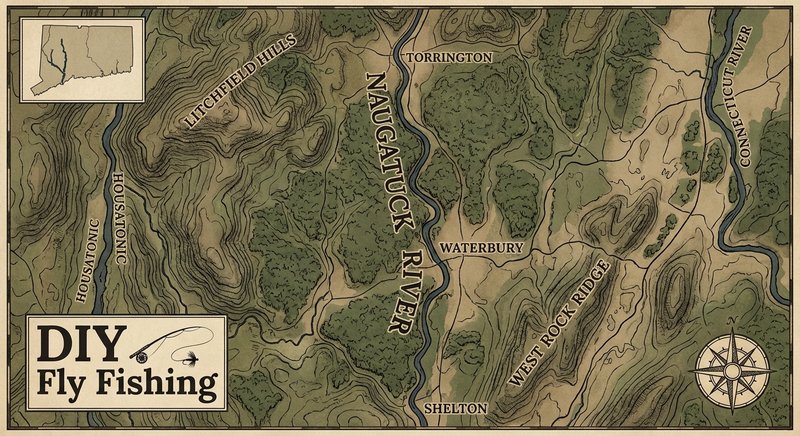
Naugatuck River
Fly fishing in Connecticut · Beginner · Best seasons: Spring, Fall
Target Species
Brown Trout, Rainbow Trout
About This Water
Central Connecticut river with stocked trout. Urban restoration project.
Fishing Recommendations
The Naugatuck River is one of the greatest "recovery" stories in American fly fishing. Once heavily polluted during the Industrial Revolution, it has been transformed into a thriving freestone fishery. For the modern angler, it offers a unique blend of rugged, boulder-strewn pocket water and scenic stretches that make you forget you are in the heart of Connecticut.
Here is your guide to mastering the "Naugy."
🎣 Location Overview
The Naugatuck River flows approximately 40 miles from Torrington to the Housatonic River in Derby. It is a classic freestone river, meaning its flow and temperature are dictated by rainfall and ambient air temperature.
What makes it special is the variety of water. The Upper Naugatuck (above Thomaston Dam) feels like a mountain stream with high gradients and tight corridors. The Lower Naugatuck opens up into a larger river with deep pools and long runs. Anglers love it because it offers high-quality trout fishing without the crushing crowds often found on the nearby Farmington River.
🐟 Target Species & Behavior
- Brown Trout: The river holds both holdover/wild browns and heavily stocked fish. They are the "kings" of the river, often tucked under the heavy shadows of undercut banks or behind large boulders in the "cushion" of the current.
- Rainbow Trout: Generally more aggressive and found in the faster, highly oxygenated water of the riffles and the heads of pools.
- Behavioral Note: The Naugatuck is also famous for its Broodstock Atlantic Salmon program (stocked in the Fall). While you are targeting trout, don't be surprised if you hook into a 10-pound salmon—always keep your drag set correctly!
📅 Best Times to Fish
- Spring (Mid-April to June): This is the prime window. The water levels are usually stable, and the major hatches occur. The Hendrickson hatch in late April/early May is legendary.
- Fall (September to November): As water temperatures drop, the trout become active again before winter. This is the best time for trophy Brown Trout, as they become aggressive before spawning.
- Best Time of Day: In the spring, midday (11 AM – 3 PM) is best for hatches. In the warmer months, focus on the "Magic Hour"—the last 90 minutes of daylight.
- Conditions: Overcast, drizzly days are often the most productive for Blue Winged Olives and for coaxing large Browns out of hiding.
🪰 Recommended Flies & Techniques
Nymphing (The Bread & Butter)
Because of the river's rocky bottom, nymphing accounts for 80% of the fish caught.
- Patterns: Frenchie (#14-18), Pheasant Tail (#16-20), Zebra Midge (#18-22), and Pat’s Rubber Legs (#8-12) for high water.
- Technique: Euro-nymphing is incredibly effective here. The pocket water allows you to get close to the fish and maintain a vertical drift through different current seams.
Dry Fly Action
- Patterns: Hendrickson Pink Lady (#12-14), Elk Hair Caddis (#14-18), and Blue Winged Olives (#18-22). In late summer, don't overlook terrestrial patterns like Foam Ants and Beetles.
- Technique: Focus on "the bubble line." Trout here wait for the current to bring the food to them. A drag-free drift is essential.
Streamer Fishing
- Patterns: Black or Olive Woolly Buggers (#6-10), Black Ghosts, and articulated patterns like the Kelly Galloup Sex Dungeon if you are hunting "the big one."
- Technique: Swing streamers through deep pools or "strip and pause" along the banks.
💡 Pro Tips & Local Knowledge
- Focus on the "Trout Management Areas" (TMAs): The sections in Litchfield/Harwinton and Beacon Falls are managed for higher fish densities.
- The "Shadow" Factor: The Naugatuck has high banks in many areas. As the sun dips behind the hills, the shadows hit the water early. This "cooling" often triggers a sudden rise of fish even before the official sunset.
- The Salmon Surprise: If you are fishing in the fall, carry a few larger streamers. If you see a massive splash, it's likely a broodstock salmon. Switching to a heavier 12lb tippet is a wise move if you decide to target them.
- Wading Safety: The rocks in the Naugatuck are notoriously "greasy." Studded wading boots and a wading staff are highly recommended, especially in the Beacon Falls area.
⚠️ Important Information
- Access: Much of the river is paralleled by Route 8. Look for the "Fishing Access" signs. The Camp Columbia area in Morris/Litchfield offers some of the most scenic and least pressured access.
- Regulations:
- Connecticut requires an Inland Fishing License AND a Trout & Salmon Stamp.
- Check the CT DEEP Hunting and Fishing Guide for specific TMA boundaries, as some sections are Catch and Release Only during certain times of the year.
- Water Temps: In July and August, the Naugatuck can get warm (over 70°F). If the water is that warm, please stop fishing for trout, as it is lethal for them to be handled in those temperatures. Switch to Smallmouth Bass in the lower stretches during the heat of summer!
Bug Hatches & Matching Flies
| Hatch | Type | Peak months | Time of day | Hook sizes | Matching flies |
|---|---|---|---|---|---|
| Blue-Winged Olive Baetis / Pseudocloeon | mayfly | April, October, November | Late Morning/Afternoon | #18-24 | BWO Sparkle Dun #18-22, Pheasant Tail #18-20, RS2 #20-22 |
| Hendrickson Ephemerella subvaria | mayfly | April, May | Afternoon | #12-14 | Red Quill #12-14, Hendrickson Emerger #12-14, Gold Ribbed Hare's Ear #12-14 |
| Grannom Caddis Brachycentrus | caddis | April, May | Morning/Evening | #14-16 | Peacock Caddis #14-16, Deep Sparkle Pupa #14-16, Holy Grail #14-16 |
| March Brown Maccaffertium vicarium | mayfly | May, June | Afternoon | #10-12 | March Brown Western #10-12, Hare's Ear Nymph #10-12 |
| Light Cahill Stenacron / Stenonema | mayfly | June, July | Evening | #12-16 | Light Cahill #12-16, Cahill Wet Fly #14-16 |
| Little Black Stonefly Taeniopteryx | stonefly | March, April | Midday | #16-20 | Black Zebra Midge #18-20, Black Stone #16-18 |
| Tan Caddis Hydropsyche | caddis | June, July, August | Evening | #14-18 | Elk Hair Caddis #14-18, LaFontaine's Emergent Pupa #16-18 |
| Terrestrials Formicidae / Coleoptera | terrestrial | July, August, September | Afternoon | #12-18 | Black Foam Ant #14-18, Cricket #12-14, Crow Beetle #14-16 |