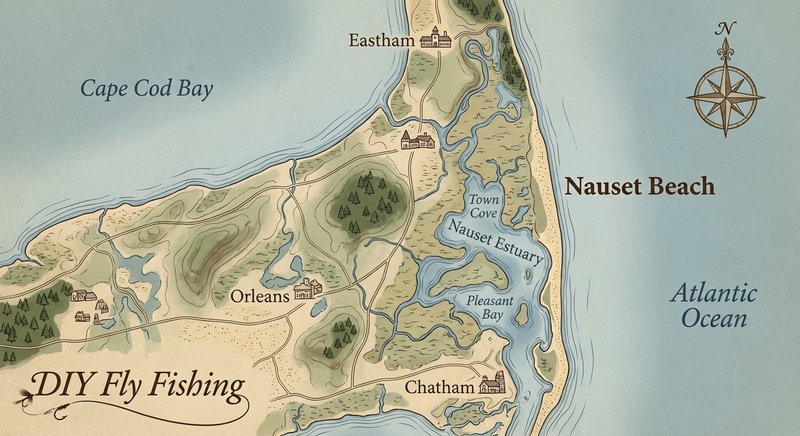
Nauset Beach
Fly fishing in Massachusetts · Intermediate · Best seasons: Summer, Fall
Target Species
Striped Bass, Bluefish
About This Water
Cape Cod outer beach with striped bass. Classic surf fishing.
Fishing Recommendations
Welcome to one of the most dynamic and productive stretches of sand on the Atlantic Seaboard. As an expert guide, I can tell you that Nauset Beach is legendary among surf fly anglers. Stretching from Orleans down toward Chatham, it is a high-energy, "big water" environment that offers some of the most exciting sight-fishing and surf-casting opportunities in the world.
🎣 Location Overview
Nauset Beach is a massive, shifting barrier beach on the "outer elbow" of Cape Cod. What makes it special is its direct exposure to the open Atlantic Ocean. Unlike the calmer flats of Cape Cod Bay, Nauset is a land of heavy surf, deep troughs (sloughs), and powerful rips.
The water here is crystal clear and typically stays cooler than the Bay, which keeps fish active even in the heat of summer. Anglers love it because it offers a "wild" experience—it’s just you, the seals, the crashing waves, and the possibility of a 40-inch striped bass cruising in two feet of water. The topography changes with every northeast storm, meaning the beach you fish today will not be the same beach you fish next season.
🐟 Target Species & Behavior
- Striped Bass: The primary draw. At Nauset, bass are often "wash-riders," patrolling the very edge of the surf line to pick off disoriented baitfish in the suds. They use the structure of the sandbars and "cuts" (openings in the bars) to move in and out with the tide.
- Bluefish: Known as "yellow-eyed devils," they move in schools and can turn the water into a frothing "blitz." They are aggressive and will shred flies.
- Behavior & Diet: These fish are focused on high-protein bait. Depending on the month, they are targeting sand eels (the staple), silversides, bunker (menhaden), and occasionally squid.
📅 Best Times to Fish
Optimal Seasons
- Summer (June - August): Excellent for "sight fishing" in the early morning. Large migratory bass settle into the cooler ocean-side waters.
- Fall (September - October): The "Fall Run." This is peak season. Fish are migrating south and feeding heavily to fuel their journey. Expect more frequent blitzes and larger fish.
Best Times of Day
- Low Light: Dawn and dusk are prime. The first two hours of light are magical because the fish lose their wariness and move into the shallowest troughs.
- Night: Many of the largest bass are caught at night using dark, large-profile flies.
Prime Windows & Conditions
- The Tides: Generally, the moving tide is essential. Many guides prefer the last two hours of the incoming and the first two hours of the outgoing.
- Wind: A light onshore wind (East) can push bait toward the beach, but a stiff West wind (offshore) flattens the surf, making for the best fly-casting and sight-fishing conditions.
🪰 Recommended Flies & Techniques
Top Fly Patterns
- Sand Eel Clouser Minnow: (Size 1/0 - 3/0) Chartreuse/White or Olive/White. This is the "bread and butter" fly for Nauset.
- Mushmouth / Epoxy Fly: Durable and mimics the translucent look of silversides.
- Ray’s Fly: A classic New England flat-wing style that has incredible movement in the surf.
- Hollow Fleye: (Size 4/0) For when larger bait like bunker are present.
- Poppers/Gurglers: For explosive surface action when bluefish are around or during low-light bass sessions.
Effective Techniques
- The "Blind Cast" in Troughs: Identify the deep blue water between the beach and the outer sandbar. Cast diagonally across the trough and use a fast, erratic strip.
- Sight Fishing: On calm, sunny days, walk the high beach with polarized glasses. Look for dark shapes or "shadows" in the waves. Lead the fish by 5-10 feet.
- The Two-Hand Strip: Tuck the rod under your arm and use both hands to strip the line rapidly. This mimics a panicked baitfish and is often the only way to trigger a strike from a bluefish.
💡 Pro Tips & Local Knowledge
- Read the Water: Don't just cast anywhere. Look for "cuts" in the outer sandbar. Water rushing out of these cuts creates a "rip" that carries bait to waiting bass.
- The Seal Factor: Nauset has a massive population of Gray Seals. If you see dozens of seals, the bass are often spooked or gone. However, a few seals can actually drive bait toward the shore. Just be careful—seals have been known to steal hooked fish!
- Gear Up: Use a 9-weight or 10-weight rod. The wind and the size of the flies require some backbone. An intermediate sinking line is the standard, as it gets the fly below the surface chop but won't snag the bottom in the shallows.
- Keep Moving: If a stretch of beach looks "dead" (no birds, no bait, no structure), walk 200 yards. The fish are mobile; you should be too.
⚠️ Important Information
Access
- Orleans (Nauset Beach): Large public parking lot at the end of Beach Road. Note that during summer days, the lot fills up fast and requires a fee/sticker.
- OSV (Over-Sand Vehicle): Much of Nauset is accessible only by 4WD vehicles with a specific permit. If you don't have one, be prepared to hike.
Regulations & Permits
- Saltwater Fishing Permit: A Massachusetts Saltwater Fishing Permit is required for all anglers age 16 and older.
- Striped Bass Limits: Regulations change yearly (currently a very narrow "slot limit" is in place). Check the MA Division of Marine Fisheries for current size and bag limits. Catch and release is highly encouraged.
Special Considerations
- Safety: The Atlantic surf is powerful. Be wary of "rogue waves" and undertows. If you wade, do so carefully; the sand can drop off sharply.
- Sharks: This is Great White territory. While they rarely bother shore anglers, avoid wading deep (past your knees) and never "string" fish in the water. If you keep a fish, take it to the dry sand immediately.
Bug Hatches & Matching Flies
| Hatch | Type | Peak months | Time of day | Hook sizes | Matching flies |
|---|---|---|---|---|---|
| Cinder Worm Alitta succinea | terrestrial | May, June | Evening | #10-14 | V-Rib Cinder Worm #12, Page's Cinder Worm #10-12 |
| Salt Marsh Midge Chironomidae | midge | May, August, September | Morning/Evening | #18-22 | Zebra Midge #18-20, Griffith's Gnat #20 |
| Greenhead Fly Tabanus nigrovittatus | terrestrial | July | Afternoon | #10-12 | Deer Hair Fly #10, Black Foam Beetle #12 |
| Flying Ant Formicidae | terrestrial | August, September | Afternoon | #16-20 | Black Fur Ant #16-18, Chernobyl Ant #14 |
| Salt Marsh Grasshopper Melanoplus | terrestrial | August, September | Afternoon | #8-12 | Dave's Hopper #10-12, Joe's Hopper #8-10 |
| Japanese Beetle Popillia japonica | terrestrial | July, August | Afternoon | #12-14 | Coffee's Sparkle Beetle #14, Foam Beetle #12 |
| Salt Marsh Mosquito Aedes sollicitans | midge | June, July, August | Evening/Night | #20-24 | Mosquito #20-22, CDC Midge Emerger #22 |
| Crab Megalops Brachyura | midge | August, September | Night/Evening | #12-16 | Micro Crab #14, Gummy Coward #16 |