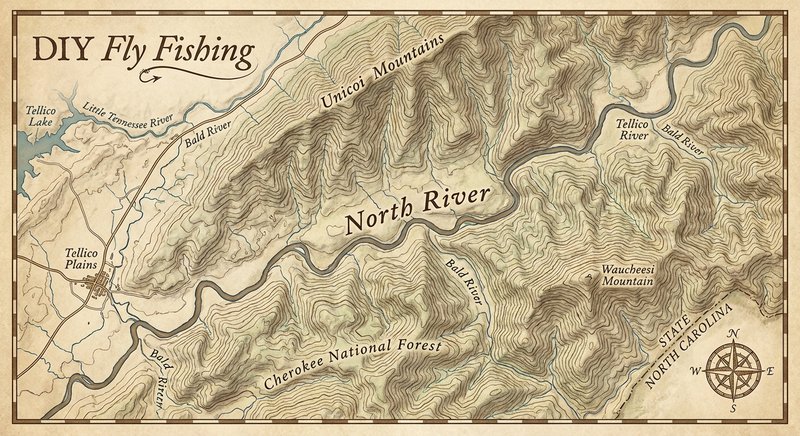
North River
Fly fishing in Tennessee · Intermediate · Best seasons: Spring, Summer, Fall
Target Species
Rainbow Trout, Brown Trout
About This Water
Cherokee National Forest stream. Wild trout in beautiful mountain setting.
Fishing Recommendations
The North River in the Cherokee National Forest is one of Tennessee’s most prized wild trout streams. A major tributary to the famed Tellico River, the North River offers a distinctly different experience: while the Tellico is often crowded and heavily stocked, the North River is a rugged, backcountry gem managed as a Wild Trout Stream. For the angler who values solitude, scenery, and "wild" fish over size and easy access, this is hallowed ground.
🎣 Location Overview
The North River is the quintessential Southern Appalachian freestone stream. It flows through a deep, heavily forested gorge characterized by plunge pools, tight pockets, and long, crystal-clear runs.
What makes it special is its wild character. Unlike the main stem Tellico, the North River has not been stocked in decades. The fish here are born in the stream, making them exceptionally beautiful but also incredibly wary. The water is chemically soft and extremely clear, requiring a stealthy approach and light tackle. It is a "high-gradient" stream, meaning it drops quickly, creating plenty of oxygen-rich pocket water that holds fish even during the warmer months.
🐟 Target Species & Behavior
- Rainbow Trout: These are the primary residents. They are vibrant, with crimson stripes and heavy spotting. They are opportunistic but spooky. They typically hold in the "bubble line" at the head of pools or in the pocket water behind mid-stream boulders.
- Brown Trout: While less numerous than rainbows, the North River holds some surprisingly large wild browns tucked away in the deeper undercut banks and the shadows of downed timber. They are notoriously difficult to catch and are most active during low-light conditions or after a rain.
- Behavior: Because food is relatively scarce in these sterile freestone environments, these fish are "opportunistic feeders." They don't have the luxury of being overly picky, but they have a very high "fright response." If they see you, the fishing in that pool is over.
📅 Best Times to Fish
Optimal Seasons
- Spring (March – June): This is the prime window. Rising water temperatures trigger insect hatches (Quill Gordons, March Browns, and Hendricksons). The fish are hungry after winter and less cautious.
- Fall (September – November): A favorite for locals. The water is low and clear, the leaves are changing, and the Brown Trout become more aggressive as they prepare for the spawn.
- Summer (July – August): Fishing remains viable because of the high elevation and canopy cover, but you must focus on the early morning and late evening to avoid stressing the fish in warmer water.
Prime Windows
- Time of Day: In the heat of summer, 6:00 AM to 10:00 AM is best. In the spring and fall, the "afternoon warm-up" (11:00 AM to 4:00 PM) often triggers the best dry fly action.
- Conditions: A slightly overcast day is a gift on the North River. It cuts the glare on the water and makes the trout feel less exposed to overhead predators.
🪰 Recommended Flies & Techniques
Top Fly Patterns
- Dry Flies:
- Parachute Adams (Size 14-18): The gold standard.
- Yellow Stimulator (Size 12-16): Mimics stoneflies and is easy to see in broken water.
- Elk Hair Caddis (Size 14-16): Great for the "skittering" caddis hatches.
- Thunderhead (Size 14): A local favorite, highly visible in white water.
- Nymphs:
- Pheasant Tail (Size 16-20): Mimics almost any mayfly nymph.
- Prince Nymph (Size 14-16): The "attractor" nymph that works when nothing else does.
- Tellico Nymph: A classic local pattern specifically for this watershed.
- Terrestrials:
- Greenie Weenie or Bead-head Inchworm: Essential in the summer months.
Techniques
- Dry-Dropper: This is the most effective way to fish the North River. Use a high-floating dry (like a Stimulator) and hang a small nymph 18-24 inches below it.
- High-Sticking: Due to the complex currents, keep as much fly line off the water as possible to avoid drag.
- The Stealth Approach: Kneel before you reach the bank. Cast from downstream to upstream so you stay behind the fish's field of vision.
💡 Pro Tips & Local Knowledge
- The "One-Cast" Rule: In the small pockets of the North River, your first cast is your best (and often only) chance. If you botch the drift or slap the water, move to the next pocket.
- Blue-Lining: Don't be afraid to hike. The further you get from North River Road (Forest Service Road 80), the better the fishing gets. Follow the small feeder creeks; you might find tiny native Southern Appalachian Brook Trout in the highest reaches.
- Gear Choice: Leave the 5-weight at home. A 7.5 to 8.5-foot 3-weight rod is the perfect tool for these tight quarters. Use a 7.5-foot leader tapered to 5X or 6X fluorocarbon.
⚠️ Important Information
Access
- Access is excellent via North River Road (FS 80), which parallels the stream for several miles.
- However, the road is gravel and can be rough/slick after heavy rains. A high-clearance vehicle is recommended but not always mandatory.
Regulations & Permits
- Wild Trout Regulations: The North River is managed under wild trout regulations. This means Lure/Bait Restrictions apply: Only single-hook artificial lures or flies are allowed. No bait (corn, worms, etc.) is permitted.
- License: You need a valid Tennessee Fishing License with a Trout Supplement.
- Size/Creel: Check the current TWRA (Tennessee Wildlife Resources Agency) guide, as wild trout streams often have specific length requirements (usually a 7-inch minimum) and reduced creel limits compared to the main Tellico.
Special Considerations
- Wading Safety: The rocks in the North River are notoriously "greasy" with algae. Felt-soled boots or studs are highly recommended.
- Wildlife: This is Bear Country. While black bears generally avoid humans, keep your food secured in your vehicle and be aware of your surroundings.
Bug Hatches & Matching Flies
| Hatch | Type | Peak months | Time of day | Hook sizes | Matching flies |
|---|---|---|---|---|---|
| Quill Gordon Epeorus pleuralis | mayfly | March, April | Midday | #12-14 | Quill Gordon Dry #12-14, Pheasant Tail #12-14 |
| Blue Quill Paraleptophlebia | mayfly | March, April | Late Morning | #16-18 | Blue Quill Dry #16-18, Hare's Ear #16-18 |
| March Brown Maccaffertium vicarium | mayfly | April, May | Afternoon | #10-14 | March Brown Dry #10-12, Gold Ribbed Hare's Ear #10-14 |
| Sulphur Ephemerella invaria | mayfly | May, June | Evening | #14-16 | Comparable Dun #14-16, Sulphur Emerger #14-16 |
| Yellow Sally Isoperla | stonefly | May, June, July | Late Afternoon | #14-16 | Yellow Stimulator #14-16, Little Yellow Stone Nymph #14-16 |
| Golden Stonefly Acroneuria | stonefly | June, July | Evening/Night | #6-10 | Golden Stimulator #8-10, Pats Rubber Legs #6-10 |
| Cinnamon Caddis Hydropsyche | caddis | May, June, September | Evening | #14-18 | Elk Hair Caddis (Tan) #14-18, Soft Hackle Peeping Caddis #14-16 |
| Blue Winged Olive Baetis | mayfly | February, March, October, November | Midday | #18-22 | BWO Sparkle Dun #18-20, RS2 #20-22 |
| Terrestrials (Beetles/Ants) N/A | terrestrial | July, August, September | All Day | #12-18 | Black Foam Beetle #14-16, Parachute Ant #16-18 |