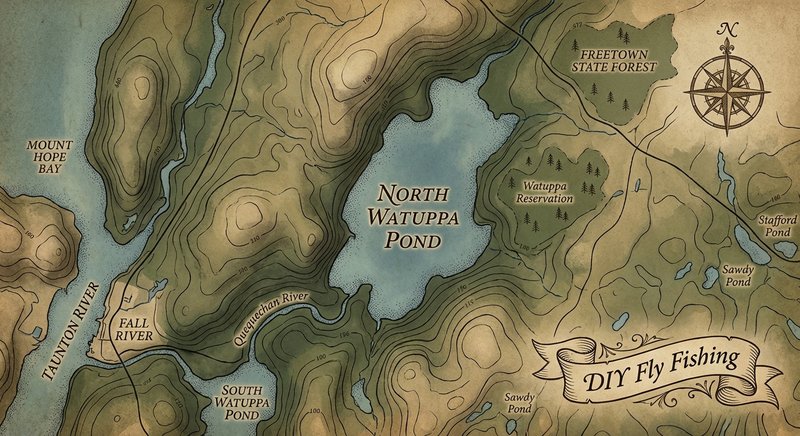
North Watuppa Pond
Fly fishing in Massachusetts · Beginner · Best seasons: Spring, Summer, Fall
Target Species
Largemouth Bass, Pickerel, Panfish
About This Water
Bristol County pond with bass and panfish. Fall River area.
Fishing Recommendations
North Watuppa Pond in Fall River, Massachusetts, is a unique gem in the South Coast region. As a primary water supply for the City of Fall River, it offers a different experience than its neighbor, South Watuppa. Because it is more protected and has stricter regulations, the water quality is higher, and the fishing pressure—while present—is often less chaotic than on fully recreational lakes.
Here is your comprehensive guide to fly fishing North Watuppa Pond.
🎣 Location Overview
North Watuppa Pond is a large, spring-fed body of water covering approximately 1,300 acres. Unlike South Watuppa, which allows jet skis and large outboard motors, North Watuppa is a public water supply reservoir. This means the water is clearer, the shoreline is more pristine, and the environment is significantly quieter.
The pond is characterized by a mix of rocky shorelines, expansive weed beds (milfoil and lily pads), and submerged timber. The clarity of the water here is a double-edged sword: it allows you to sight-fish for cruisers, but it also means the fish are more "spooky" than in murkier ponds. It is a classic Northeast lowland pond that feels much larger than it is once you are out on the water.
🐟 Target Species & Behavior
- Largemouth Bass: The stars of the show. North Watuppa holds some truly "hawg" status bass. They relate heavily to the transition lines where rocky bottoms meet weed edges. In the heat of summer, they retreat to the deeper "holes" or bury themselves in the thickest canopy of vegetation.
- Chain Pickerel: Often called "water wolves," these fish are abundant here. They are aggressive, ambush predators that sit motionless in the weeds waiting for a fly to flash by. They provide explosive takes and are a great backup when the bass are lethargic.
- Panfish (Bluegill & Pumpkinseed): These are world-class at North Watuppa. You can find "slab" sized sunfish that will aggressively take small poppers. They are perfect for introducing new anglers to the sport.
📅 Best Times to Fish
- Spring (Late April – June): This is the prime window. As the water warms, bass move into the shallows for the pre-spawn and spawn. This is your best chance at a trophy fish on a fly rod in 3–6 feet of water.
- Summer (July – August): Focus on the "low light" windows. The pond can get tough during a bright, midday sun. Dawn and Dusk are essential for topwater action. Look for overcast or slightly windy days to break up the surface glare.
- Fall (September – October): As temperatures drop, fish move back to the shallows to gorge themselves for winter. The weed beds begin to die back, making it easier to fish subsurface streamers without snagging constantly.
🪰 Recommended Flies & Techniques
For Largemouth Bass
- Patterns:
- Topwater: Foam Gurglers (White or Chartreuse), BoogleBugs, and Deer Hair Poppers.
- Subsurface: Game Changers, Woolly Buggers (Size 2-4, Olive/Black), and Murdich Minnows.
- Technique: Use a 7-weight or 8-weight rod. If fishing the lily pads, use a weedless frog pattern and "chug" it slowly across the leaves, pausing in the open pockets. For subsurface, use a sink-tip line to get the fly down 5–10 feet along the rocky drop-offs.
For Chain Pickerel
- Patterns: Flashy Clouser Minnows (Red/White or Chartreuse/White) and Bunny Leeches.
- Technique: A wire tippet or heavy fluorocarbon (20lb+) is mandatory, or their teeth will snap your line instantly. Use a "strip-strip-pause" retrieve. Pickerel often strike on the pause.
For Panfish
- Patterns: Size 10-12 Foam Spiders, Elk Hair Caddis, or small bead-head Gold Ribbed Hare’s Ears under a dry fly.
- Technique: A light 3-weight or 4-weight rod makes these fish feel like monsters. Cast to the edges of docks or fallen timber.
💡 Pro Tips & Local Knowledge
- The Rock Factor: North Watuppa has significant boulder fields. While most anglers focus on the weeds, the biggest bass often hold on the shady side of submerged boulders. If you see a "dark spot" in the water that looks like a rock, cast past it and strip your fly right over the top.
- Longer Leaders: Because this is a clear-water reservoir, avoid the short, 4-foot "bass leaders" often sold in shops. Go with a 9-foot fluorocarbon leader tapered to 10lb or 12lb test to avoid spooking the bigger, older fish.
- Wind is your Friend: A "Watuppa Chop" (light wind from the SW) creates surface ripples that hide your presence. If the pond is glass-calm, your casting shadows will scare the fish away before you reach them.
⚠️ Important Information
Access & Restrictions (Crucial)
- Water Supply Rules: Because North Watuppa is a reservoir, it is strictly regulated by the Fall River Water Department.
- Permits: You often need a specific fishing permit issued by the City of Fall River in addition to your Massachusetts state fishing license. Check with the Fall River Water Division (usually located near the pump station) for current fees and rules.
- Boating: Gas engines are generally prohibited or extremely restricted. Most fishing is done via electric trolling motors or from designated shore access points. Check current local ordinances, as they can change season-to-season regarding boat decontamination to prevent invasive species (Zebra Mussels).
- Wading: Wading is often prohibited in reservoirs to protect water quality. Stay on the shore or in a boat/kayak.
Regulations
- Observe all Massachusetts state freshwater fishing regulations regarding creel limits and seasons.
- Catch and Release is highly encouraged to maintain the quality of the trophy bass population in this sensitive ecosystem.
Guide’s Final Word: North Watuppa is a "thinking man's" bass pond. It rewards stealth, accurate casting, and an understanding of structure. Respect the water supply rules, and the pond will reward you with some of the best warm-water fly fishing in Bristol County.
Bug Hatches & Matching Flies
| Hatch | Type | Peak months | Time of day | Hook sizes | Matching flies |
|---|---|---|---|---|---|
| Midges Chironomidae | midge | April, May, September, October | All Day | #18-24 | Zebra Midge #18-22, Griffith's Gnat #20-24, Palomino Midge #20-22 |
| Speckled Spinner / Callibaetis Callibaetis | mayfly | May, June, August, September | Morning/Afternoon | #12-16 | Callibaetis Spinner #14-16, Hare's Ear Nymph #12-16, Callibaetis Cripple #14-16 |
| Damselflies Enallagma / Ischnura | terrestrial | June, July | Afternoon | #10-14 | Marabou Damsel Nymph #10-12, Adult Damsel #12-14, Braided Butt Damsel #12 |
| The Hex / Giant Mayfly Hexagenia limbata | mayfly | June, July | Dusk/Night | #6-10 | Hexagenia Parachute #6-8, Hexagenia Nymph #8-10, Wiggle Hex #8 |
| Dragonflies Anisoptera | terrestrial | July, August | Morning/Afternoon | #4-10 | Dragonfly Nymph #6-10, Adult Dragon #4-8 |
| Spotted Sedge Hydropsyche | caddis | May, June | Evening | #14-18 | Elk Hair Caddis #14-16, LaFontaine's Deep Sparkle Pupa #16 |
| Angler's Curse Caenis | mayfly | July, August | Early Morning | #22-26 | Caenis Spinner #24-26, Micro-midge Larva #24 |
| Carpenter Ants Camponotus | terrestrial | May, June, August | All Day | #10-16 | Black Foam Ant #12-16, Chernobyl Ant #10-12 |
| Japanese Beetle Popillia japonica | terrestrial | July, August | Afternoon | #12-14 | Foam Beetle #12-14, Coffee's Sparkle Beetle #14 |