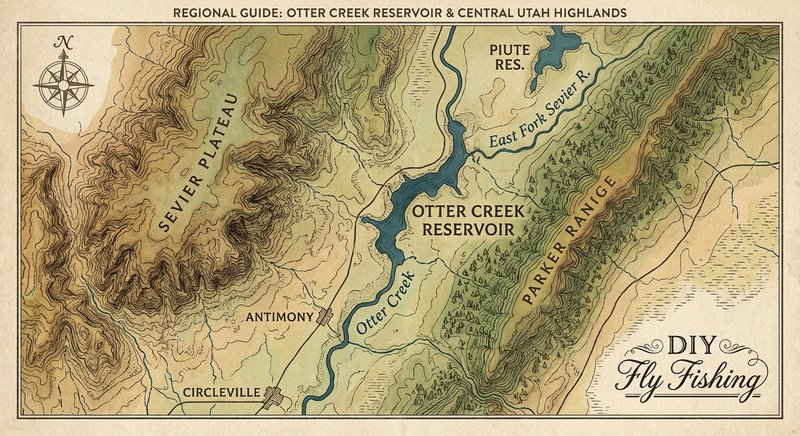
Otter Creek Reservoir
Fly fishing in Utah · Beginner · Best seasons: Spring, Summer, Fall
Target Species
Rainbow Trout, Brown Trout
About This Water
Central Utah reservoir with excellent rainbow trout. Good shore fishing.
Fishing Recommendations
Welcome to one of Utah’s most productive "trophy" stillwaters. As a guide, I often tell clients that if you want numbers, go elsewhere; but if you want heavy-shouldered trout that pull like freight trains, Otter Creek Reservoir is the place. Located in south-central Utah near Antimony, this is a classic high-desert impoundment known for its incredible growth rates and rich aquatic life.
🎣 Location Overview
Otter Creek Reservoir is a 2,500-acre state park gem situated at an elevation of about 6,400 feet. What makes this water special is its productivity. The reservoir is relatively shallow and sits on a nutrient-rich bed, which leads to massive hatches and a high concentration of scuds and midges.
The water is often slightly stained or "off-color" due to wind and algae, but this works in the fly fisher's favor by allowing you to use slightly heavier tippets for these powerful fish. Anglers love it because it is one of the most consistent "big fish" producers in the state, offering a true chance at a 5-pound-plus Rainbow on a fly rod.
🐟 Target Species & Behavior
- Rainbow Trout: These are the primary target. They are frequently stocked as fingerlings and grow rapidly. They are "fat" fish—deep-bodied and extremely strong. They cruise the shoreline drop-offs and weed beds looking for easy meals.
- Brown Trout: While less numerous than the Rainbows, the Browns here get massive. They are more predatory and secretive, often holding near the rocky dam face or the deeper structure near the old river channel.
- Behavior: During the spring and fall, fish are found in the shallows (3–10 feet). In the heat of summer, they retreat to the deeper, cooler water near the dam and the center channel. They are opportunistic feeders but can become very focused on specific hatches (Chironomids in spring, Damsels in summer).
📅 Best Times to Fish
- Spring (April – June): Prime Time. As soon as the ice melts (usually late March/early April), the fish are ravenous. The "ice-off" window is legendary for catching the largest fish of the year in very shallow water.
- Summer (July – August): Fishing remains good but shifts earlier and later in the day. Mid-day heat pushes fish deep. Focus on the oxygenated water near the inflow or the deep drop-offs.
- Fall (September – November): The second peak. As water temperatures drop, fish move back into the shallows to bulk up for winter. Brown trout become more aggressive as they prepare for their spawn.
- Best Time of Day: Early morning (first light) and the "golden hour" before sunset are most productive. However, on overcast or slightly breezy days, the midday "Chironomid bite" can be world-class.
🪰 Recommended Flies & Techniques
Top Fly Patterns
- Chironomids (Midges): Sizes 12–18. Blood midges (red), Zebra Midges (black/silver), and "Ice Buds" in pearl or olive.
- Scuds (Freshwater Shrimp): This is the "bread and butter" of Otter Creek. Sizes 12–16 in Olive, Dead Orange, or Pink.
- Leeches/Streamers: Balanced Leeches (black, bruiser, or olive) are deadly under an indicator. For stripping, use Woolly Buggers or balanced leeches in dark colors.
- Nymphs: Hare's Ear, Pheasant Tail, and Prince Nymphs (Sizes 12–16).
- Damsel Flies: During June and July, olive Marabou Damsels are a must.
Effective Techniques
- Indicator Rigging (The "Otter Creek Special"): Use a long leader (10–15 feet) and hang a Balanced Leech or a Scud/Chironomid combo. Let the wave action move the flies. This is the most effective way to fish here.
- The "Slow Crawl": Use an intermediate (slow-sinking) line with a duo-nymph rig (Scud and a Midge). Retrieve with an agonizingly slow "figure-eight" crawl.
- Streamer Stripping: Near the dam or rocky points, use a Type 3 or Type 5 sinking line to pull leeches or buggers through the water column.
💡 Pro Tips & Local Knowledge
- The "Wind is Your Friend": While wind makes casting difficult, a "light chop" on the water is ideal. It oxygenates the shallows, masks your presence, and activates the insects. If it's glass-calm, the fish become very spooky.
- Focus on the West Shore: The western bank has several points and coves that hold fish. Look for the "transition zones" where the bottom changes from mud to weed or rock.
- The Inflow: The north end where Otter Creek enters the reservoir is a hotspot in the spring, but be careful of the soft mud—it can act like quicksand.
- Watch the Pelicans: If you see American White Pelicans diving or hovering, they are on a school of baitfish or congregating trout. Fish those areas.
- Leader Strength: Do not go below 4X tippet. These fish are heavy and the weeds are thick. 3X is often the standard to ensure you can turn a 22-inch Rainbow away from a weed bed.
⚠️ Important Information
- Access: Otter Creek State Park provides excellent access, including a boat ramp, docks, and plenty of shoreline for wading. There is a daily vehicle fee to enter the State Park.
- Regulations: Generally, Utah's general limits apply (4 trout), but always check the current Utah Fishing Guidebook for any emergency changes or specific bait restrictions.
- Boating: This lake is very popular for float tubes and pontoons. However, be extremely cautious of the wind. It can go from calm to dangerous 30mph gusts in minutes. Always wear a PFD.
- Supplies: The town of Antimony is nearby for basic supplies, but for specialized fly gear, you should stock up in Richfield or Panguitch before heading to the reservoir.
Guide’s Final Word: Otter Creek is a "patience" fishery. You might go an hour without a hit, but when that indicator goes down, it’s usually the fish of the season. Tight lines!
Bug Hatches & Matching Flies
| Hatch | Type | Peak months | Time of day | Hook sizes | Matching flies |
|---|---|---|---|---|---|
| Chironomid Chironomidae | midge | April, May, September, October | All Day | #12-22 | Ice Cream Cone #14-18, Zebra Midge #16-20, Griffith's Gnat #18-22 |
| Callibaetis (Speckled Dun) Callibaetis spp. | mayfly | June, July, August | Late Morning | #12-16 | Parachute Adams #14-16, Callibaetis Nymph #14-16, RS2 #16 |
| Traveling Sedge Hesperophylax designatus | caddis | June, July | Evening | #10-14 | Elk Hair Caddis #12-14, Goddard Caddis #10-12, LaFontaine's Deep Sparkle Pupa #12-14 |
| Grasshopper Acrididae | terrestrial | August, September | Afternoon | #8-12 | Dave's Hopper #10-12, Parachute Hopper #8-12, Morrish Hopper #10 |
| Bloodworm Chironomus plumosus | midge | April, May, June | All Day | #14-18 | San Juan Worm (Red) #14-16, Chironobone #16, ASB Bloodworm #14-18 |
| Trico Tricorythodes spp. | mayfly | August, September | Early Morning | #20-24 | Trico Spinner #20-22, Sunken Trico Spinner #20-24 |
| Little Black Caddis Brachycentrus occidentalis | caddis | April, May | Afternoon | #16-18 | Z-Caddis #16-18, Peacock Caddis #16-18 |
| Ants and Beetles Formicidae / Coleoptera | terrestrial | July, August | Afternoon | #14-18 | Cinnamon Ant #16-18, Foam Beetle #14-16 |