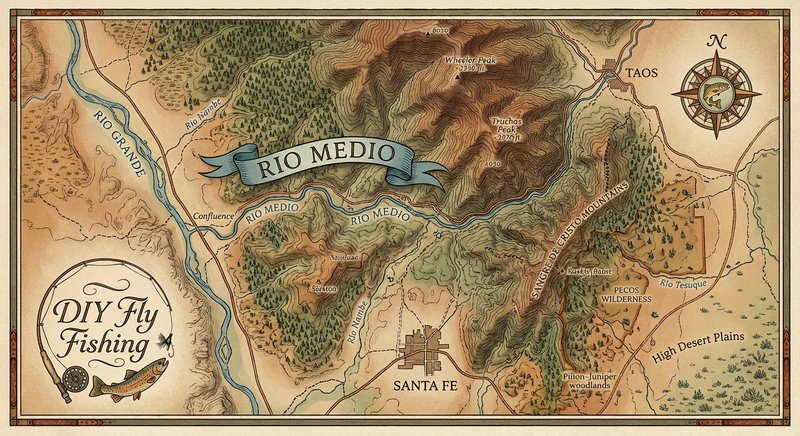
Rio Medio
Fly fishing in New Mexico · Advanced · Best seasons: Summer, Fall
Target Species
Cutthroat Trout
About This Water
Remote stream in the Pecos Wilderness. Native Rio Grande cutthroat trout.
Fishing Recommendations
The Rio Medio is a hidden gem tucked away in the Sangre de Cristo Mountains of northern New Mexico. Flowing through the Pecos Wilderness, this high-gradient mountain stream is one of the premier strongholds for New Mexico’s state fish: the Rio Grande Cutthroat Trout.
For the angler seeking solitude, rugged beauty, and "blue-lining" at its finest, the Rio Medio offers a quintessential backcountry experience.
🎣 Location Overview
The Rio Medio is a classic high-alpine freestone stream. It originates from the snowmelt of the high peaks near the Truchas Lakes and tumbles down through steep canyons, thick forests of spruce and fir, and eventually into meadows as it nears the village of Cundiyo.
What makes it special is its wildness. Unlike the nearby Pecos River, the Rio Medio sees significantly less pressure due to its more demanding access. The water is gin-clear, cold, and highly oxygenated. It features a "pool-drop" morphology—lots of small waterfalls, deep plunge pools, and short, bubbly pocket water. Anglers love it because the fish are wild, stunningly beautiful, and often willing to rise to a well-placed dry fly.
🐟 Target Species & Behavior
The primary draw here is the Rio Grande Cutthroat Trout (RGCT). You may also encounter the occasional Brown Trout in the lower reaches near the Borrego Mesa area, but the higher you go, the more the Cutthroat dominates.
- Behavior: These are opportunistic feeders. Due to the short growing season and nutrient-poor alpine water, they cannot afford to be overly picky. However, they are extremely "spooky." In the crystal-clear, thin water, a shadow or a heavy footstep will send them darting under a rock for an hour.
- Holding Spots: Look for them in the "tail-outs" of pools during hatches, but most often they sit in the soft water right next to the main current or in the deep "buckets" beneath waterfalls.
- Diet: Their diet consists mainly of small stoneflies, caddis, and terrestrial insects (ants, beetles, and grasshoppers) that fall from the dense overhanging vegetation.
📅 Best Times to Fish
Optimal Seasons
- Summer (Late June – August): This is the prime window. The snowpack has usually melted by late June, and the water temperatures reach the 50s. This is peak dry-fly season. Be wary of the "Monsoon Season" (July/August)—afternoon thunderstorms can turn the creek muddy and dangerous quickly.
- Fall (September – October): My personal favorite. The aspens are turning gold, the water is low and clear, and the fish are aggressively feeding to bulk up for winter. The Rio Grande Cutthroats take on their most brilliant spawning colors in the fall.
Best Times of Day
- 10:00 AM – 4:00 PM: In high-altitude streams, you don't need to be there at dawn. The water needs time to warm up to trigger insect activity. Once the sun hits the water, the fish start looking up.
🪰 Recommended Flies & Techniques
Top Fly Patterns
Because these fish aren't overly pressured, "attractor" patterns work best. You want flies that are high-visibility and buoyant.
- Dry Flies:
- Stimulators (Orange or Yellow, size 12-16) – Mimics stoneflies and hoppers.
- Royal Wulff or Royal Coachman (Size 14-18) – The classic high-mountain attractor.
- Parachute Adams (Size 16-20) – For when they get a bit more selective.
- Elk Hair Caddis (Tan or Olive, size 14-18).
- Terrestrials:
- Black Ants (Size 16-18) – Lethal in the late summer.
- Amy’s Ant or small Foam Hoppers (Size 12-14).
- Nymphs (as droppers):
- Pheasant Tail (Size 16-20).
- Copper John (Red or Silver, size 16-18).
Techniques & Presentation
- Dry-Dropper Rig: This is the most effective setup. Fish a buoyant Stimulator or Hopper on top with a small Pheasant Tail suspended 12–18 inches below.
- Short Line Casting: You will rarely cast more than 15–20 feet. Use a 7.5 to 8-foot 3-weight or 4-weight rod.
- Stealth is Key: Wear drab clothing (camo or earth tones). Approach the pools from downstream, staying low (sometimes on your knees). If you see the fish before you cast, they’ve probably already seen you.
💡 Pro Tips & Local Knowledge
- The "Hidden" Pockets: Don't just fish the big pools. Some of the biggest Cutthroats in the Rio Medio live in tiny "pockets" the size of a dinner plate behind a single rock.
- Keep Moving: These fish are spread out. If you don't get a strike in 5 or 6 good drifts, move to the next pocket.
- The Borrego Mesa Approach: Most people access via the Santa Cruz Lake side or the lower trailhead. For a more "wild" experience, take the drive up to Borrego Mesa and hike down into the canyon. It’s a steep hike back out, but the fishing is often untouched.
- Mind the Wind: In the canyons, the wind usually blows downstream in the morning and switches to upstream in the afternoon as the canyon warms. Use this to help your drifts.
⚠️ Important Information
- Access: Access is primarily via the Rio Medio Trail (#155) starting near the town of Cordova or via the Borrego Mesa Campground. High-clearance vehicles are highly recommended for the forest roads.
- Regulations: The Rio Medio is within the Pecos Wilderness. You need a valid New Mexico Fishing License and a Habitat Management & Access Validation (HMAV).
- Special Considerations:
- Barbless Hooks: While not always legally required in every stretch, using barbless hooks is vital for the survival of the native Rio Grande Cutthroat.
- Bear Safety: This is prime Black Bear country. Carry bear spray and be "bear aware" with your snacks.
- Catch & Release: Because this is a native fishery, please practice strict catch and release to preserve these unique genetics for future generations.
- Weather: Hypothermia is a risk even in summer if you get caught in a high-altitude monsoon rain. Pack a light rain jacket.
Bug Hatches & Matching Flies
| Hatch | Type | Peak months | Time of day | Hook sizes | Matching flies |
|---|---|---|---|---|---|
| Blue Winged Olive (BWO) Baetis tricaudatus | mayfly | March, April, September, October | Late Morning/Afternoon | #18-22 | RS2 #20-22, Parachute Adams #18-20, WD-40 #20-22 |
| Western March Brown Rhithrogena morrisoni | mayfly | May, June | Mid-day | #12-14 | Hare's Ear Nymph #12-14, March Brown Western Dry #12-14 |
| Pale Morning Dun (PMD) Ephemerella excrucians | mayfly | June, July, August | Morning/Early Afternoon | #16-18 | Pheasant Tail #16-18, PMD Sparkle Dun #16-18, Quill Gordon #16 |
| Spotted Sedge Hydropsyche | caddis | June, July, August | Evening | #14-16 | Elk Hair Caddis #14-16, LaFontaine's Deep Sparkle Pupa #14-16, Stimulator #14-16 |
| Golden Stonefly Hesperoperla pacifica | stonefly | June, July | All Day | #8-12 | Pats Rubber Legs #8-12, Golden Stimulator #10-12 |
| Yellow Sally Isoperla | stonefly | June, July, August | Afternoon/Evening | #14-16 | Yellow Sally Dry #14-16, Iron Lotus #16 |
| Terrestrials (Grasshoppers/Ants) Formicidae / Caelifera | terrestrial | July, August, September | All Day | #12-18 | Dave's Hopper #12-14, Cinnamon Ant #16-18, Black Beetle #14-16 |
| Midges Chironomidae | midge | January, February, March, December | Morning/Mid-day | #20-24 | Zebra Midge #20-22, Griffith's Gnat #20-22 |