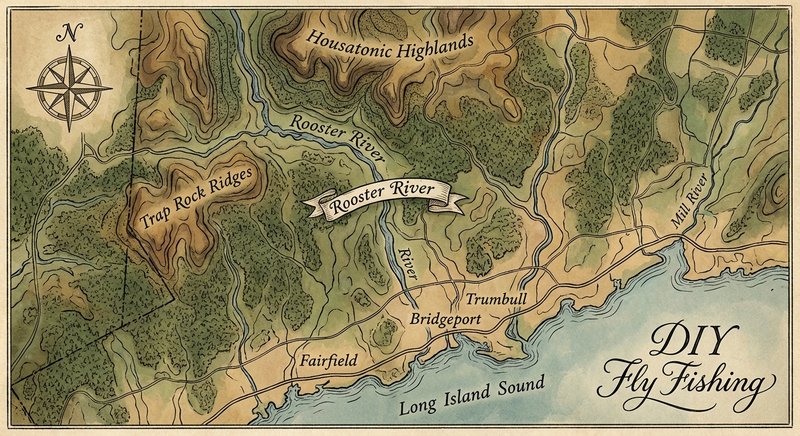
Rooster River
Fly fishing in Connecticut · Intermediate · Best seasons: Fall, Winter
Target Species
Sea-Run Brown Trout
About This Water
Fairfield County stream with sea-run trout. Urban estuary fishing.
Fishing Recommendations
The Rooster River, snaking through the urban landscape of Bridgeport and Fairfield, Connecticut, is one of the East Coast's most unique "hidden in plain sight" fisheries. While it may lack the mountain scenery of the Catskills, it offers a gritty, rewarding challenge: the pursuit of the elusive Sea-Run Brown Trout.
As your guide, I’m going to walk you through how to tackle this technical tidal fishery.
🎣 Location Overview
The Rooster River is a small, coastal stream that flows into Ash Creek and eventually Long Island Sound. What makes it special is its status as a "tidal nursery." Unlike the massive rivers of the West, this is intimate, technical water.
Anglers love it because it represents a "specimen fishery." You aren't here for high numbers; you are here for the chance to hook a wild, buttery-gold brown trout that has spent time in the salt, gaining strength and silver scales before returning to the freshwater flow. The water characteristics vary from shallow, gravelly runs to deep, murky tidal pools affected by the push and pull of the Atlantic.
🐟 Target Species & Behavior
Sea-Run Brown Trout
These are not your average stockies. Sea-run browns are survivors. They are highly migratory, moving between the brackish marshes of Ash Creek and the freshwater pools of the Rooster.
- Behavior: They are incredibly spooky. Because the river is small and often clear in the upper reaches, these fish have a "high-alert" temperament.
- Holding Patterns: Look for "interstate" spots—places where they can rest while moving upstream. They love undercut banks, bridge pilings, and the deep "guts" of tidal bends.
- Feeding: In the salt/brackish sections, they gorge on mummichogs (killifish), grass shrimp, and small blue crabs. Once they move into the river, they transition back to aquatic insects (scuds, stoneflies) and smaller baitfish.
📅 Best Times to Fish
Optimal Seasons: Fall & Winter
- Fall (October – November): This is the prime migration window. As water temperatures drop and autumn rains increase the flow, fish begin pushing up from the estuary to spawn.
- Winter (December – February): Many fish will hold over in deeper pools throughout the winter. On warmer "bluebird" days in January, you can find active fish.
Best Time of Day
- Low Light: Early morning and late evening are non-negotiable. In an urban environment, these fish are most comfortable feeding under the cover of darkness or twilight.
- The Tidal Window: The "Golden Hour" here isn't just about the sun; it’s about the tide. Generally, the last two hours of the falling tide and the first hour of the rising tide are most productive, as it concentrates the fish and their forage.
🪰 Recommended Flies & Techniques
Top Fly Patterns
- Streamers:
- Black or Olive Woolly Buggers (Size 6-10): The gold standard.
- Mickey Finn: A classic attractor that mimics small baitfish.
- Clouser Minnows (Small, Chartreuse/White): Excellent for the lower brackish sections.
- Nymphs & Scuds:
- Ray Charles or Pink Scuds (Size 14-16): Freshwater shrimp are a staple here.
- Pheasant Tail Nymphs: Standard fare for when the fish are hunkered down.
- The "Local Secret":
- Grass Shrimp Patterns: Transparent/pinkish flies that mimic the forage in Ash Creek.
Effective Techniques
- The "Swing and Strip": Cast across and slightly downstream, letting the fly swing into the bank, followed by short, erratic strips.
- Tight-Line Nymphing: In the swifter, upper sections, use a Euro-style or tight-line rig to keep your nymphs in the strike zone without the splash of an indicator.
- Stealth Approach: This is "ninja fishing." Stay low, wear drab colors, and avoid splashing.
💡 Pro Tips & Local Knowledge
- The "Bridge Effect": Urban rivers have bridges. These provide shade and structure. Always fish the shadow line of a bridge; sea-runs love to sit exactly where the light meets the dark.
- Post-Rain Strategy: The Rooster reacts quickly to rain. The best fishing is often 12–24 hours after a rain event when the water is "tannic" or slightly stained but not blown out. This color gives the fish confidence to leave their hiding spots.
- Check the Temperature: If the water is above 68°F, stay home. These fish are stressed in heat. In the winter, if you find a spring-fed seep where the water is slightly warmer than the main flow, you’ve found a goldmine.
⚠️ Important Information
Access Information
Access can be tricky due to the urban/suburban surroundings.
- Fairfield Side: Look for public parks and open spaces along the river corridor (e.g., areas near the Brooklawn Country Club or local municipal lots).
- Ash Creek: The lower tidal area has more public access points for those looking to intercept fish entering the system.
Regulations & Permits
- License: A valid Connecticut Freshwater Fishing License is required.
- Trout & Salmon Stamp: You must have the Trout & Salmon stamp to fish for sea-run browns.
- Creel Limits: Historically, the Rooster has specific regulations regarding sea-run trout. Many areas are Catch and Release or have very high minimum size requirements (often 15 inches or more). Always check the current CT DEEP Fishing Guide before heading out.
Special Considerations
- Urban Awareness: Be mindful of your surroundings. Do not leave valuables in your car, and be respectful of private property bordering the river.
- Water Quality: While the river has improved significantly, it is an urban stream. It is highly recommended to wash your hands after fishing and avoid eating fish from these waters. Catch and Release is the best practice here.
Bug Hatches & Matching Flies
| Hatch | Type | Peak months | Time of day | Hook sizes | Matching flies |
|---|---|---|---|---|---|
| Blue Winged Olive Baetis | mayfly | April, May, September, October | Mid-day/Afternoon | #18-22 | Blue Winged Olive #18-20, RS2 #20-22, Pheasant Tail Nymph #18-22 |
| Tan Caddis Hydropsyche | caddis | May, June | Late Afternoon/Evening | #14-18 | Elk Hair Caddis #14-16, LaFontaine's Deep Sparkle Pupa #14-16, Holy Grail #16 |
| Sulfur Ephemerella invaria/dorothea | mayfly | May, June | Evening | #14-18 | Sulfur Parachute #16-18, Sulfur Emerger #16-18, Pheasant Tail #16-18 |
| Common Midge Chironomidae | midge | January, February, March, December | Anytime | #20-26 | Zebra Midge #20-24, Griffith's Gnat #20-22, Morgan's Midge #22-24 |
| Black Ants and Beetles Formicidae/Coleoptera | terrestrial | July, August, September | Daytime | #14-20 | Cinnamon Ant #16-18, Black Foam Beetle #14-16, Chernobyl Ant #12-14 |
| Light Cahill Stenacron canadense | mayfly | June, July | Evening | #12-14 | Light Cahill #12-14, Gold Ribbed Hare's Ear #12-14 |
| Grannom Caddis Brachycentrus | caddis | April | Morning/Afternoon | #14-16 | Peacock Caddis #14-16, Green Weenie #14-16 |
| Trico Tricorythodes | mayfly | August, September | Early Morning | #22-26 | Trico Spinner #22-24, Black Sunfish Midge #24 |