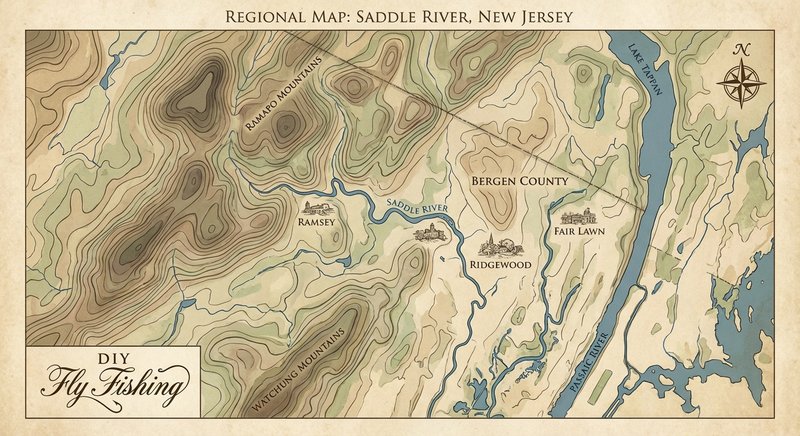
Saddle River
Fly fishing in New Jersey · beginner · Best seasons: spring
Target Species
Rainbow Trout, Brown Trout
About This Water
Bergen County suburban stream with spring stocking. Multiple park access points.
Fishing Recommendations
As an expert guide who has spent years navigating the technicalities of Mid-Atlantic suburban streams, I can tell you that the Saddle River is a unique gem tucked into the hustle and bustle of Bergen County. While it may not have the rugged wilderness of the Catskills, it offers fantastic accessibility and surprisingly productive trout fishing for those who know how to read its waters.
Here is your comprehensive guide to fly fishing the Saddle River.
🎣 Location Overview
The Saddle River is a classic suburban freestone stream that flows south through the heart of northern New Jersey before meeting the Passaic River. What makes it special is its "backyard" accessibility; it offers high-quality trout fishing just minutes from major metropolitan areas.
The river is characterized by a mix of shallow riffles, pocket water, and deep, slow-moving pools—often created by bridge abutments or natural bends. Because it flows through developed areas, it features many "man-made" structures (retaining walls, bridge pilings) that create excellent holding water for trout. It is a "Put-and-Take" fishery, heavily stocked by the NJ Division of Fish and Wildlife, but savvy anglers can find fish that hold over well into the late spring.
🐟 Target Species & Behavior
The primary targets here are Rainbow Trout and Brown Trout.
- Rainbow Trout: These are the most common. They tend to hold in faster water than browns—look for them in the "heads" of pools where the water is highly oxygenated or in the middle of riffles. They are opportunistic feeders and will often move several feet to chase a fly.
- Brown Trout: The browns in the Saddle River are often more cautious. They prefer "structure"—look for them tucked under overhanging banks, behind large boulders, or in the deep shadows of bridges.
- Behavior: Because the river is stocked, fish can be concentrated in large numbers near access points shortly after a stocking truck visits. However, within 48 hours, they spread out into the pocket water. They feed primarily on aquatic insects (caddis and midges) and small baitfish (blacknose dace).
📅 Best Times to Fish
Optimal Seasons: Spring
Spring is the undisputed king on the Saddle River.
- April: This is prime time. The water temperatures are rising into the 50s (Fahrenheit), and the fish are most active.
- May: This is the peak for insect activity. Evening rises become common as the air warms.
Best Times of Day
- Early Morning (Sunrise to 10:00 AM): Best for nymphing and streamer fishing.
- Late Afternoon/Dusk: This is when the "hatch" happens. If you want to catch fish on dry flies, be on the water the hour before the sun goes down.
Prime Conditions
Look for a "falling barometer" or a slightly overcast day. The Saddle River can run very clear; a little cloud cover or a slight stain in the water after a light rain makes the trout much less spooky and more willing to strike.
🪰 Recommended Flies & Techniques
Top Fly Patterns
- Nymphs:
- Bead-head Pheasant Tail (#14-18): The gold standard for mimicking mayfly nymphs.
- Zebra Midge (#18-22): Essential for when the fish are being picky in slow water.
- Hare’s Ear (#14-16): Great all-purpose buggy look.
- Dry Flies:
- Elk Hair Caddis (#14-16): The most common hatch on this river.
- Adams (Parachute) (#16-18): Excellent general attractor.
- Streamers:
- Woolly Bugger (Black or Olive, #8-10): Best for targeting larger browns or aggressive rainbows in deep pools.
Effective Techniques
- Tight-Line Nymphing: Since the river is relatively shallow and narrow, "Euro-style" or tight-line nymphing is incredibly effective. It allows you to keep your line off the conflicting currents and get your fly down to the fish quickly.
- Indicator Nymphing: In the deeper pools (like those near the bridges in Ridgewood or Rochelle Park), a small yarn indicator is best.
- The "Swing": Swinging a small wet fly or streamer through the tail-outs of pools is a classic way to hook into active Saddle River rainbows.
💡 Pro Tips & Local Knowledge
- Focus on the Parks: The Saddle River County Park system (specifically the Wild Duck Pond area in Ridgewood and the stretches in Glen Rock and Fair Lawn) provides the best public access and the most consistent stocking.
- Bridge Pools are Key: In suburban streams, bridges are the best "natural" features. They provide shade, depth, and structure. Never skip a bridge.
- Go Small and Light: Because the water is often clear and pressured, use 5X or 6X fluorocarbon tippet. If you use 4X, you will likely see the fish look at your fly and turn away.
- Stealth Matters: Avoid wading right into the middle of a pool. Stand on the bank or the edge of the water and fish the "near" water first. These fish are used to seeing people on bike paths, but they are still sensitive to vibrations in the water.
⚠️ Important Information
Access & Parking
Most fishing occurs within the Saddle River County Park. Parking is ample and free in designated lots. Most of the river is bordered by a paved multi-use path, making it easy to scout several miles of water on foot.
Regulations & Permits
- License: A valid New Jersey Fishing License and a Trout Stamp are required for all anglers 16 and older.
- Season Closures: Be aware of the Pre-Season Stocking Closures. The river is typically closed to all fishing for a few weeks in late March/early April leading up to Opening Day.
- Limits: Check the current NJ Freshwater Fishing Digest for daily creel limits, as these can change annually.
Special Considerations
- Water Temperature: By late June, the Saddle River can get quite warm. If the water exceeds 68°F, please stop fishing to protect the trout, as they will not survive the stress of a catch-and-release in warm water.
- Share the Space: This is a high-traffic recreational area. Be mindful of bikers and joggers on the paths when you are casting.
Guide’s Final Word: The Saddle River is the perfect "after-work" stream. It rewards the technical angler who uses light tippets and delicate presentations. Tight lines!
Bug Hatches & Matching Flies
| Hatch | Type | Peak months | Time of day | Hook sizes | Matching flies |
|---|---|---|---|---|---|
| Blue-Winged Olive Baetis spp. | mayfly | March, April, September, October | Late Morning/Afternoon | #18-22 | RS2 #18-22, Parachute Adams #18-22, Pheasant Tail Nymph #18-20 |
| Hendrickson Ephemerella subvaria | mayfly | April, May | Afternoon | #12-14 | Hendrickson Dark #12-14, Red Quill #12-14, Hare's Ear Nymph #12-14 |
| Early Brown Stonefly Strophopteryx fasciata | stonefly | March, April | Mid-day | #14-16 | Little Brown Stone #14-16, Pats Rubber Legs #12-14, Copper John #14-16 |
| Sulfur Ephemerella invaria | mayfly | May, June | Evening | #14-18 | Sulfur Parachute #14-18, Sulfur Emerger #16-18, Pheasant Tail #16-18 |
| Tan Caddis Hydropsyche spp. | caddis | May, June | All Day/Evening | #14-16 | Elk Hair Caddis #14-16, Pupa Sedge #14-16, Gold Ribbed Hare's Ear #14-16 |
| Light Cahill Stenonema ithaca | mayfly | June, July | Evening | #12-14 | Light Cahill #12-14, Cream Usual #14, Gold Ribbed Hare's Ear #12-14 |
| Trico Tricorythodes spp. | mayfly | July, August, September | Early Morning | #22-26 | Trico Spinner #22-26, Zebra Midge #22-24 |
| Terrestrials (Ants/Beetles) Formicidae / Coleoptera | terrestrial | July, August, September | All Day | #12-18 | Black Foam Ant #16-18, Chernobyl Ant #12-14, Crow Beetle #14-16 |
| Zebra Midge Chironomidae | midge | January, February, March, December | All Day | #18-24 | Zebra Midge #18-22, Griffith's Gnat #20-22, WD-40 #20-22 |