San Antonio Creek
Fly fishing in New Mexico · Intermediate · Best seasons: Summer, Fall
Target Species
Brown Trout, Rainbow Trout
About This Water
Tributary of the Jemez in Valles Caldera. Excellent wild trout fishing in meadows.
Fishing Recommendations
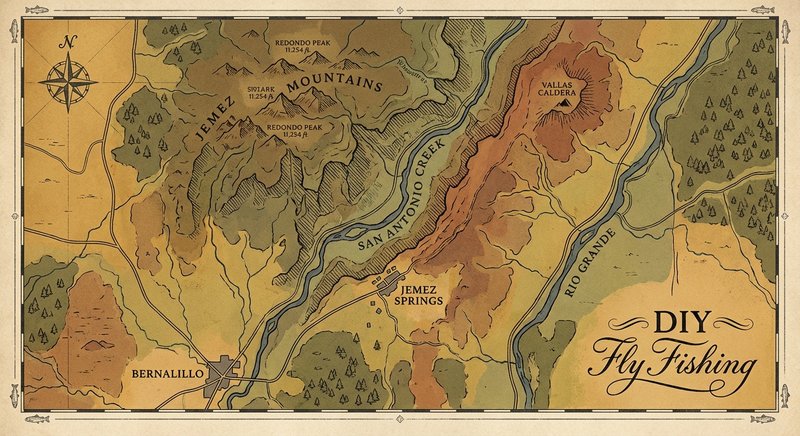
San Antonio Creek, located within the stunning Valles Caldera National Preserve and the Jemez Mountains of Northern New Mexico, is one of the most iconic "spring creek-style" meadow fisheries in the American Southwest. It offers a unique technical challenge amidst a landscape formed by a massive volcanic collapse millions of years ago.
🎣 Location Overview
San Antonio Creek is a high-altitude gem (approx. 8,500–9,000 ft) characterized by its tight, serpentine meanders through vast, open grass meadows. Unlike the rocky, tumbling canyons found elsewhere in the Jemez, the "San Tone" inside the Caldera is slow-moving with deep undercut banks and silty bottoms.
What makes it special is the purity of the meadow experience. Because there are few trees on the banks within the Valles Caldera, it offers unobstructed casting but provides zero cover for the angler. It is a "stealth-first" fishery where your shadow or a heavy footstep will spook every fish in the pool.
🐟 Target Species & Behavior
- Brown Trout: The dominant species. These are primarily wild fish. They are notoriously wary and spend most of their time tucked deep under the overhanging grassy banks. They move into the main current only when a hatch is on or to ambush terrestrials.
- Rainbow Trout: Found more frequently in the lower sections outside the Preserve or near the San Antonio Campground. They tend to be slightly less cautious than the Browns but still require a delicate presentation.
Behavior: These fish are opportunistic but easily intimidated. They key in heavily on "micro-currents" within the bends. If your fly has even a hint of drag, they will refuse it.
📅 Best Times to Fish
- Summer (Late June – August): This is the prime season for Terrestrials. The tall meadow grasses are teeming with grasshoppers, beetles, and ants.
- Note: This is also monsoon season. Afternoon thunderstorms are frequent and dangerous in the open caldera. Fish early, and get off the water if you see lightning.
- Fall (September – October): Perhaps the most beautiful time. The elk are bugling, the aspens are turning, and the Brown Trout become more aggressive as they prepare for the spawn.
- Best Time of Day:
- Morning: Midges and small mayfly hatches.
- Midday: Peak terrestrial activity when the wind picks up and knocks bugs into the water.
- Late Afternoon: Potential for Blue Winged Olive (BWO) hatches if it's overcast.
🪰 Recommended Flies & Techniques
Top Fly Patterns
- Terrestrials: Dave’s Hopper, Parachute Hopper (size 12-16), Foam Beetles (black), and Cinnamon Ants (size 16-18).
- Dry Flies: Parachute Adams (18-22), Elk Hair Caddis (16-18), and Griffith’s Gnat (20-22).
- Nymphs: Bead-head Pheasant Tail (16-20), Zebra Midge (18-22 in red or black), and Copper Johns (18).
- Streamers: Small Wooly Buggers in olive or black (size 10-12) can work in the deeper holes during the fall.
Effective Techniques
- The "Dry-Dropper": A high-floating hopper with a small Zebra Midge or Pheasant Tail dropped 18-24 inches below is the "gold standard" here.
- Upstream Approach: Always fish moving upstream. Because the water is clear and slow, the fish face into the current; if you approach from behind them, you have a better chance of remaining unseen.
- The Bow-and-Arrow Cast: In some of the tighter bends or where willows are present, this short-range cast is essential.
💡 Pro Tips & Local Knowledge
- Stay Off the Skyline: Because the meadows are flat, you look like a giant to the fish. Crouch or even crawl to the bank. If you can see the fish, they have likely already seen you.
- Watch Your Feet: The banks are soft and hollow. Walking heavily sends vibrations through the ground and into the water, which "alerts" the trout to your presence long before you cast.
- The "Reach Cast": Learn the reach cast to manage the complex currents in the bends. You need the fly to travel at the exact speed of the bubble line.
- Focus on the Bends: 90% of the fish are in the deep water on the outside of the curves or tucked under the "cut" side of the bank. Don't waste too much time in the shallow, straight riffles.
⚠️ Important Information
Access & Permits
- Valles Caldera National Preserve: Entry usually requires a National Park pass or a fee.
- Licensing: You must have a valid New Mexico State Fishing License AND a Habitat Management & Access Validation (HMAV).
- Backcountry Access: Some areas of the San Antonio require a backcountry vehicle permit (limited numbers per day) or a long hike/bike ride. Check the Valles Caldera NPS website for current reservation rules.
Regulations
- Catch and Release: Inside the Preserve, it is primarily catch and release.
- Tackle: Barbless hooks only. This is strictly enforced by rangers.
- Handling: Keep the fish in the water. High-altitude trout are fragile, especially when water temperatures rise in mid-summer.
Special Considerations
- Wildlife: You are in prime Elk and Black Bear country. Give the elk plenty of space, especially during the fall rut.
- Altitude: At 9,000 feet, dehydration and sunburn happen fast. Drink twice as much water as you think you need.
Bug Hatches & Matching Flies
| Hatch | Type | Peak months | Time of day | Hook sizes | Matching flies |
|---|---|---|---|---|---|
| Blue Winged Olive Baetis spp. | mayfly | March, April, September, October | Late Morning/Afternoon | #18-22 | Parachute Adams #18-22, RS2 #20-22, Pheasant Tail Nymph #18-20 |
| Pale Morning Dun Ephemerella excrucians | mayfly | June, July | Late Morning | #14-18 | PMD Sparkle Dun #16-18, Pale Morning Dun Parachute #14-16, Split Case PMD #16-18 |
| Spotted Sedge Hydropsyche spp. | caddis | June, July, August | Evening | #14-18 | Elk Hair Caddis #14-18, LaFontaine's Deep Sparkle Pupa #14-16, Puterbaugh Sedge #16 |
| Grasshopper Acrididae | terrestrial | July, August, September | Mid-day/Afternoon | #8-14 | Dave's Hopper #10-12, Amy's Ant #12-14, Parachute Hopper #12-14 |
| Little Yellow Stonefly Isoperla spp. | stonefly | June, July | Morning/Evening | #14-16 | Yellow Stimulator #14-16, Little Yellow Sloan #16, Iron Lotus #16 |
| Black Ants Formicidae | terrestrial | July, August | All Day | #16-20 | Cinnamon Ant #16-18, Black Foam Ant #18-20, Transparant #18 |
| Trico Tricorythodes spp. | mayfly | August, September | Early Morning | #20-24 | Trico Spinner #22-24, Trico Dun #20-22, WD-40 #20-22 |
| Midges Chironomidae | midge | January, February, March, December | Late Morning | #18-24 | Zebra Midge #18-22, Griffith's Gnat #20-24, Top Secret Midge #20-22 |
| Beetles Coleoptera | terrestrial | July, August | Afternoon | #12-16 | Foam Beetle #14-16, Crowe Beetle #12-14 |