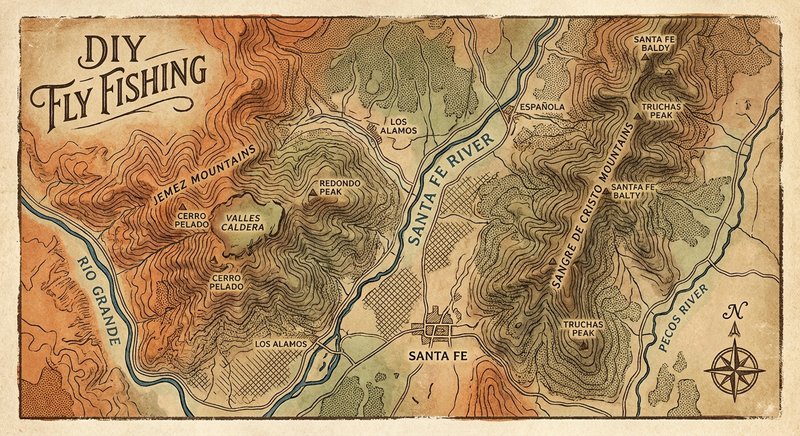
Santa Fe River
Fly fishing in New Mexico · Beginner · Best seasons: Spring, Summer, Fall
Target Species
Rainbow Trout, Brown Trout
About This Water
Small urban stream with stocked trout. Easy access near downtown Santa Fe.
Fishing Recommendations
Welcome to the high desert, angler. As your guide, I’m excited to walk you through one of New Mexico’s most overlooked yet rewarding small-water fisheries: the Santa Fe River.
While many anglers flock to the San Juan or the Pecos, the Santa Fe River offers an intimate, technical, and scenic experience right in the backyard of the "City Different." It is a tale of two rivers: the high-alpine headwaters and the rugged desert canyon.
🎣 Location Overview
The Santa Fe River is a small, high-altitude freestone stream that begins in the Sangre de Cristo Mountains. What makes it special is the sheer contrast in scenery.
- The Upper Canyon: Located above the city in the Santa Fe National Forest, this is classic "blue line" fishing. It features tight corridors, plunge pools, and granite boulders shaded by ponderosa pines and aspens.
- The Lower Canyon (Caja del Rio): Below the city, the river carves through a dramatic basalt canyon. This area is fed by reclaimed water and springs, creating a tailwater-like environment in a desert setting.
Anglers love it because you can fish it in a half-day and still be back in town for a world-class meal. It rewards stealth, precision, and light tackle.
🐟 Target Species & Behavior
- Brown Trout: The stars of the river. The browns here are wild, vibrant, and exceptionally spooky. They hold tight to undercut banks and under "shadow lines" provided by overhanging willows.
- Rainbow Trout: Found primarily in the upper sections where the state occasionally stocks, though some wild populations persist in deeper canyon pools.
Behavior: These fish are highly opportunistic but have a very small "strike window." Because the river is small, they won't move far for a fly. You must put the fly right on their nose. In the Upper Canyon, they are "looking up" from June through September.
📅 Best Times to Fish
- Spring (March – May): Pre-runoff is excellent. Focus on the Lower Canyon where temperatures warm up faster. Once the snow melts in the Sangres (late May), the Upper Canyon can become too turbid and fast to fish safely.
- Summer (June – August): This is prime time for the Upper Canyon. As the heat hits the valley, the high-altitude water stays cool. Morning sessions (sunrise to 11:00 AM) are most productive.
- Fall (September – November): The Golden Window. The Brown trout become aggressive as they prepare to spawn. The cottonwoods turn gold, the water is crystal clear, and the fish are eager to bulk up for winter.
🪰 Recommended Flies & Techniques
Top Patterns
- Dry Flies: Parachute Adams (#16-20), Elk Hair Caddis (#14-18), Royal Wulff (#16), and Stimulators (#14) for the pocket water.
- Nymphs: Bead-head Pheasant Tails (#16-20), Zebra Midges (Black or Red, #18-22), and Gold-ribbed Hare’s Ears (#16).
- Terrestrials: From July to September, a Dave’s Hopper or a small Black Ant dropped near the bank is deadly.
- Streamers: Small Woolly Buggers (Thin Mint or Olive) in sizes #10-12, swung through deeper pools in the Lower Canyon.
Techniques
- The "Short Leash": Use a short leader (7.5 feet) ending in 5X or 6X tippet. Large loops lead to tangles in the brush.
- Bow-and-Arrow Cast: Essential for the Upper Canyon. The vegetation is thick; often, you won't have room for a traditional backcast.
- Dry-Dropper: A high-visibility dry fly (like a Stimulator) with a small Pheasant Tail nymph tied 12–18 inches below it is the most effective way to cover the varying depths of the pools.
💡 Pro Tips & Local Knowledge
- Stealth is Mandatory: The water is thin and clear. If you can see the fish, they have likely already seen you. Wear earthy tones (no bright white hats) and stay low to the ground.
- Upper Canyon Access: Drive up Upper Canyon Road until you reach the Randall Davey Audubon Center. Park in the designated forest access areas. The further you hike up into the wilderness, the better the fishing gets.
- The "Spring" Factor: In the Lower Canyon (Caja del Rio), the water stays a constant temperature due to spring inflows. This is your best bet for winter fishing when everything else is frozen.
- Watch the Flows: The river is heavily managed for city water. Always check the USGS gauge for "Santa Fe River near Santa Fe." If it’s running below 5 CFS, it’s too low to fish ethically. Aim for 10–25 CFS.
⚠️ Important Information
- Access: Much of the river through the actual city limits is dry or runs through private property. Focus your efforts on the Santa Fe National Forest land above the city or the Caja del Rio BLM land below.
- Regulations: You need a valid New Mexico Fishing License plus the Habitat Management & Access Validation (HMAV).
- Respect the Watershed: The upper reservoirs (Nichols and McClure) are closed to fishing and trespassing as they provide the city's drinking water. Respect all "Closed Area" signs.
- Safety: The Lower Canyon is remote with no cell service and is home to rattlesnakes in the summer. Dress appropriately and carry a satellite messenger if going deep into the canyon.
Tight lines, and enjoy the serenity of the Sangre de Cristos!
Bug Hatches & Matching Flies
| Hatch | Type | Peak months | Time of day | Hook sizes | Matching flies |
|---|---|---|---|---|---|
| Midges Chironomidae | midge | January, February, March, December | All day | #18-24 | Zebra Midge #18-22, Griffith's Gnat #20-24, Morgan's Midge #20-22 |
| Blue Winged Olive Baetis | mayfly | March, April, September, October | Late Morning/Afternoon | #18-22 | Parachute Adams #18-22, RS2 #20-22, JujuBaetis #18-22 |
| Pale Morning Dun Ephemerella | mayfly | June, July | Morning/Early Afternoon | #14-18 | PMD Sparkle Dun #16-18, Pheasant Tail #14-18, PMD Emerger #16-18 |
| Spotted Sedge / Cased Caddis Hydropsyche | caddis | May, June, July | Evening | #14-18 | Elk Hair Caddis #14-18, Holy Grail #16-18, Peeping Caddis #14-16 |
| Yellow Sally Isoperla | stonefly | June, July | Afternoon/Evening | #14-16 | Yellow Stimulator #14-16, Little Yellow Stone Nymph #14-16, Sofa Pillow #14 |
| Tricos Tricorythodes | mayfly | August, September | Early Morning | #20-24 | Trico Spinner #20-24, Sunray Trico #20-22 |
| Grasshoppers Acrididae | terrestrial | July, August, September | Midday/Afternoon | #8-12 | Chubby Chernobyl #10-12, Dave's Hopper #10-12, Parachute Hopper #12 |
| Cinnamon Ants Formicidae | terrestrial | July, August | Afternoon | #16-20 | Cinnamon Ant #16-18, Black Foam Ant #16-20 |