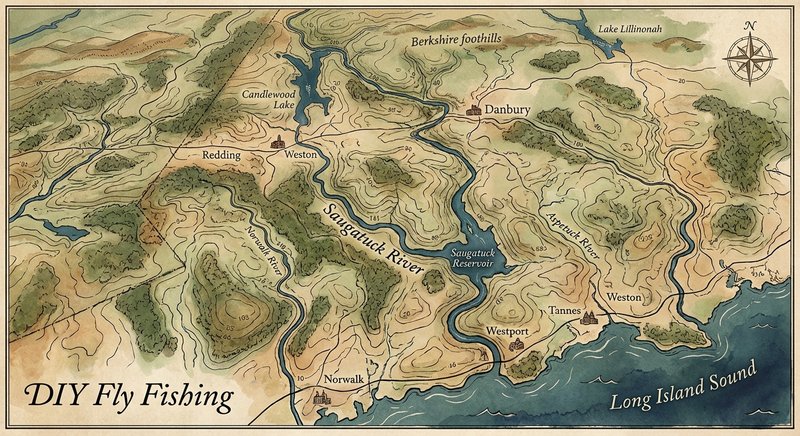
Saugatuck River
Fly fishing in Connecticut · Intermediate · Best seasons: Spring, Fall
Target Species
Brown Trout, Sea-Run Brown Trout
About This Water
Fairfield County stream with wild brown trout. Suburban fishing near New York City.
Fishing Recommendations
The Saugatuck River is one of Connecticut’s "hidden gem" fisheries. While the state is famous for the Farmington and Housatonic, the Saugatuck offers a more intimate, technical experience that transitions from a classic upland trout stream into a unique tidal estuary.
🎣 Location Overview
The Saugatuck is a quintessential New England freestone river located in Fairfield County. What makes it special is the diversity of its water: the upper sections near the Saugatuck Reservoir are characterized by pocket water and hemlock-shaded pools, while the lower sections below the Reservoir Dam flow through suburban Weston and Westport before meeting the Long Island Sound.
Anglers love it because it offers a "big fish" potential in a relatively small footprint. The river is heavily stocked, but it also holds a legendary status for its Sea-Run Brown Trout program—a rarity in the Northeast—where trout migrate to the salt and return larger, stronger, and silver-bright.
🐟 Target Species & Behavior
- Stocked Brown & Rainbow Trout: These are the bread and butter of the river. They hold in traditional spots: behind large boulders, in the deep "guts" of pools, and along undercut banks.
- Sea-Run Brown Trout: These are the ghosts of the Saugatuck. They behave more like Atlantic Salmon or Steelhead. They are extremely wary, often holding in the lower tidal sections or the deep pools just above the head-of-tide.
- Feeding Behavior: In the upper river, trout focus on aquatic insects (Caddis and Stoneflies). In the lower river and tidal sections, their diet shifts heavily toward protein—mummichogs (killifish), silversides, and small blue crabs.
📅 Best Times to Fish
Optimal Seasons
- Spring (April – June): This is prime time. High water levels and insect hatches (Hendricksons and Caddis) bring the fish into a feeding frenzy.
- Fall (October – November): This is the best window for Sea-Run Browns. As water temperatures drop, these fish move up from the harbor into the river. The fall foliage and aggressive pre-spawn behavior make for excellent streamer fishing.
Best Times of Day
- Low Light: Early morning and late evening are essential, especially for Sea-Run fish which are notorious for being "light-shy."
- Tidal Influence: In the lower river, the incoming tide is often the most productive, as it pushes baitfish and cooler, oxygenated water upstream.
🪰 Recommended Flies & Techniques
Nymphing (Upper River)
- Flies: Frenchies (#14-18), Prince Nymphs (#12-16), and Pheasant Tails.
- Technique: Tight-line (Euro) nymphing is highly effective in the pocket water sections. If using an indicator, keep it small to avoid spooking fish in the clearer pools.
Dry Fly (Spring Hatches)
- Flies: Elk Hair Caddis (#14-16), Blue Winged Olives (#18-22), and Hendrickson patterns in May.
- Technique: Use a long, fine leader (9-12ft 6X) and focus on "dead drift" accuracy. The Saugatuck trout see a lot of pressure; a micro-drag will result in a refusal.
Streamers (The "Big Fish" Approach)
- Flies: Woolly Buggers (Black/Olive), Black Ghost, and specifically White Zonkers or Clouser Minnows for the tidal sections to mimic baitfish.
- Technique: Use a "swing and strip" method. For Sea-Run browns, cast across and slightly downstream, letting the fly swing into the bank, then retrieve with erratic pulses.
💡 Pro Tips & Local Knowledge
- The "Ford Road" Section: This is the most famous stretch for a reason. It features the Trout Management Area (TMA). Focus on the deep holes near the bridges.
- Stealth is Key: Because the river is relatively small and clear, your approach matters. Wear camo or earth tones, avoid wading deeply if you don't have to, and minimize false casting.
- The Estuary Secret: If the upper river is crowded, head to the mouth of the river at high tide with an 8-weight rod and large streamers. You might hook into a Sea-Run Brown, or even a migrating Striped Bass.
- Temperature Check: In late June, the Saugatuck can warm up quickly. If the water hits 68°F, stop fishing to protect the trout—head to the cooler tailwater sections directly below the dam instead.
⚠️ Important Information
Access
- Trout Management Area: Located in Westport and Weston. Multiple pull-offs are available along Ford Road and Lyons Plain Road.
- The Aspetuck Confluence: A great spot where the Aspetuck River joins the Saugatuck, providing a boost of cold water.
Regulations
- CT Fishing License: Required for all anglers 16+. You must also purchase a Trout & Salmon Stamp.
- TMA Rules: The Trout Management Area is generally Catch and Release Only from September through mid-April (check current CT DEEP Angler’s Guide for specific dates).
- Gear: A 4-weight or 5-weight rod (8.5' to 9') is the perfect "all-around" tool for this river.
Special Considerations
Much of the Saugatuck flows through private property. While the riverbed is generally accessible if you stay in the water, be extremely respectful of landowners’ privacy to ensure continued access for the fly fishing community.
Bug Hatches & Matching Flies
| Hatch | Type | Peak months | Time of day | Hook sizes | Matching flies |
|---|---|---|---|---|---|
| Blue Winged Olive Baetis / Acerpenna | mayfly | March, April, October, November | Midday | #18-24 | RS2 #20-22, BWO Sparkle Dun #18-22, Pheasant Tail #18-20 |
| Zebra Midge Chironomidae | midge | January, February, March | Late Morning | #20-26 | Zebra Midge #20-24, Griffith's Gnat #20-22 |
| Hendrickson Ephemerella subvaria | mayfly | April, May | Afternoon | #12-14 | Red Quill #12-14, Hendrickson Emerger #14 |
| Grannom Caddis Brachycentrus | caddis | April, May | Morning/Evening | #14-16 | Peacock Caddis #14-16, Deep Sparkle Pupa #14 |
| March Brown Maccaffertium vicarium | mayfly | May, June | Midday | #10-12 | March Brown Dry #10-12, Hare's Ear Nymph #10-12 |
| Sulphur Ephemerella invaria/dorothea | mayfly | May, June | Evening | #14-18 | Sulphur Parachute #16-18, Sulphur Cripple #16 |
| Tan Caddis Hydropsyche | caddis | June, July, August | Evening/Night | #14-18 | Elk Hair Caddis #14-18, LaFontaine Pupa #16 |
| Ants and Beetles Formicidae / Coleoptera | terrestrial | July, August, September | All Day | #12-20 | Black Foam Ant #16-18, Cinnamon Ant #14-18, Black Beetle #12-16 |
| Light Cahill Stenacron / Stenonema | mayfly | June, July | Evening | #12-14 | Light Cahill #12-14 |
| Isonychia Isonychia bicolor | mayfly | June, September | Afternoon/Evening | #10-12 | Iso Parachute #10-12, Zug Bug #10-12 |