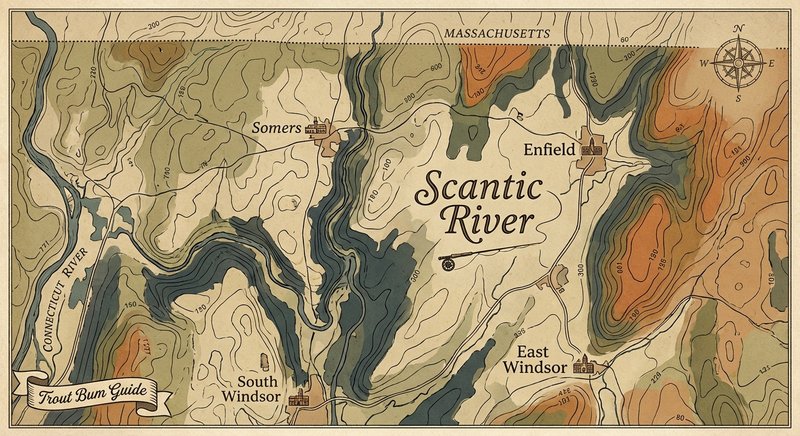
Scantic River
Fly fishing in Connecticut · Intermediate · Best seasons: Spring, Fall
Target Species
Brown Trout, Rainbow Trout
About This Water
The Scantic River offers a serene fly fishing experience in the heart of Connecticut. This winding river is known for its stocked trout and challenging wading conditions, rewarding anglers with beautiful scenery and the chance to hook into a memorable fish.
Fishing Recommendations
The Scantic River in North central Connecticut is one of the state’s most overlooked gems. Flowing from Somers through Enfield and East Windsor before meeting the Connecticut River, it offers a distinct "lowland" trout fishing experience. Unlike the rocky, bouldery rivers of the Litchfield Hills (like the Farmington or Housatonic), the Scantic is characterized by sandy bottoms, undercut banks, and slow-winding bends that feel more like a Midwestern spring creek than a typical New England freestone.
🎣 Location Overview
The Scantic is a small-to-medium-sized river that feels intimate and secluded, despite being close to developed areas.
- Water Characteristics: It is generally slow-moving with deep, tea-colored (tannic) pools and long glides. The bottom is predominantly sand and silt, which means the river changes slightly every year after the spring floods.
- Why Anglers Love It: It is heavily stocked by the CT DEEP, but because it is harder to "read" than a classic riffle-and-pool river, it sees less pressure than the Farmington. It’s an excellent river for stealthy anglers who enjoy "hunting" fish along banks rather than blind-casting into rapids.
🐟 Target Species & Behavior
The primary targets here are Brown Trout and Rainbow Trout.
- Brown Trout: These are the kings of the Scantic. They love the river’s abundant structure. Look for them tucked tight under overhanging brush or buried in the "root balls" of fallen trees. They are wary and prefer low-light conditions.
- Rainbow Trout: Usually found in the slightly faster water sections or at the very heads of the deeper pools where the water is most oxygenated.
- Feeding Habits: Due to the sandy bottom, the river has a massive population of scuds and isopods (sowbugs). In the spring, they focus on Hendrickson and Blue Winged Olive hatches; in the fall, they transition to terrestrial insects and small baitfish like dace and sculpins.
📅 Best Times to Fish
The Scantic is a "seasonal" river, as it can get quite warm in the heat of mid-summer.
- Optimal Seasons:
- Spring (Mid-April to June): This is the peak. Water levels are high, and the fish are most active. This coincides with the major mayfly hatches.
- Fall (Late September to November): As water temperatures drop, the DEEP often does a secondary stocking. The resident Browns become aggressive as they prepare for the spawn.
- Best Times of Day:
- Spring: Mid-day (11 AM – 3 PM) is best for hatches.
- Fall: Late afternoon when the sun warms the water slightly.
- Prime Conditions: Aim for 2-3 days after a rain. The Scantic can get "milky" or muddy quickly; you want it when it has a "greenish" tint but at least 2 feet of visibility.
🪰 Recommended Flies & Techniques
Top Fly Patterns
- Nymphs: Zebra Midges (#18-22), Gold Ribbed Hare’s Ear (#14-16), and Pink or Orange Scud patterns (#14-18)—the latter is a local "must-have."
- Dry Flies: Hendrickson (Spring), Elk Hair Caddis (#14-16), and Blue Winged Olives (#18-20).
- Streamers: Black or Olive Woolly Buggers (#8-10) and small Muddler Minnows to imitate the river's sculpins.
Effective Techniques
- Tight-Line/Euro Nymphing: Difficult in many parts of the Scantic due to the depth and lack of current. A traditional indicator rig is often more effective for drifting flies through long, slow pools.
- Streamer Stripping: Cast toward the opposite bank, let the streamer sink, and strip it back across the submerged wood. This is the best way to pull a large Brown Trout out of cover.
- Terrestrial Dropper: In late spring/early summer, a foam ant or beetle with a small nymph dropper is deadly along the grassy banks.
💡 Pro Tips & Local Knowledge
- Focus on the "Outside Bends": Because the river is sandy, the deepest water and the best trout cover are always on the outside of the bends where the current has carved out the bank.
- Stealth is Mandatory: The Scantic is quiet. Heavy wading will send vibrations through the sandy bottom and spook every fish in the pool. Stay on the bank where possible and cast from a distance.
- The "Enfield/Somers" Line: Some of the best fishing is found within the Scantic River State Park sections. The area near the Powder Hollow Park (Enfield) is a classic starting point, offering a mix of accessible water and deeper, more technical holes.
- Check the "Hole" behind the trees: If you see a fallen tree in the water, there is a fish under it. Use a weighted streamer to "jig" the wood—it’s risky for your flies, but high reward for big fish.
⚠️ Important Information
- Regulations: The Scantic River is largely managed under general Connecticut state regulations, but parts of it may fall under Trout Management Area (TMA) or specific stocking rules. Always check the CT DEEP Hunting & Fishing Guide for current creel limits and gear restrictions.
- Permit: A valid Connecticut Inland Fishing License is required. If you are keeping trout (where legal), you must have a Trout & Salmon Stamp.
- Access:
- Powder Hollow Park (Enfield): Ample parking and easy access.
- Somers/East Windsor bridges: Many anglers park near bridge crossings (where legal/safe) and hike in.
- Caution: The sandy bottom can be deceptive; "quick-sand" pockets exist in soft silt areas. Use a wading staff and move slowly. Also, be wary of ticks in the tall grass along the banks—the Scantic valley is prime tick country.
Bug Hatches & Matching Flies
| Hatch | Type | Peak months | Time of day | Hook sizes | Matching flies |
|---|---|---|---|---|---|
| Blue Winged Olive Baetis spp. | mayfly | March, April, October, November | Afternoon | #18-22 | RS2 #18-22, BWO Sparkle Dun #18-20, Pheasant Tail #18-20 |
| Grannom Caddis Brachycentrus | caddis | April, May | Morning/Afternoon | #14-16 | Grannom Pupa #14-16, Elk Hair Caddis #14-16, Peacock Caddis #16 |
| Hendrickson Ephemerella subvaria | mayfly | April, May | Afternoon | #12-14 | Red Quill #12-14, Hendrickson Emerger #12-14, Gold Ribbed Hare's Ear #12-14 |
| March Brown Maccaffertium vicarium | mayfly | May, June | Afternoon | #10-12 | March Brown Wet #10-12, Ausable Wulff #10-12 |
| Sulphur Ephemerella invaria/dorothea | mayfly | May, June | Evening | #14-18 | Sulphur Parachute #14-18, Sulphur Cripple #16, Mercer's Poxyback Sulphur #14-16 |
| Light Cahill Stenacron interpunctatum | mayfly | June, July | Evening | #12-14 | Light Cahill #12-14, Cream Usual #14 |
| Common Midge Chironomidae | midge | January, February, March, December | Morning/Afternoon | #20-26 | Zebra Midge #18-22, Griffith's Gnat #20-24, Top Secret Midge #20-22 |
| Common Terrestrials Formicidae / Gryllidae | terrestrial | July, August, September | All Day | #10-18 | Black Foam Ant #14-18, Chernobyl Ant #10-12, Cinnamon Ant #16-18 |