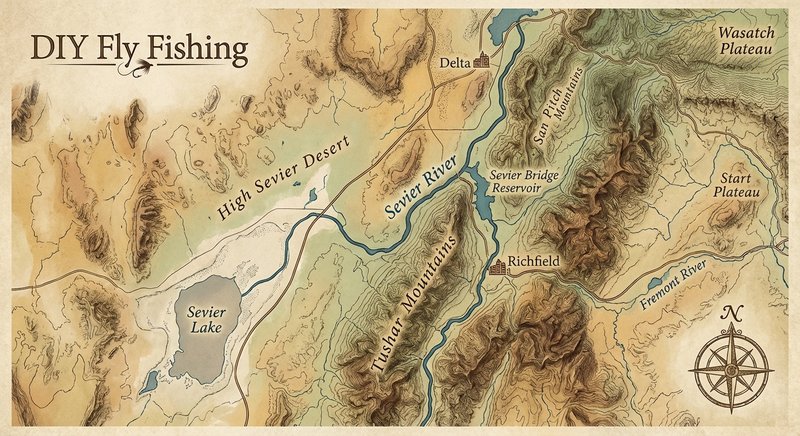
Sevier River
Fly fishing in Utah · Beginner · Best seasons: Spring, Summer, Fall
Target Species
Brown Trout, Rainbow Trout
About This Water
Longest river entirely within Utah. Brown trout in upper sections.
Fishing Recommendations
The Sevier River is one of the most underrated gems in the American West. Flowing through the heart of Southern Utah, it offers a diverse range of water—from high-mountain meadow streams to rugged, tumbling canyons. Unlike the famous Green or Provo Rivers, the Sevier offers a more intimate, less-crowded experience where a dedicated angler can find solitude and hungry, wild trout.
🎣 Location Overview
The Sevier River is a long, winding system, but for the fly fisher, the action is concentrated in three primary sections: the Upper Sevier (near Hatch), the Marysvale Canyon, and the tailwater section below Piute Reservoir.
What makes the Sevier special is its "working river" character. It transitions from a classic high-elevation freestone to a desert canyon river. The water often has a slight "tea" stain or turbidity due to the volcanic soils of the Paunsaugunt Plateau, which actually works in the angler's favor by making the fish a little less "leader shy" than those in crystal-clear tailwaters. It is a river of undercut banks, deep pockets, and thick willow-lined shores.
🐟 Target Species & Behavior
- Brown Trout: The undisputed kings of the Sevier. In the Marysvale Canyon and the lower reaches, wild Browns dominate. They are opportunistic but territorial. They love structure—look for them tucked tight against the volcanic boulders or hovering in the shadows of undercut banks.
- Rainbow Trout: Found more frequently in the upper reaches near Hatch and in areas supplemented by the Utah DWR. These fish tend to hold in the faster riffles and at the heads of pools.
Feeding Behavior: Sevier trout are "caddis-centric." While they see Mayflies and Stoneflies, the river’s biomass is heavily weighted toward caddisflies. During the summer, they also become highly attuned to terrestrial life falling from the dense bankside vegetation.
📅 Best Times to Fish
- Spring (March – April): Before the snowmelt hits, the "Pre-Runoff" window is excellent. Look for Blue Winged Olive (BWO) hatches on overcast days. Note: Late May and June usually see high, muddy water due to runoff.
- Summer (July – August): This is the prime window. The water clears, and the fish move into the oxygenated riffles. Morning and late evenings are best to avoid the heat of the day. This is the peak of the dry-fly action.
- Fall (September – November): My personal favorite. The Brown trout become aggressive as they prepare to spawn. The colors in the canyon are spectacular, and the "Mother’s Day" caddis (which often gets washed out in Spring) has a secondary smaller emergence.
🪰 Recommended Flies & Techniques
Dry Flies
- Elk Hair Caddis (Sizes 14–18): In tan or olive. This is the "bread and butter" fly for the Sevier.
- Stimulators (Sizes 10–14): Great for the pocket water in the canyon; they act as a high-vis attractor or a Golden Stonefly mimic.
- Parachute Adams (Sizes 16–20): Use this when the fish are being picky during a BWO hatch.
- Terrestrials: Fat Albert, Chernobyl Ants, and Dave’s Hopper (August–September).
Nymphs
- Zebra Midge (Sizes 18–22): In red or black; essential for the tailwater sections.
- Gold Ribbed Hare’s Ear: A perfect mimic for the "buggy" bottom of the Sevier.
- Pat’s Rubber Legs: Effective in the deeper canyon holes to mimic the Golden Stoneflies.
Streamers
- Woolly Buggers (Black or Olive): Dead-drift them or swing them through deep pools.
- Sculpzilla: The Sevier has a healthy population of sculpins; a small, weighted streamer can produce the biggest fish of the day.
💡 Pro Tips & Local Knowledge
- The Marysvale Canyon Stretch: Focus on the "Big Rock Candy Mountain" area. The river here is full of pocket water. The key is "high-sticking"—keep as much fly line off the water as possible to avoid the complex micro-currents that cause drag.
- Mind the Turbidity: If the water looks a bit cloudy, don't leave! Sevier fish are used to it. Use a slightly larger, darker fly (like a black woolly bugger or a dark stonefly nymph) that provides a strong silhouette.
- The "Hatch" Hike: In the upper sections near Hatch, UT, the river meanders through private ranch land. Use the UDWR Walk-In Access (WIA) points. Staying mobile is key—if a hole doesn't produce in 10 minutes, move to the next bend.
- Stealth on the Banks: The Browns in the meadow sections are extremely sensitive to vibrations. If you're walking the high banks, stay back 5 feet from the edge, or you'll see the "V-wake" of a trophy trout heading for the next county.
⚠️ Important Information
- Access: Much of the Sevier is surrounded by private land. Always look for the green "Walk-In Access" signs provided by the state. The Marysvale Canyon section is mostly public (USFS/BLM) and easily accessed from Highway 89.
- Regulations: Generally, the Sevier follows General State Regulations, but specific stretches (like the East Fork) have different bag limits and lure restrictions. Always check the current Utah Fishing Guidebook before your trip.
- Safety: The volcanic rocks in the Marysvale Canyon are incredibly slippery and sharp. Felt-soled boots or studs are highly recommended.
- Supplies: Stop in Panguitch or Richfield for last-minute supplies, as the canyon stretches are remote with limited cell service.
Guide’s Final Word: The Sevier River rewards the angler who likes to move. It’s not a "sit on a bucket" river. Cover water, hunt the banks, and keep a tan caddis on your line—you'll have a hell of a day.
Bug Hatches & Matching Flies
| Hatch | Type | Peak months | Time of day | Hook sizes | Matching flies |
|---|---|---|---|---|---|
| Midges Chironomidae | midge | January, February, March, April | All Day | #18-24 | Zebra Midge #18-22, Griffith's Gnat #20-22, Palomino Midge #20-24 |
| Blue Winged Olive Baetis | mayfly | March, April, October, November | Mid-day | #18-22 | RS2 #18-22, Parachute Adams #18-22, Pheasant Tail Nymph #18-20 |
| Pale Morning Dun Ephemerella excrucians | mayfly | June, July | Late Morning/Afternoon | #16-18 | Sparkle Dun #16-18, PMD Emerger #16-18, Frenchie #14-16 |
| Spotted Sedge Hydropsyche | caddis | May, June, July | Evening | #14-18 | Elk Hair Caddis #14-18, LaFontaine's Sparkle Pupa #14-16, Goddard Caddis #14-16 |
| Golden Stonefly Hesperoperla pacifica | stonefly | June, July | Morning/Evening | #6-10 | Chubby Chernobyl #8-12, Pat's Rubber Legs #6-10, Kaufmann's Stone #8-10 |
| Yellow Sally Isoperla | stonefly | June, July, August | Afternoon/Evening | #14-16 | Little Yellow Sloan #14-16, Yellow Sally Nymph #14-16, Stimulator (Yellow) #14-16 |
| Trico Tricorythodes | mayfly | August, September | Early Morning | #20-24 | Trico Spinner #20-24, Sunken Trico Spinner #22-24 |
| Grasshoppers Acrididae | terrestrial | July, August, September | Afternoon | #8-12 | Morrish Hopper #8-12, Dave's Hopper #10-12, Parachute Hopper #10-14 |
| Black Ants Formicidae | terrestrial | June, July, August | All Day | #14-18 | Cinnamon Ant #16-18, Black Foam Ant #14-18 |