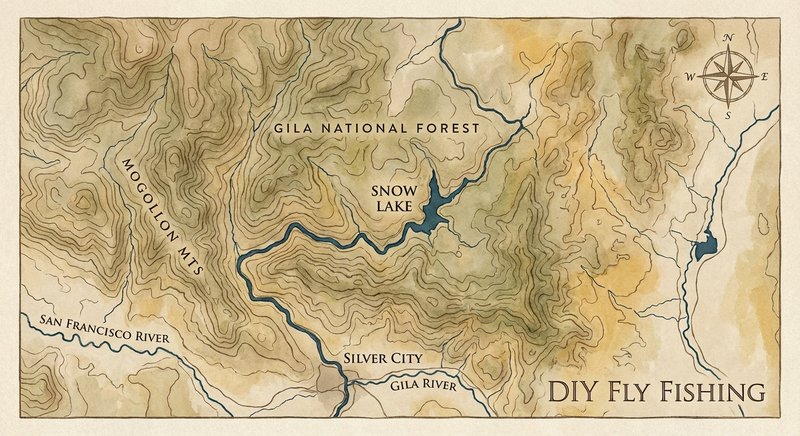
Snow Lake
Fly fishing in New Mexico · Advanced · Best seasons: Spring, Summer, Fall
Target Species
Rainbow Trout, Brown Trout
About This Water
High mountain lake in the Gila with excellent trout fishing. Scenic backcountry setting.
Fishing Recommendations
Snow Lake is one of the hidden gems of the Gila National Forest in southwestern New Mexico. Situated at an elevation of approximately 7,300 feet, this 55-acre high-mountain reservoir offers a true "getaway" experience for fly anglers looking to escape the crowds of more accessible waters.
Here is your comprehensive guide to fly fishing Snow Lake.
🎣 Location Overview
Snow Lake is a remote, man-made impoundment nestled in the high meadows of the Gila Wilderness. What makes it special is the transition between high-desert canyons and alpine ponderosa pine forests. The water is fed by Snow Creek and Gilita Creek.
The lake is characterized by relatively shallow flats, a distinct submerged creek channel, and significant weed growth during the warmer months. Because it is far from any major city (about 2.5 to 3 hours from Silver City), the pressure is lower than at other New Mexico lakes. Anglers love it for the silence, the dark night skies, and the chance to catch quality trout in a wilderness setting.
🐟 Target Species & Behavior
While Snow Lake is historically known for its Rainbow Trout and Brown Trout, it is also a critical area for Gila Trout recovery.
- Rainbow Trout: These are the most active feeders. They tend to cruise the littoral zones (the edges) in search of midges and damselflies. You’ll find them in the top 5–10 feet of the water column.
- Brown Trout: The "wolves" of the lake. Browns here tend to hold deeper near the old submerged creek channel or around the dam structure. They are much more light-sensitive and become most active during the "golden hours" or under overcast skies.
- Behavior: During the day, fish move toward the center or deeper holes to stay cool. In the evening, they move into the shallows near the weed beds to feed on emerging insects.
📅 Best Times to Fish
- Spring (April – June): This is the prime window. As the ice melts and the water warms, the fish become extremely aggressive. This is when you’ll see the best chironomid (midge) hatches.
- Summer (July – August): Fishing can be productive but requires early starts. Monsoon season usually begins in July; afternoon thunderstorms are common and can make the water murky, but the pressure drop before a storm often triggers a feeding frenzy.
- Fall (September – November): This is arguably the best time for trophy Browns. As temperatures drop, Browns become territorial and aggressive ahead of their spawning cycle. The fall colors in the Gila are an added bonus.
- Best Time of Day: First light until 10:00 AM and two hours before sunset. Mid-day fishing is generally slow unless there is significant cloud cover.
🪰 Recommended Flies & Techniques
Top Fly Patterns
- Nymphs: Zebra Midges (size 18–22) in red or black, Prince Nymphs (14–16), and Hare's Ear.
- Dry Flies: Parachute Adams (16–20), Griffith’s Gnat (18–22), and during the summer, Foam Ants or Beetles.
- The "Secret Weapon": Damselfly Nymphs. Snow Lake has a massive damselfly population. An olive, marabou-tailed damselfly nymph (size 12–14) fished with a slow, twitchy retrieve is deadly.
- Streamers: Woolly Buggers (Olive, Black, or White) and Simi Seal Leeches.
Effective Techniques
- Indicator Nymphing: Suspend a midge or scud 4–8 feet below an indicator. This is the most consistent way to catch fish here, especially near the dam.
- The "Slow Strip": Using an intermediate sinking line, cast a damselfly nymph or a small woolly bugger toward the weed edges and strip it back with 2-inch "ticks."
- Dry-Dropper: In the evenings, use a high-visibility dry (like a Chubby Chernobyl) with a small pheasant tail dropper.
💡 Pro Tips & Local Knowledge
- Bring a Float Tube: While you can fish from the bank, Snow Lake is best fished from the water. A float tube or kayak allows you to reach the submerged creek channel where the larger Browns hide.
- Watch the Weed Lines: In late summer, the weeds can be thick. Instead of fighting them, fish the "lanes" or pockets between weed beds. This is where trout ambush prey.
- The Tributaries: Don't ignore the inlets where Snow Creek and Gilita Creek enter the lake. These areas provide moving water and higher oxygen levels, often attracting the most active fish.
- Wind Management: The Gila is notorious for afternoon winds. If the surface gets a "chop" on it, switch to streamers. The broken surface makes the fish feel less exposed, and they will strike more confidently.
⚠️ Important Information
- Access: The road to Snow Lake (FR 141 or FR 28) is long and unpaved. While usually passable for passenger cars in dry weather, it becomes treacherous when wet. High clearance vehicles are strongly recommended.
- Supplies: There is no cell service and the nearest gas/grocery is hours away. Come with a full tank of gas, a spare tire, and plenty of water/food.
- Regulations: A valid New Mexico fishing license with a Habitat Management & Protection Stamp is required. Check the current NM Department of Game & Fish rules, as Gila Trout conservation measures may occasionally change tackle requirements (e.g., barbless hooks or catch-and-release only).
- Camping: The Snow Lake Campground is nearby and offers basic amenities (vault toilets, fire rings), but it is "dry" camping—bring your own water.
Guide’s Final Word: Snow Lake isn't about high fish counts; it’s about the quality of the experience. It is a rugged, beautiful place where you can find solitude and some of the hardest-fighting trout in the Southwest. Respect the resource, pack out your trash, and enjoy the silence.
Bug Hatches & Matching Flies
| Hatch | Type | Peak months | Time of day | Hook sizes | Matching flies |
|---|---|---|---|---|---|
| Callibaetis (Speckled Duns) Callibaetis spp. | mayfly | May, June, September | Late Morning to Mid-Afternoon | #12-16 | Parachute Adams #14-16, Callibaetis Nymph #12-16, Mercer's Pucker Face #14-16 |
| Chironomids (Midges) Chironomidae | midge | April, May, June, October | All Day | #18-24 | Zebra Midge #18-22, Ice Cream Cone #16-20, Griffith's Gnat #20-24 |
| Blue-Winged Olive (BWO) Baetis spp. | mayfly | March, April, October, November | Mid-day (Overcast preferred) | #18-22 | RS2 #20-22, BWO Parachute #18-22, Pheasant Tail Nymph #18-20 |
| Damselfly Enallagma spp. | terrestrial | June, July | Morning to Afternoon | #10-14 | Marabou Damsel Nymph #10-12, Adult Damsel #12-14 |
| Spotted Sedge Hydropsyche spp. | caddis | June, July, August | Evening | #14-16 | Elk Hair Caddis #14-16, LaFontaine's Deep Sparkle Pupa #14-16 |
| Freshwater Shrimp (Scuds) Gammarus spp. | midge | May, September | All Day | #14-18 | Ray Charles #14-18, Olive Scud #14-16 |
| Grasshoppers Melanoplus spp. | terrestrial | August, September | Mid-morning to Evening | #8-12 | Dave's Hopper #10-12, Parachute Hopper #10-12 |
| Water Boatman Corixidae | terrestrial | September, October | Afternoon | #14-16 | Water Boatman #14-16, Prince Nymph #14-16 |