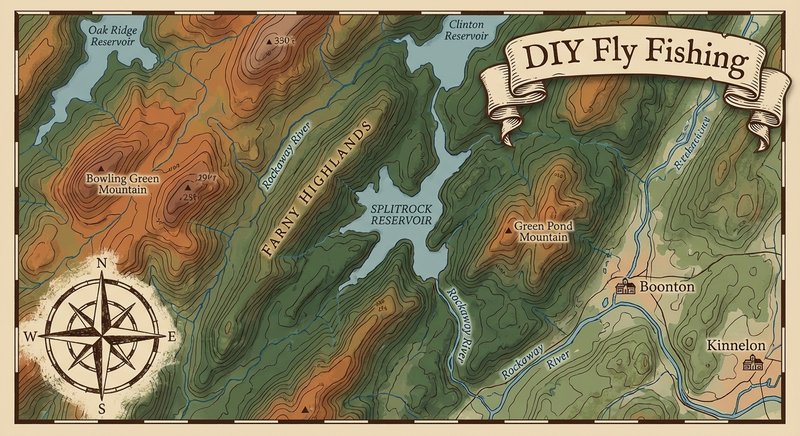
Splitrock Reservoir
Fly fishing in New Jersey · intermediate · Best seasons: spring, fall
Target Species
Brown Trout, Rainbow Trout
About This Water
Morris County reservoir with stocked trout. Scenic mountain setting with good spring fishing.
Fishing Recommendations
Welcome to one of New Jersey’s true "hidden gems." As a guide, I often tell clients that Splitrock Reservoir is the closest you can get to the Adirondacks or the wilds of Maine without leaving the Garden State. Located in Rockaway Township, this 625-acre wilderness reservoir is defined by its rugged, rocky shoreline, crystal-clear water, and a complete lack of residential development.
While many locals head here for the trophy Smallmouth Bass and Walleye, the trout fishing—particularly in the shoulder seasons—can be exceptional for the fly angler who knows how to work stillwater.
🎣 Location Overview
Splitrock Reservoir is part of the Jersey City water supply system, but it feels like a glacial lake. It is surrounded by the Farny State Park and the 4,000-acre Wildcat Ridge Wildlife Management Area.
What makes it special is the structure. The reservoir is characterized by steep drop-offs, massive submerged boulders, and "fingers" of land that create deep coves. The water is significantly clearer than most NJ impoundments, meaning the fish are visual hunters but can also be quite "spooky." For the fly angler, this is a "boat-essential" water; while some bank fishing is possible near the launch, a kayak or canoe is your best tool for reaching the fish.
🐟 Target Species & Behavior
While the state stocks Rainbow Trout and Brown Trout, Splitrock is a deep, cold-water environment that allows for better "holdover" potential than many shallower NJ lakes.
- Rainbow Trout: These are your primary targets in the spring. They tend to cruise the upper 5–10 feet of the water column, often found near the dam or patrolling the rocky shorelines in search of midge hatches.
- Brown Trout: The Browns here are more elusive and often larger. They hug the deeper structure—submerged timber and the base of rock walls. They are highly piscivorous (fish-eating) and will often shadow schools of baitfish (alewives).
- Feeding Habits: In the spring, they focus on midges and early caddis. In the fall, they shift their focus heavily toward baitfish to bulk up for winter.
📅 Best Times to Fish
Optimal Seasons
- Spring (April – Early June): This is prime time. The water temperature is consistent throughout the column, and trout are active in the shallows.
- Fall (Late September – November): As the "turnover" occurs and surface temperatures drop, trout move back up from the depths. This is the best time to hunt for a trophy-sized holdover Brown.
Best Times of Day
- Dawn & Dusk: Because the water is so clear, trout are most comfortable feeding in low-light conditions.
- Overcast Days: A cloudy, drizzly day is arguably the best "trophy" weather at Splitrock. It breaks up the surface glare and allows you to use slightly heavier leaders without spooking fish.
🪰 Recommended Flies & Techniques
Streamer Fishing (The "Go-To" Strategy)
Since this is a large body of water, searching with streamers is often most effective.
- Patterns: Woolly Buggers (Olive or Black, sizes 6-10), Black Ghost, and Clouser Minnows (White/Chartreuse to mimic baitfish).
- Technique: Cast toward the rocky shorelines and strip back toward deep water. Use a sink-tip line or a long leader with a weighted fly to get down 5–10 feet.
Stillwater Nymphing
- Patterns: Zebra Midges (Red or Black, sizes 18-22), Pheasant Tails, and Prince Nymphs.
- Technique: Use a long leader (12ft+) and a small indicator. Suspend your nymphs near drop-offs. If there is a slight breeze, let the "chatter" of the waves move your fly.
Dry Fly Action
- Patterns: Griffith’s Gnat, Adams, or Elk Hair Caddis.
- Technique: Look for rising fish in the quiet coves during the evening. If you see "sipping" rises, it’s almost certainly midges.
💡 Pro Tips & Local Knowledge
- The Eastern Shoreline: The eastern side of the reservoir has some of the most dramatic rock faces. Trout often hover just off these walls where the shade lingers longer in the morning.
- Find the "Points": Any point of land that juts out into the water creates a current break and a natural ambush spot for trout.
- The Wind is Your Friend: Don't be afraid of a little "chop" on the water. A light breeze oxygenates the surface and masks your presence.
- Stealth Matters: Because the water is so clear, avoid wearing bright colors. Wear greys or blues to blend into the sky. If you are in a kayak, try to avoid banging your paddle against the side—the sound telegraphs through the water.
⚠️ Important Information
Access
- Launch Point: There is one primary access point at the end of Splitrock Road. The road is unpaved and can be quite bumpy; while a car can make it, a vehicle with a bit of clearance is better.
- Parking: The lot is small and fills up very quickly on weekends. Arrive at sunrise to secure a spot.
Regulations
- Boating: Electric motors only. Gas engines are strictly prohibited.
- Licenses: You must have a valid New Jersey Fishing License and a Trout Stamp.
- Rules: Check the current NJ Freshwater Fishing Digest for specific creel limits, as they can change seasonally.
Special Considerations
- Cell Service: It is very spotty at the reservoir. Let someone know where you are going.
- Bears: This area has a high density of Black Bears. Keep any snacks sealed in your boat and be mindful if you are shoreline fishing.
Guide’s Final Word: Splitrock is a "thinking angler's" water. It doesn't give up its secrets easily, but landing a wild-looking holdover Brown Trout in that scenery is one of the best experiences New Jersey fly fishing has to offer. Tight lines!
Bug Hatches & Matching Flies
| Hatch | Type | Peak months | Time of day | Hook sizes | Matching flies |
|---|---|---|---|---|---|
| Chironomids Chironomidae | midge | April, May, September | All day | #18-24 | Zebra Midge #18-22, Griffith's Gnat #20-24 |
| Giant Michigan Mayfly Hexagenia limbata | mayfly | June, July | Late Evening/Night | #6-10 | Hexagenia Dry #6-8, Hex Nymph #8-10 |
| Blue-Winged Olive Baetis | mayfly | April, October | Afternoon | #18-22 | BWO Sparkle Dun #18-20, RS2 #20-22 |
| Damselfly Enallagma/Lestes | terrestrial | June, July, August | Late Morning/Afternoon | #10-14 | Marabou Damsel Nymph #10-12, Adult Damsel #12-14 |
| Dragonfly Anisoptera | terrestrial | July, August | All day | #4-10 | Dragonfly Nymph (Gummi Bug) #4-8, Deer Hair Dragonfly #6-10 |
| Spotted Sedge Hydropsyche | caddis | May, June | Evening | #14-16 | Elk Hair Caddis #14-16, LaFontaine's Deep Sparkle Pupa #14-16 |
| Carpenter Ants Camponotus | terrestrial | August, September | Afternoon | #12-16 | Chernobyl Ant #12-14, Black Foam Ant #14-16 |
| White Miller Ephoron leukon | mayfly | August | Evening/Dusk | #12-14 | White Wulff #12-14, White Miller Emerger #12-14 |
| Backswimmers/Water Boatmen Corixidae/Notonectidae | terrestrial | September, October | Afternoon | #14-18 | Water Boatman #14-16, Backswimmer #14-16 |