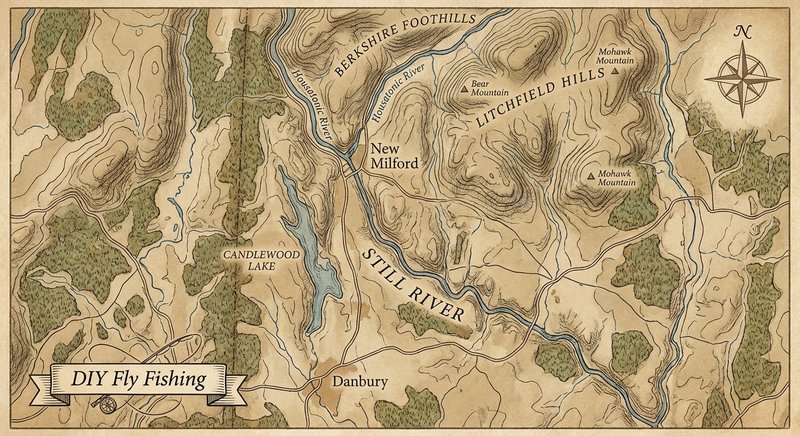
Still River
Fly fishing in Connecticut · Intermediate · Best seasons: Spring, Summer, Fall
Target Species
Brown Trout
About This Water
Litchfield County stream with wild brown trout. Technical fishing in scenic valley.
Fishing Recommendations
Tight lines! As a guide who has spent plenty of time navigating the varied waters of the Northeast, I can tell you that the Still River in Litchfield County, Connecticut, is a bit of a hidden gem for those who enjoy technical, intimate trout fishing.
While there are multiple "Still Rivers" in CT, the one most prized by trout anglers is the tributary to the Farmington River, primarily flowing through Winsted, Colebrook, and Barkhamsted.
📅 Location Overview
The Still River is a classic freestone stream that eventually joins the West Branch of the Farmington River. What makes it special is its transition from a pocket-water stream in its upper reaches to a more classic meadow-style run as it nears the confluence.
Anglers love it because it offers a "small stream" feel compared to the big water of the main stem Farmington. It is characterized by deep pools, undercut banks, and significant overhead canopy. In the spring, it runs cold and clear, offering a sanctuary for wild and holdover fish. It feels remote, even when you aren't far from the road, providing a peaceful alternative to the crowds on the Farmington.
🐟 Target Species & Behavior
The primary draw here is the Brown Trout. While the state stocks this river, the Still River has a surprising capacity to hold fish over, and you will encounter beautiful, buttery-colored "holdover" Browns that have adapted to the river's wild insect life.
- Behavior: These Browns are wary. Due to the clarity and smaller size of the water, they are easily spooked. They hold tightly against undercut banks and in the shadows of overhanging mountain laurel and hemlocks.
- Feeding: They are opportunistic feeders. In the spring, they focus on aquatic larvae; in the summer, they shift heavily toward terrestrials and small crayfish.
📅 Best Times to Fish
Optimal Seasons
- Spring (Mid-April – June): This is the prime window. The water levels are usually perfect, and the first major hatches (Hendricksons and Early Caddis) bring the fish to the surface.
- Summer (July – August): Best early in the morning or late in the evening. Because the Still River is fed by smaller cold-water tributaries, it can stay cooler than other area streams, but always check water temps. If it's over 68°F, give the fish a break.
- Fall (September – October): A fantastic time to target aggressive pre-spawn Browns. The foliage is stunning, and the fish are willing to chase streamers.
Prime Windows
- Morning: 7:00 AM – 10:00 AM (especially in Summer).
- Evening: The "magic hour" before dusk during the caddis hatches.
🪰 Recommended Flies & Techniques
Top Fly Patterns
- Dry Flies:
- Tan or Olive Elk Hair Caddis (#14-18): A staple on this water.
- Hendrickson (Dark Red Quill) (#12-14): Critical in late April/May.
- Ants and Beetles (#16-18): Essential for summer stealth fishing.
- Nymphs:
- Pheasant Tail (#16-20): Mimics almost everything in the river.
- Zebra Midge (#18-22): Perfect for the slow, deep pools.
- Pat’s Rubber Legs (#10-12): Great for high-water spring days.
- Streamers:
- Wooly Bugger (Olive or Black) (#8-10): Swing these through the deeper bends.
Effective Techniques
- Tight-Line/Euro Nymphing: In the riffles and pocket water, this is the most effective way to reach fish tucked behind boulders.
- Dry-Dropper: A high-vis Caddis with a small Pheasant Tail dropped 18 inches below is the "pro move" for covering the Still River’s varied depths.
- Stealth Casting: Because the river is narrow, use a side-arm cast to stay under the tree canopy and avoid "lining" the fish.
💡 Pro Tips & Local Knowledge
- The "Confluence" Factor: The lower section near the confluence with the Farmington River often holds larger fish that migrate up from the main stem to escape the crowds or seek different forage.
- Wading Strategy: Move slowly. The Still River has a lot of silt and loose rock in certain stretches; if you stomp around, the vibrations will alert the trout before you ever make a cast.
- Downsize your Tippet: Use 5x or 6x fluorocarbon. These fish see enough pressure to be "leader shy," especially in the flatter pools.
- Look for the "Wood": In the Still River, "wood is good." Look for fallen trees or log jams. A Brown Trout is almost certainly sitting in the dark water underneath that structure.
⚠️ Important Information
- Access: Much of the river parallels Route 8 and Sandy Brook Rd. There are several pull-offs provided by the CT DEEP. Always respect "Posted" private property signs, as some stretches flow through private yards.
- Regulations: Ensure you have a valid Connecticut Fishing License and a Trout & Salmon Stamp.
- Safety: The banks can be steep and slippery. I recommend felt-soled boots or studs, and always carry a wading staff.
- Bear Country: This area of Litchfield County has a high black bear population. Keep your snacks sealed and be aware of your surroundings, especially if fishing alone at dusk.
Guide’s Final Thought: The Still River isn't about catching 50 fish a day; it’s about the quality of the hunt. Take your time, watch the water, and enjoy one of Connecticut's most charming trout streams.
Bug Hatches & Matching Flies
| Hatch | Type | Peak months | Time of day | Hook sizes | Matching flies |
|---|---|---|---|---|---|
| Blue Winged Olive Baetis / Pseudocloeon | mayfly | April, May, September, October | Mid-day | #18-22 | RS2 #20-22, BWO Sparkle Dun #18-20, Pheasant Tail Nymph #18-20 |
| Hendrickson Ephemerella subvaria | mayfly | April, May | Afternoon | #12-14 | Red Quill #12-14, Hendrickson Emerger #12-14, Gold Ribbed Hare's Ear #12-14 |
| Grannom Caddis Brachycentrus | caddis | April, May | Morning/Afternoon | #14-16 | Elk Hair Caddis (Dark) #14-16, Peacock Caddis Larva #14-16, LaFontaine Sparkle Pupa #14-16 |
| Sulphur Ephemerella invaria / dorothea | mayfly | May, June | Evening | #14-18 | Sulphur Parachute #16-18, Sulphur Emerger #14-16, Pale Morning Dun Nymph #16-18 |
| Light Cahill Stenacron / Stenonema | mayfly | June, July | Evening | #12-14 | Light Cahill #12-14, Cream Usual #12-16 |
| Trico Tricorythodes | mayfly | July, August, September | Morning | #22-26 | Trico Spinner #22-26, Zebra Midge #22-24 |
| Isonychia Isonychia bicolor | mayfly | June, September | Late Afternoon/Evening | #10-12 | Iso Parachute #10-12, Prince Nymph #10-12, Zug Bug #10-12 |
| Cinnamon Caddis Hydropsyche | caddis | June, July, August | Evening | #16-18 | Tan Elk Hair Caddis #16-18, Holy Grail Caddis #16-18 |
| Ants and Beetles Hymenoptera / Coleoptera | terrestrial | July, August, September | All Day | #12-18 | Black Foam Ant #16-18, Chernobyl Ant #12-14, Cricket/Beetle Pattern #14-16 |