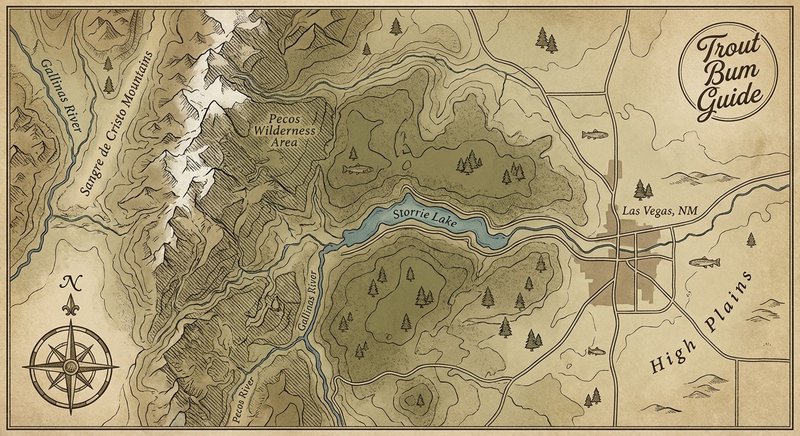
Storrie Lake
Fly fishing in New Mexico · Beginner · Best seasons: Spring, Summer, Fall
Target Species
Rainbow Trout
About This Water
Lake near Las Vegas, NM with stocked trout. Good float tube fishing.
Fishing Recommendations
Welcome to the high plains of Northern New Mexico. As your guide, I’m excited to break down Storrie Lake State Park. Located just north of Las Vegas, NM, this is a unique destination. Unlike the tight, technical canyons of the Pecos or the high-alpine streams of the Sangre de Cristo Mountains, Storrie Lake offers a "big water" experience on the edge of the prairie.
Here is your comprehensive guide to fly fishing Storrie Lake.
🎣 Location Overview
Storrie Lake is a medium-sized reservoir sitting at an elevation of approximately 6,600 feet. It serves as a vital irrigation source and a recreational hub for the local community.
What makes it special: It is one of the most consistent "cool water" fisheries in the region. While many low-elevation lakes in New Mexico get too warm for trout in the peak of summer, Storrie’s wind-swept surface and depth allow it to hold Rainbows year-round. It is known for its heavy winds, which can be a challenge for fly casters but a blessing for the fishing, as the chop oxygenates the water and hides the angler's profile.
🐟 Target Species & Behavior
While Storrie Lake holds some warm-water species like Channel Catfish, the primary draw for the fly angler is the Rainbow Trout.
- Behavior: These are primarily "stocker" fish, but because the lake is rich in nutrients, they hold over well and grow quickly. Unlike river trout that hold in current, these fish cruise the littoral zones (near the shore) in search of food.
- Holding Areas: Look for the "Transition Zones"—where the shallow shelf drops off into deeper water. They also frequent the areas near the dam and the rocks along the eastern shore.
- Feeding: Their diet consists heavily of Chironomids (midges), Damsel Fly larvae, Crayfish, and small baitfish (minnows).
📅 Best Times to Fish
Optimal Seasons
- Spring (March – May): This is arguably the prime window. As the ice melts and the water warms, trout become extremely active in the shallows. The "Ice-Out" period can produce some of the largest fish of the year.
- Summer (June – August): Fishing is best in the early morning or late evening. During the heat of the day, trout retreat to the deeper, cooler center of the lake.
- Fall (September – November): As temperatures drop, trout move back into the shallows to bulk up for winter. This is the best time for aggressive streamer stripping.
Prime Windows
- The "Magic Hour": The first 90 minutes of daylight and the last hour before sunset are critical, especially if the wind dies down.
- Cloudy/Overcast Days: Trout feel safer moving into shallow water when the sun isn’t bright.
🪰 Recommended Flies & Techniques
Top Fly Patterns
- Nymphs/Midges: Zebra Midges (size 18-22 in red or black), Ice Cream Cone Midges, and bloodworm patterns.
- Attractors: Prince Nymphs and Hare’s Ears (size 14-16).
- Streamers: Woolly Buggers (Black, Olive, or White) in size 8-12. Thin Mints are also highly effective here.
- Stillwater Specials: Balanced Leeches (olive/brown) and Damsel Fly nymphs.
Effective Techniques
- The "Indicator Rig": This is the most effective way to fish Storrie. Suspend a midge or a balanced leech 4–8 feet under a strike indicator. Let the wave action provide the movement.
- Stripping Streamers: Use an intermediate sinking line or a long leader on a floating line. Use a "twitch-twitch-pause" retrieve. Often, the strike happens on the pause.
- Dry Fly: Occasional midge hatches occur at dusk. Use a Griffith’s Gnat or a Parachute Adams in small sizes (20-22).
💡 Pro Tips & Local Knowledge
- Embrace the Wind: Locals know that the wind usually blows from the west. If you fish the eastern shore (the "windward" side), the wind pushes nutrients, insects, and baitfish toward you. The trout follow the food.
- The Float Tube Advantage: While you can fish from the bank, a float tube or kayak allows you to reach the drop-off zones that are just out of casting range from the shore.
- Color Palette: Storrie can get a bit murky/stained. In turbid water, use Black or Fluorescent Orange flies to provide a better silhouette. In clear water, stick to Olive and Tan.
- The Dam Area: The rocks near the dam hold heat in the spring, making it a great spot for early-season activity.
⚠️ Important Information
- Access: Storrie Lake State Park requires a daily nominal vehicle fee (usually $5) unless you have an annual New Mexico State Parks pass.
- Regulations: A valid New Mexico Fishing License is required for everyone 12 years and older. You also need the "Habitat Management & Access Validation" stamp.
- Safety: The wind here can become dangerous very quickly. If you are in a float tube or small boat and see whitecaps forming, get to shore immediately.
- Amenities: The park offers excellent camping, restrooms, and picnic tables, making it a great "family-friendly" fly fishing destination.
Guide’s Final Note: Don't come expecting the technicality of the San Juan River. Storrie is about patience, watching your indicator, and enjoying the massive New Mexico sky. When you hook a 16-inch Rainbow that has been fattening up on lake midges, you'll understand why we love it. Tight lines!
Bug Hatches & Matching Flies
| Hatch | Type | Peak months | Time of day | Hook sizes | Matching flies |
|---|---|---|---|---|---|
| Chironomids (Midges) Chironomidae | midge | March, April, May, October | All Day | #14-22 | Zebra Midge #18-22, Ice Cream Cone #14-18, Griffith's Gnat #18-22 |
| Callibaetis (Speckled Duns) Callibaetis spp. | mayfly | June, July, August | Late Morning/Early Afternoon | #12-16 | Callibaetis Spinner #14-16, Hare's Ear Nymph #12-16, Parachute Adams #14-18 |
| Damselfly Enallagma spp. | terrestrial | June, July | Late Morning/Afternoon | #10-12 | Marabou Damsel Nymph #10-12, Braided Butt Damsel #10-12 |
| Scud Gammarus | terrestrial | April, May, September | All Day | #12-18 | Ray Charles #14-18, Flashback Scud #12-16 |
| Water Boatman Corixidae | terrestrial | September, October | Afternoon | #14-16 | Prince Nymph #14-16, Water Boatman #14-16 |
| Grasshoppers Melanoplus spp. | terrestrial | August, September | Late Morning/Afternoon | #8-12 | Dave's Hopper #8-12, Joe's Hopper #10-12 |
| Cinnamon Caddis Hydropsyche spp. | caddis | July, August | Evening | #14-18 | Elk Hair Caddis #14-16, Pupa Emerger #16-18 |
| Dragonfly Nymph Anisoptera | terrestrial | June, July, August | All Day | #6-10 | Dragon Nymph #6-10, Woolly Bugger (Olive) #8-12 |